


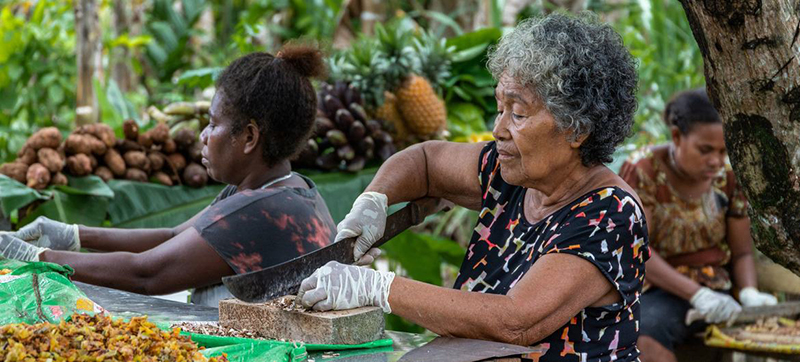
 Small Islands
Small island States to accelerate action on preventable diseases, mental health
Small Island Developing States (SIDS) are among countries that have the highest prevalence of non-communicable diseases (NCDs) and mental health risks in the world. Now, UN health agency WHO, is pledging to work more closely with them, to help save and improve lives.
This follows a two-day meeting in Barbados hosted by the Government, WHO and the Pan American Health Organization (PAHO), which concluded on Wednesday.
Over half of all people living in small island countries are dying prematurely from preventable diseases and the rate of hypertension is over 30 per cent in nearly all countries, according to a new WHO data portal.
Crises fuelling disease
SIDS account for 10 of the nations with the highest rates of obesity worldwide.
They also are on track to have the highest prevalence of diabetes among adults in the world, while rates of mental health conditions reach as high as 15 per cent in the Caribbean and the Pacific.
The situation is partly due to multiple overlapping crises affecting countries, WHO explained.
“The climate crisis and the COVID-19 pandemic, combined with poverty, unemployment, inequality and the marginalization of minority communities, are fuelling an increase in non-communicable diseases and mental health conditions,” said Tedros Adhanom Ghebreyesus, the agency’s Director-General.
Collaborating for change
During the meeting, participants identified key recommendations to scale up action towards achieving a one-third reduction in premature mortality from NCDs and suicide, before 2030.
Recommendations include accelerating collaboration on early detection, prevention and management; strengthening health systems in the face of the climate crisis and the COVID-19 pandemic; tackling obesity, and providing adequate, sustainable financial and human resources for NCDs and mental health.
Reducing the risk
The meeting also heard that small island states are at the forefront of rolling out low-cost, high-impact solutions to reduce the most common risk factors of NCDs and mental health.
Interventions include the use of health taxation, incorporating health into climate change adaptation and mitigation efforts, and maintaining NCD and mental health services during health emergencies.
Commercial drivers of NCDs also were discussed, such as trade agreements and policies.
WHO said these measures influence the price, availability and promotion of food products, cigarettes and alcohol, which have contributed to the alarmingly high levels of food insecurity and preventable diseases in the SIDS.
Support Our Journalism
We cannot do without you.. your contribution supports unbiased journalism
IBNS is not driven by any ism- not wokeism, not racism, not skewed secularism, not hyper right-wing or left liberal ideals, nor by any hardline religious beliefs or hyper nationalism. We want to serve you good old objective news, as they are. We do not judge or preach. We let people decide for themselves. We only try to present factual and well-sourced news.
Support objective journalism for a small contribution.


