


Strategy in the blink of an eye, finds study
New York, Feb 17 (IBNS): If a brief event in our surroundings is about to happen it is probably better not to blink during that moment.
A team of researchers at the Centre for Cognitive Science from Technische Universität Darmstadt published a study in the “Proceedings of the National Academy of the Sciences”, which found that humans unconsciously trade off the loss of information during a blink with the physiological urge to blink.
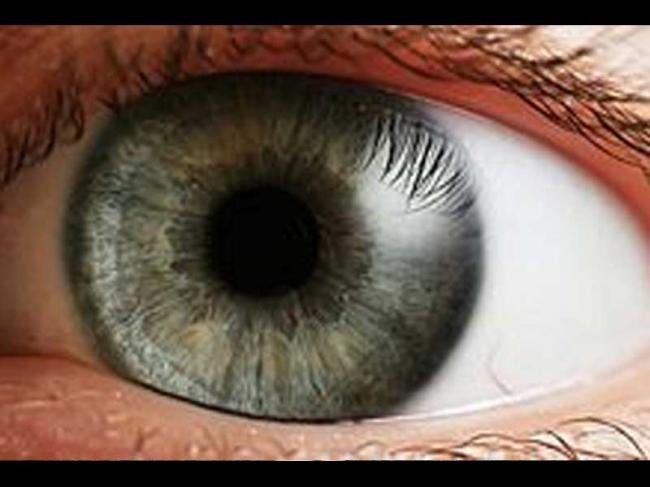
During a single blink, our visual perception is interrupted for about a third of a second. Image: Patrick Bal
Control of blinking agrees with computational models of information processing, which include the inherent human uncertainty about when the next event might happen.
Blinking is an omnipresent involuntary process that maintains stable and healthy vision. With 15 blinks per minute on average it is one of the most frequent human actions. But during a single blink, our visual perception is interrupted for about a third of a second. Although our conscious perception suggests a continuous and stable world, about 10 percent of the time we are missing potentially important visual information from our surroundings. For this reason it is advantageous, whether for our ancestors roaming the savanna or the modern human crossing a busy road, to coordinate our blinking intelligently.
Previous studies have revealed an intriguing multitude of additional factors influencing human blink rates. Blinking is closely intertwined with cognitive functions connected to dopamine, a neuromodulator involved in reward related behavior and learning. In particular, blink rates are elevated when we are tired and are related to our activities, as they go up when we are talking and go down when we are reading. While blinking is clearly related to these cognitive processes, so far it has been unknown, how blinking relates quantitatively to properties of our environment.
Unconsciously less blinking
The team of researchers led by professor Constantin Rothkopf, director of the Centre for Cognitive Science, now showed for the first time quantitatively, how blinking is related to environmental task events. Participants in an experiment were instructed to detect short events presented on a computer monitor. The probability of an event occurring was systematically modified by the researchers to reveal participants’ blinking strategies. Participants indeed learned the hidden regularities of the visual events and progressively improved their performance of detecting the events. The analysis of the blinking behavior showed that participants unconsciously blinked less and less the more probable they believed an event was about to occur.
“The computational model we have developed is able to reproduce this behavior”, explained Ph.D. student David Hoppe, first author of the study. “As the model also contains physiological parameters, which differ between individual participants, it is possible to predict the likelihood of times between two successive blinks.” The time intervals between two blinks have long been known to differ considerably between individual people but can be categorized into four groups. While this has been known since a classic study from 1927, the current study finally provides an answer to why this happens.
The results now published will likely also have consequences for technical applications.
Especially the measuring of the attentional state or fatigue e.g. in driving assistance systems or in intention recognition systems currently already uses people’s blinking rates.
The current study now allows relating visual perception, physiological properties of the visual system and the importance people give to an ongoing task in a quantitative fashion, just on the basis of their blinking.
Support Our Journalism
We cannot do without you.. your contribution supports unbiased journalism
IBNS is not driven by any ism- not wokeism, not racism, not skewed secularism, not hyper right-wing or left liberal ideals, nor by any hardline religious beliefs or hyper nationalism. We want to serve you good old objective news, as they are. We do not judge or preach. We let people decide for themselves. We only try to present factual and well-sourced news.
Support objective journalism for a small contribution.


