


 WHO
WHO
Sudan: 800,000 still trapped in El Fasher where supplies running out, warns WHO
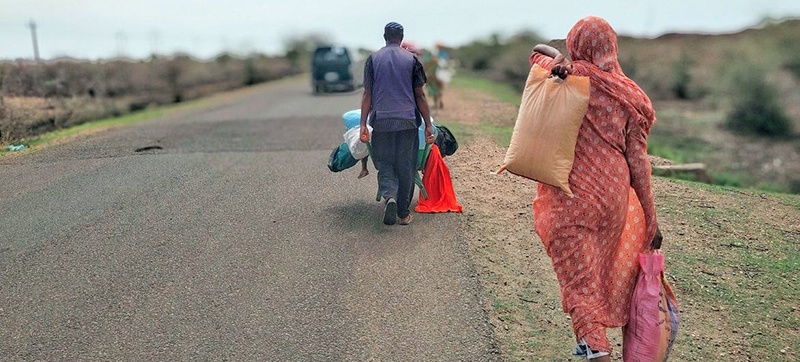
Hunger and fear of famine stalk Sudan where a staggering 800,000 people still remain trapped in the North Darfur capital El Fasher without enough food, water or medical support, the World Health Organization, WHO, said on Tuesday.
In an alert, Dr Shible Sahbani, WHO Representative to Sudan, said that heavy fighting between Sudan’s rival militaries had made access to El Fasher “completely impossible”, as the country’s warring parties continue to hold talks in Geneva.
The latest warning about the emergency comes 15 months since heavy conflict erupted between rival militaries in Sudan over a proposed transition to civilian rule, following a military coup in 2021 and the 2019 ousting of long-time President Omar Al-Bashir.
Millions forced to flee
“The Darfurs, Kordofans, Khartoum and Al Jazira states are all but cut off from humanitarian and health assistance due to the relentless fighting,” the WHO official told journalists in Geneva. “The situation in Darfur is particularly alarming, where in places like El Fasher…the wounded cannot get the urgent care they need; children and pregnant and breastfeeding women are weak due to acute hunger.”
Tweet URL
Large parts of Sudan have been impacted by the fighting, after hostilities involving heavy weapons and fighter jets spread from the capital, Khartoum, to other regions and states including the Darfurs, located in the west of the vast country.
In addition to pleas to the belligerents to ensure the protection of civilians, aid teams and public infrastructure including hospitals in line with international humanitarian law, the WHO official insisted that access was “immediately needed so that we can avert the disastrous health situation”.
Relief supplies on the move
Existing healthcare stockpiles have been used to supply a few hospitals in El Fasher, but “it’s not enough and it’s not sustainable”, the WHO official insisted, adding that the UN aid coordination office, OCHA, was continuing to negotiate with the various parties at war to allow relief supplies to be trucked in wherever possible.
“As we speak now I have seven trucks moving from Kordofans towards Darfur... and just yesterday we got the approval to have them moving towards Darfur,” said Dr Sahbani, adding that there were also “good signs” about cross-border aid operations from “all the different parties”.
“But it's not enough, again, because we have to deal with these cases on ad hoc basis…We need more advocacy in the country with the different belligerents, but we need also advocacy with the big, countries, with those who have a certain influence on the situation.”
Dr Sahbani said that while he was on an assessment mission to neighbouring Chad last week, desperate refugees had told him that “the main reason they left Sudan now is hunger, is famine…They said it’s not insecurity, it’s not lack of access to basic services, but because we have nothing to eat there.”
The WHO official described his shock when a woman who had fled Darfur and reached Adré just past Chad’s eastern border told him that “whatever we use to produce [food] locally, to eat, was taken by fighters”. She had walked for three days with her children in search of safety, without food for the entire journey.
Geneva talks focus
Dr. Sahbani warned that the humanitarian response in Sudan remains only 26 per cent funded as he described the emergency as “one of the worst in the world”.
Humanitarian access and protection of civilians are among the main points under discussion at the UN-led talks between representatives from the Sudanese Armed Forces and the paramilitary Rapid Support Forces that began last week in Geneva, under the leadership of the UN Secretary-General’s Personal Envoy for Sudan, Ramtane Lamamra.
UN Geneva spokesperson Alessandra Vellucci told journalists that both delegations were “engaged” and that Mr. Lamamra and his team have had several interactions with each throughout the weekend.
“If we don’t get [a] ceasefire, at least we could get the protection of civilians and the opening of humanitarian corridors,” Dr Sahbani noted.
Support Our Journalism
We cannot do without you.. your contribution supports unbiased journalism
IBNS is not driven by any ism- not wokeism, not racism, not skewed secularism, not hyper right-wing or left liberal ideals, nor by any hardline religious beliefs or hyper nationalism. We want to serve you good old objective news, as they are. We do not judge or preach. We let people decide for themselves. We only try to present factual and well-sourced news.
Support objective journalism for a small contribution.


