


 Ice Age
This 37,000-year-old bamboo from Manipur just exposed an Ice Age mystery
Among the silt-rich deposits of the Chirang River in Manipur’s Imphal Valley, researchers examining fossil plant remains have found an astonishingly intact bamboo stem, carrying the ghostly marks of long-vanished thorns.
This earliest thorny bamboo fossil from Asia could rewrite a chapter of the continent’s botanical history.
"Bamboo fossils are extremely rare because their hollow stems and fibrous tissues decay rapidly, leaving little trace in the geological record. Scientists usually understood bamboo defences mainly by comparing modern species with their habitats," read a government statement.
Scientists from Birbal Sahni institution of Palaeosciences (BSIP), an autonomous institute of the Department of Science and Technology (DST) during field surveys in the silt-rich deposits of the Chirang River in Manipur’s Imphal Valley, chanced upon a bamboo stem with unusual markings.
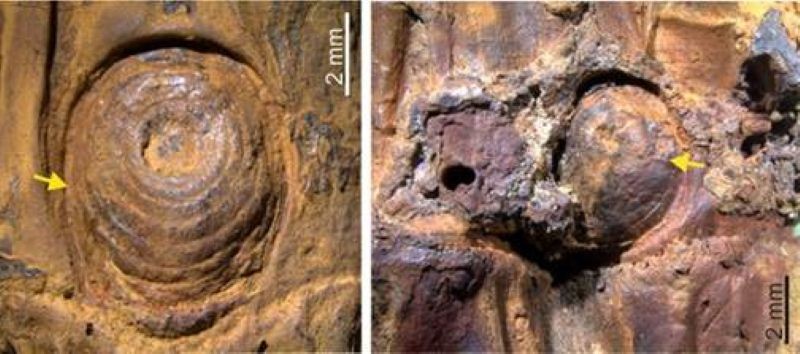
Their detailed analysis identified these as thorn scars, prompting further investigation into its identity and significance.
Through study of its morphology—nodes, buds, and thorn scars in the laboratory, as they assigned it to the genus Chimonobambusa. Comparisons with living thorny bamboos such as Bambusa bambos and Chimonobambusa callosa helped reconstruct its defensive traits and ecological role.
This is the first fossil evidence that thorniness in bamboo—a defense against herbivores—was already present in Asia during the Ice Age.
Its preservation is particularly significant because it comes from a period of colder and drier global climates, when bamboo was wiped out in many other regions, including Europe. The fossil shows that while harsh Ice Age conditions restricted bamboo’s global distribution, Northeast India provided a safe refuge where the plant could continue to thrive.
The discovery published in the journal Review of Palaeobotany and Palynology is remarkable for capturing fragile details like thorn scars—features that almost never fossilize. The finding also highlights the Indo-Burma biodiversity hotspot as a crucial refugium during the Ice Age.
While colder and drier climates eliminated bamboo from places such as Europe, the warm and humid conditions of Northeast India allowed it to persist.
This research by H Bhatia, P Kumari, NH Singh & G Srivastava adds a new dimension to our understanding of both bamboo evolution and regional climate history. It also emphasizes the role of this part of Asia in safeguarding biodiversity during times of global stress, making the discovery not only a botanical milestone but also an important contribution to palaeoclimatic and biogeographic studies.
Support Our Journalism
We cannot do without you.. your contribution supports unbiased journalism
IBNS is not driven by any ism- not wokeism, not racism, not skewed secularism, not hyper right-wing or left liberal ideals, nor by any hardline religious beliefs or hyper nationalism. We want to serve you good old objective news, as they are. We do not judge or preach. We let people decide for themselves. We only try to present factual and well-sourced news.
Support objective journalism for a small contribution.


