


 Plastic Pollution
‘Toxic tidal wave’ of plastic pollution putting human rights at risk
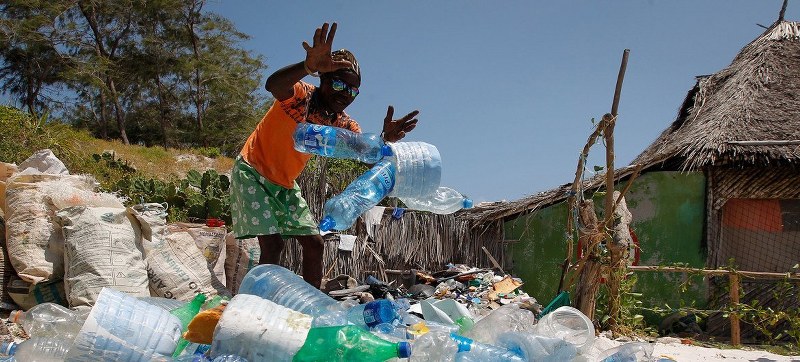
New York: The world must combat the “toxic tidal wave” of plastic pollution that threatens human rights, two UN independent experts said on Thursday.
The appeal comes as countries continue negotiations towards an international treaty on plastic pollution, and ahead of World Environment Day on 5 June.
“Plastic production has increased exponentially over recent decades and today the world is generating 400 million tonnes of plastic waste yearly,” said David R. Boyd, UN Special Rapporteur on human rights and the environment, and Marcos Orellana, Special Rapporteur on toxics and human rights.
Tweet URL
“We are in the middle of an overwhelming toxic tidal wave as plastic pollutes our environment and negatively impacts human rights in a myriad of ways over its life cycle.”
A dangerous ‘cycle’
The experts outlined how all stages of the “plastics cycle” are harmful to people’s rights to a healthy environment, life, health, food, water and an adequate standard of living.
Plastic production releases hazardous substances and almost exclusively relies on fossil fuels, and plastic itself contains toxic chemicals which put humans and nature at risk. Furthermore, 85 per cent of single use plastics end up in landfills or dumped in the environment.
Meanwhile, incineration, recycling and other “false and misleading solutions” only aggravate the threat, they added, noting that “plastic, microplastic and the hazardous substances they contain can be found in the food we eat, the water we drink and the air we breathe.”
Suffering in ‘sacrifice zones’
The statement also addressed how marginalized communities are most affected by exposure to plastic-related pollution and waste.
“We are particularly concerned about groups suffering from environmental injustices due to heightened exposure to plastic pollution, many of them living in 'sacrifice zones'”, they said, referring to locations near facilities such as open-pit mines, petroleum refineries, steel plants and coal-fired power stations.
Plastic pollution has also made an “alarming” contribution to climate change, which is often overlooked, according to the experts. “For instance, plastic particles found in oceans limit the ability of marine ecosystems to remove greenhouse gases from the atmosphere,” they said.
As Special Rapporteurs, Mr. Boyd and Mr. Orellana receive their mandates from the UN Human Rights Council. They are not UN staff and are not paid for their work.
They noted that over the past two years, the Council and the UN General Assembly have adopted landmark resolutions recognising the human right to a clean, healthy and sustainable environment, which should prompt and guide initiatives to address plastic pollution.
Treaty negotiations underway
They also welcomed progress towards an internationally binding treaty to turn the tide on plastic pollution, including in the marine environment. The UN Environment Programme (UNEP) projects that the amount of plastic waste entering aquatic ecosystems could reach some 23 to 37 million tonnes per year by 2040.
Negotiations continued this week in Paris, following on from an initial session held last year in Uruguay.
Speaking during the opening on Monday, UNEP chief Inger Andersen bluntly stated that “we cannot recycle our way out of this mess”, adding that “only elimination, reduction, a full life-cycle approach, transparency and a just transition can bring success.”
The second meeting of the Intergovernmental Negotiating Committee on Plastic Pollution (INC-2) will conclude on Friday, and delegates have a deadline to agree a treaty by 2024.
Support Our Journalism
We cannot do without you.. your contribution supports unbiased journalism
IBNS is not driven by any ism- not wokeism, not racism, not skewed secularism, not hyper right-wing or left liberal ideals, nor by any hardline religious beliefs or hyper nationalism. We want to serve you good old objective news, as they are. We do not judge or preach. We let people decide for themselves. We only try to present factual and well-sourced news.
Support objective journalism for a small contribution.


