


UN agency warns of fruit bat risk in West African Ebola epidemic
“We are not suggesting that people stop hunting altogether, which isn’t realistic,” said FAO Chief Veterinary Officer Juan Lubroth in a statement released by the Rome-based agency on Monday.
“But communities need clear advice on the need not to touch dead animals or to sell or eat the meat of any animal that they find already dead. They should also avoid hunting animals that are sick or behaving strangely, as this is another red flag.”
The West African epidemic is thought to have started when the virus crossed over from infected wildlife into the human population and subsequently began spreading between people. Guinea, Liberia and Sierra Leone are currently struggling to contain what has become the world’s deadliest recorded outbreak of the virus.
The Ebola virus is transmitted by direct contact with the blood and body of infected people and animals. And fruit bats – usually eaten dried or in a spicy soup – are thought to be the most likely reservoir species for the virus. They can carry Ebola without developing clinical signs and should be avoided altogether, according to FAO.
“The virus is killed when meat is cooked at a high temperature or heavily smoked, but anyone who handles, skins or butchers an infected wild animal is at risk of contracting the virus,” Lubroth warned.
While several governments have attempted to outlaw the sale and consumption of bushmeat, bans have proved impossible to enforce as they are usually met with suspicion from rural communities. There are growing concerns about the effect the outbreak may have on food security. Farmers are becoming increasingly afraid to work in their fields, while some food markets have closed.
“There is a lot of mistrust to the extent that people are hiding patients rather than getting medical help, and it’s very difficult to control the disease in the midst of many myths and rumours,” said Katinka de Balogh, FAO veterinary public health officer.
“It is critical for rural communities to understand the risks, both of human-to-human transmission and from wildlife, so that they are in a position to make informed decisions themselves.”
FAO is working with governments to set up wildlife surveillance systems that support early detection, and rural radio stations to improve information about the virus on a community level. The agency is also partnering with the UN World Health Organization (WHO) country offices in Guinea, Liberia and Sierra Leone to get the word out and help find healthier and more sustainable livestock production options.
West Africa’s first human cases of Ebola virus were suspected to have occurred in December 2013. According to WHO, more than 600 people have died from the disease in the region thus far. Lethal in up to 90 per cent of cases, Ebola virus causes multiple organ failure and, in some cases, severe haemorrhaging. There is currently no vaccine for the disease.
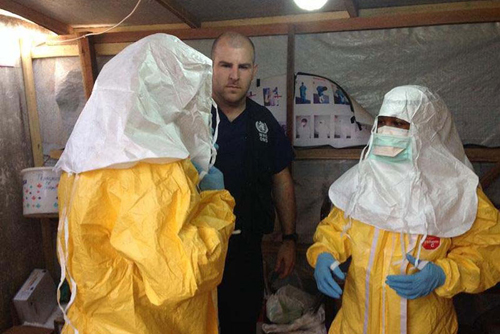
After being triaged at the emergency room, people presenting Ebola-like symptoms are directed to the Department of Infectious Disease. Conakry, Guinea. Photo: WHO/T. Jasarevic
Support Our Journalism
We cannot do without you.. your contribution supports unbiased journalism
IBNS is not driven by any ism- not wokeism, not racism, not skewed secularism, not hyper right-wing or left liberal ideals, nor by any hardline religious beliefs or hyper nationalism. We want to serve you good old objective news, as they are. We do not judge or preach. We let people decide for themselves. We only try to present factual and well-sourced news.
Support objective journalism for a small contribution.


