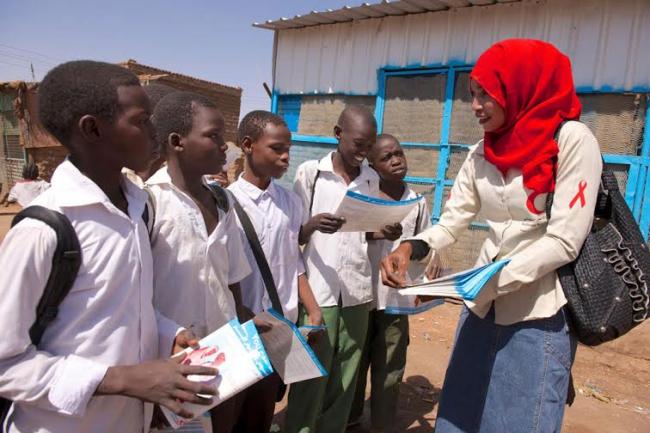
UN launches'‘All In' initiative to end adolescent AIDS
While major advances have been made in almost every area of the response to the human immunodeficiency virus, just one in four children and adolescents under the age of 15 have access to life-saving treatment. And deaths are declining in all age groups, except among 10-19 year olds, according to the UN.
“Children and young people should be the first to benefit from the progress we have made in ending the epidemic, not the last,” said UN Children's Fund (UNICEF) Executive Director Anthony Lake at the launch of a new platform for action to drive better results for adolescents by encouraging changes in policy and engaging young people in the effort.p>
The 'All In' initiative, a partnership between UNAIDS [Joint UN Programme on HIV/AIDS] and UNICEF, aims to reach adolescents with HIV services designed for their specific needs and to fast-track progress to advance global efforts to end the AIDS epidemic by 2030.
“We need to reach the adolescents we are missing and engage all young people in the effort to end adolescent AIDS. In fact, we cannot achieve the goal of an AIDS-free generation without them,” Mr. Lake stressed. More than 200 young advocates and leaders from adolescent and youth movements were present at launch of 'All In' in Nairobi today.
New HIV infections among adolescents are not declining as quickly as among other age groups. Adolescent girls are most affected. In South Africa, for example, more than 860 girls became infected with HIV every week in 2013, compared to 170 boys.
“HIV is the leading cause of death among adolescents in Africa and young women are most affected. This is a moral injustice. I am calling on young people to lead the 'All In' movement, alongside the United Nations, public and private partners, and countries themselves, to end the adolescent AIDS epidemic,” said Michel Sidibé, Executive Director of UNAIDS.
This is also a pressing issue in East Asia and the Pacific. Thailand, for example, is facing a new rise in HIV cases, especially among young people, with 70% of all sexually transmitted infections (STI) cases occurring in the 15-24 age group. New data released in 2014 showed infections have risen among groups of at-risk young people, namely those involved in sex work, those injecting drugs, and young men having unprotected sex with men.
UNICEF Thailand used this data to talk to the government about reducing the age of consent for HIV tests to below 18, providing training for health workers on working with at-risk young people, and expanding HIV education in schools. In December 2014, the official guidance on HIV tests was changed in line with these recommendations.
Meanwhile, UNAIDS has set new Fast-Track Targets to be achieved by 2020 for adolescents that include reducing new HIV infections by at least 75%, reducing AIDS-related deaths by 65% and achieving zero discrimination. Achieving these targets would put the world on track towards ending adolescent AIDS by 2030 and ending the global AIDS epidemic as a public health threat.
Most of the 2.1 million adolescents living with HIV in 2013 became infected at least 10 years ago, when their mothers were pregnant, during delivery or in the first months of life – at a time when antiretroviral medicines that can greatly reduce the possibility of HIV transmission were not available. Many were never diagnosed, fell out of treatment and care programmes.
Photo: UNICEF
Support Our Journalism
We cannot do without you.. your contribution supports unbiased journalism
IBNS is not driven by any ism- not wokeism, not racism, not skewed secularism, not hyper right-wing or left liberal ideals, nor by any hardline religious beliefs or hyper nationalism. We want to serve you good old objective news, as they are. We do not judge or preach. We let people decide for themselves. We only try to present factual and well-sourced news.
Support objective journalism for a small contribution.