October 05, 2026 11:38 am (IST)

Follow us:


UN seeks sustainable food systems to adapt climate change
New York, Apr 24 (IBNS): Countries need to shift to more sustainable food systems to adapt to the effects of climate change, the Director-General of the United Nations Food and Drug Organization (FAO) Jose Graziano da Silva told a conference in Morocco on Wednesday, warning that the phenomenon has the potential to reshape the planet's food production scenario.
"Everything we do needs to take climate change into consideration," da Silva stressed "and the time is now. We cannot afford to wait."
In an address to the seventh Forum on Agriculture in Menkes, Morocco, the Director-General asserted that climate change has reintroduced “an element of uncertainty” – after decades in which hunger was mostly caused by the inability to produce or purchase food, rather than insufficient supplies globally.
"Climate change has the potential to reconfigure the planet's food production scenario," da Silva pressed.
The world's poorest are particularly vulnerable. da Silva explained, that: "Not only do they have fewer means to react, but they also tend to live in already marginal production areas," where the impact of climate change in agricultural production is felt to an even greater extent.
FAO’s Director-General pointed to recent findings of the Intergovernmental Panel on Climate Change that reflected these concerns and called for urgent action.
Noting that the United Nations had declared 2014 the International Year of Family Farming, da Silva also underscored family farming as a tool for rural development and stability.
"By providing adequate support to family farming we can combat food insecurity by reaching out to a group that is in itself vulnerable – and by increasing food supply where we need it the most," he said.
He noted that some 500 million family farms account for about 80 per cent of the world's holdings, yet also include many of the most vulnerable families globally.
“Climate change is a challenge faced by both large, modernized family farms as well as small-scale family farmers,” he emphasized.
Family farmers make up an estimated 70 per cent of all food insecure households in rural areas of developing countries. Linking productive support to social protection would help to jumpstart local and inclusive sustainable development.
“It cuts across a broad range of development priorities, including ending hunger, supporting sustainable production, reducing rural poverty, improving food markets and building resilience,” da Silva said.
The Director-General, the Moroccan Ministers of Agriculture and Marine Fisheries and of the Economy and Finance signed an agreement to support food security projects elsewhere in Africa through the FAO South-South Cooperation programme as an innovative initiative to combine Government and private sector funds.
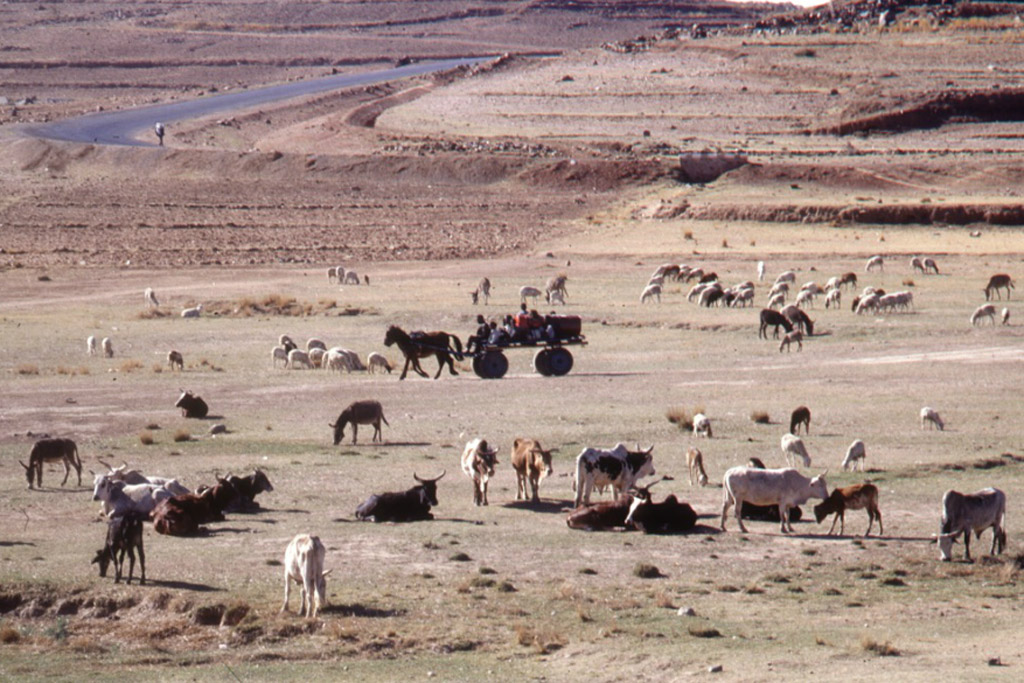
(Livestock can play an important role in both adapting to climate change and mitigating its effects on human welfare. Photo: FAO/Roberto Faidutti)
Support Our Journalism
We cannot do without you.. your contribution supports unbiased journalism
IBNS is not driven by any ism- not wokeism, not racism, not skewed secularism, not hyper right-wing or left liberal ideals, nor by any hardline religious beliefs or hyper nationalism. We want to serve you good old objective news, as they are. We do not judge or preach. We let people decide for themselves. We only try to present factual and well-sourced news.
Support objective journalism for a small contribution.



Latest Headlines
Global whale conservation in focus as India makes key pitch at IWC-70. All details here
Mon, Sep 28 2026
Nepal avalanche horror: 4 bodies recovered, 12 remain missing
Mon, Sep 28 2026
Nepal: Avalanche strikes Himlung Himal base camp, 10 feared missing
Sun, Sep 27 2026
India, Nepal, China to join hands? Balen Shah’s big Himalayan climate proposal at UNGA
Fri, Sep 25 2026
Super El Nino alert: 451,000 deaths could follow as extreme heat grips the world, warns study
Wed, Sep 23 2026