


 Flu
Flu
Universal flu vaccine: US starts clinical trial
The United States has begun the phase 1 trial of a new investigational universal influenza vaccine candidate.
The trial is taking place at the National Institutes of Health’s Clinical Center in Bethesda, Maryland.
The trial is sponsored by the National Institute of Allergy and Infectious Diseases (NIAID), part of the NIH, and will evaluate the investigational vaccine for safety and its ability to elicit an immune response.
Currently, available seasonal influenza (or “flu”) vaccines are effective at preventing specific strains of influenza. Each year, the vaccines are re-evaluated and changed to best match the strains of flu predicted to be the most dominant in the upcoming flu season.
Most seasonal flu vaccines are designed to train the immune system to defend against three or four different common strains of flu, but a “universal” influenza vaccine might someday provide protection against many more.
“An ideal universal influenza vaccine could be taken less frequently than once a year and protect against multiple strains of influenza virus. With each new universal influenza vaccine candidate and clinical trial, we take another step closer to that goal,” said Acting NIAID Director Hugh Auchincloss, M.D.
The vaccine candidate under investigation, FluMos-v2, was designed by researchers at NIAID’s Vaccine Research Center (VRC).
It is an adaptation of an earlier universal flu vaccine candidate, FluMos-v1, which began first-in-human testing in 2021 and is still undergoing trials.
FluMos-v2 is designed to induce antibodies against many different influenza virus strains by displaying part of the influenza virus hemagglutinin (HA) protein in repeating patterns on self-assembling nanoparticle scaffolds.
Exposure to these harmless fragments of virus proteins prepares the immune system to recognize and fight the actual virus. When tested in animals, the experimental vaccine resulted in robust antibody responses.
While the FluMos-v1 vaccine candidate displays HA from four strains of influenza virus, FluMos-v2 displays HA from six: four influenza A viruses and two influenza B viruses.
The researchers anticipate that this will further broaden vaccine recipients’ immunity, providing protection against a wider variety of influenza viruses.
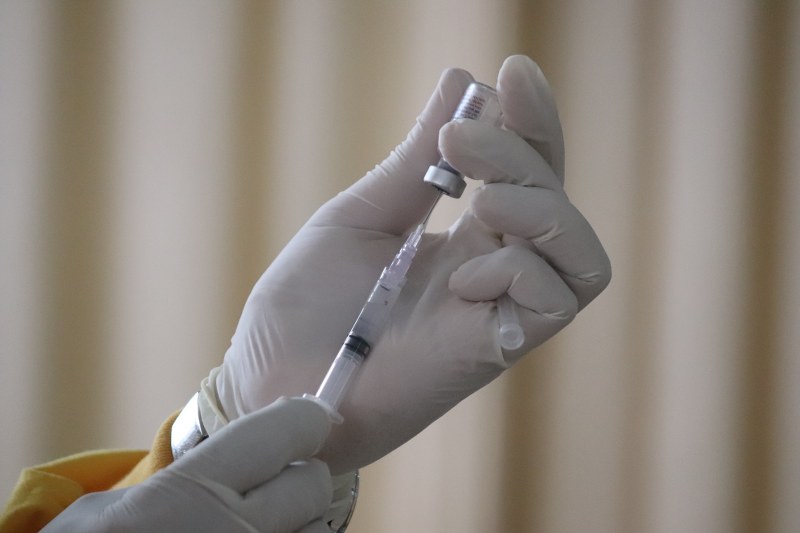
The new clinical trial is expected to enroll 24 healthy volunteers, aged 18-50 years, who will receive two intramuscular injections of the FluMos-v2 vaccine candidate.
These injections will be given 16 weeks apart. At first, participants will be enrolled in the lower dose group (60 mcg per vaccination).
If no safety concerns are identified after at least three participants have received this dose, enrollment will begin in the higher dose (180 mcg per vaccination) group. The study team plans to enroll 12 participants into each dosage group.
For 40 weeks after their first vaccination, participants will receive regular follow-up phone calls and examinations to track their responses to the experimental vaccine.
Blood samples will be taken during study visits to measure any immune responses to the vaccine candidate.
Support Our Journalism
We cannot do without you.. your contribution supports unbiased journalism
IBNS is not driven by any ism- not wokeism, not racism, not skewed secularism, not hyper right-wing or left liberal ideals, nor by any hardline religious beliefs or hyper nationalism. We want to serve you good old objective news, as they are. We do not judge or preach. We let people decide for themselves. We only try to present factual and well-sourced news.
Support objective journalism for a small contribution.


