


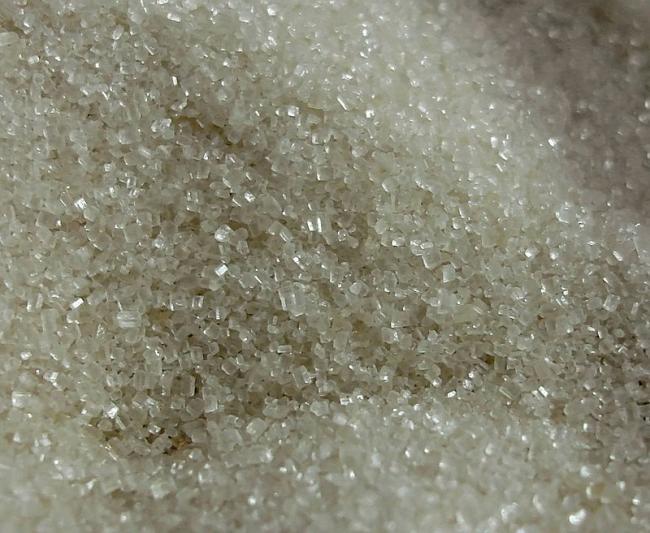
Using sugar to detect malignant tumours: Study
Malignant tumours show higher sugar consumption than surrounding tissue.
“If sugar replaces metal as a contrast agent in the body, it can also have a positive psychological effect and make patients calmer,” says
Linda Knutsson, senior lecturer at Lund University in Sweden.
A tumour’s properties can be examined by injecting a small amount of sugar into it, and then measuring how much sugar the tumour consumes. The more sugar the tumour consumes, the more malignant it is.
Linda Knutsson is working with a team from Johns Hopkins University in the USA, which has developed a new imaging technique for magnetic resonance tomography. The collaboration has resulted in the new imaging technique being combined with the testing of natural sugar as a replacement for metal in contrast agents.
There is no similar clinical research in this area. It is the first time a non-synthetic contrast agent has been used in human magnetic
resonance tomography examinations, and the results are promising.
The uptake of sugar is higher in the tumour than in healthy tissue according to the results of tests carried out by Linda Knutsson and
the Johns Hopkins team in the USA. The tests were carried out on three persons with a brain tumour and four healthy persons and published in the research journal Tomography in December last year. A more detailed study on a large group of patients is to commence soon in Lund.
“Metal-based contrast agents cost more than sugar-based agents. Accordingly, this could lead to a reduction in medical care costs,” says Linda Knutsson.
A disadvantage is that sugar-based contrast agents cannot be used in examinations of diabetes patients.
Image: Wikimedia Commons
Support Our Journalism
We cannot do without you.. your contribution supports unbiased journalism
IBNS is not driven by any ism- not wokeism, not racism, not skewed secularism, not hyper right-wing or left liberal ideals, nor by any hardline religious beliefs or hyper nationalism. We want to serve you good old objective news, as they are. We do not judge or preach. We let people decide for themselves. We only try to present factual and well-sourced news.
Support objective journalism for a small contribution.


