


 Vaccine Inequality
Vaccine inequity causes ‘dangerous divergence’ in COVID survival rates – UN agency heads
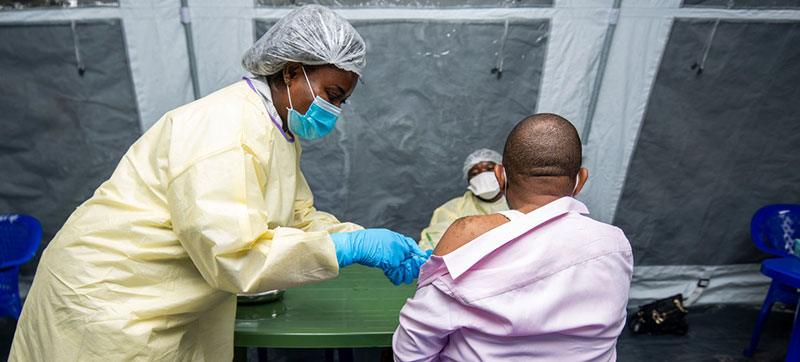
New York: The global rollout of COVID-19 vaccines is progressing at “two alarmingly different speeds”, UN agency leaders said in a statement on Friday, noting that less than two per cent of adults are fully vaccinated in most low-income countries compared to almost 50 per cent in high-‑income nations.
The heads of the International Monetary Fund (IMF), World Bank, World Health Organization (WHO) and World Trade Organization (WTO) met with the leaders of the African Vaccine Acquisition Trust (AVAT), Africa CDC, Gavi and UNICEF to rapidly scale-up vaccines in low- and lower middle-income countries, particularly in Africa.
“These countries, the majority of which are in Africa, simply cannot access sufficient vaccine to meet even the global goals of 10 per cent coverage in all countries by September and 40 per cent by end 2021, let alone the African Union’s goal of 70 per cent in 2022”, the UN officials said.
Vaccine inequity
A crisis of vaccine inequity is driving a “dangerous divergence” in COVID-19 survival rates and in the global economy, the agency heads stated, expressing gratitude for “the important work” of AVAT and COVAX in trying to address the “unacceptable situation”.
However, they warned, “effectively tackling this acute vaccine supply shortage in low- and lower middle-income countries, and fully enabling AVAT and COVAX, requires the urgent cooperation of vaccine manufacturers, vaccine-producing countries, and countries that have already achieved high vaccination rates”.
Reaching targets
To ensure that all countries achieve the global goals of at least 10 per cent coverage by September, and 40 per cent by the end of the year, the top UN Officials called on countries that have contracted high volumes of vaccines to “swap near-term delivery schedules with COVAX and AVAT”.
They also advised vaccine manufacturers to “immediately prioritize and fulfill” their contracts to COVAX and AVAT, and to provide regular, clear supply forecasts.
Moreover, the UN agency chiefs urged G7 industrialized nations and all dose-sharing countries to “fulfill their pledges urgently” with enhanced pipeline visibility, product shelf life and support for ancillary supplies – as barely 10 per cent of the nearly 900 million committed doses have yet to be shipped.
“We call on all countries to eliminate export restrictions and any other trade barriers on COVID-19 vaccines and the inputs involved in their production”, the statement continued.
World’s health ‘at stake’
In parallel, the UN agencies are intensifying their work with COVAX and AVAT to tackle persistent vaccine delivery, manufacturing and trade issues, notably in Africa.
They are mobilizing grants and concessional financing to support this work.
“We will also explore financing mechanisms to cover future vaccine needs as requested by AVAT…[and] advocate for better supply forecasts and investments to increase country preparedness and absorptive capacity”, they assured.
The UN agency heads upheld that they would also continue to enhance data, identify gaps and improve transparency in the supply and use of all COVID-19 tools.
“The time for action is now. The course of the pandemic – and the health of the world – are at stake”, the statement concluded.
Support Our Journalism
We cannot do without you.. your contribution supports unbiased journalism
IBNS is not driven by any ism- not wokeism, not racism, not skewed secularism, not hyper right-wing or left liberal ideals, nor by any hardline religious beliefs or hyper nationalism. We want to serve you good old objective news, as they are. We do not judge or preach. We let people decide for themselves. We only try to present factual and well-sourced news.
Support objective journalism for a small contribution.


