October 05, 2026 07:54 am (IST)

Follow us:


West Africa: UN provides information to curb spread of Ebola
New York, Apr 11 (IBNS): Together with Ministries of Health and other partners across seven countries in West Africa, the United Nations Children's Fund (UNICEF) is using culturally-sensitive communication strategies to disseminate life-saving information in order to contain the often-fatal Ebola virus, through text-messaging, radio shows, TV programmes and door-to-door campaigns.
“Most of the people in this part of the world had never heard of Ebola before,” said Dr. Guido Borghese, UNICEF’s Principal Advisor Child Survival and Development for West and Central Africa.
“In this environment, unfounded fears and rumours spread quickly and widely. More than ever, it is crucial that families have both the means and the right information to protect themselves and prevent dangerous misunderstandings.”
In collaboration with partners such as the Red Cross and the UN World Health Organization (WHO), UNICEF mass and digital media, as well as inter-personal communication activities, are being carried out to prevent people from contracting the virus, particularly in mosques, churches, schools, health centres and markets.
These “information blasts” are being implemented in Guinea, Liberia, Sierra Leone, Cote d'Ivoire, Senegal, Mali and Guinea-Bissau, where UNICEF is also providing critical prevention supplies, such as soap, chlorine, and gloves to the people in affected communities.
Radio dramas, print materials, TV shows, and even voice messages are automatically sent to mobile phones – we use every appropriate means of communication to reach more people, spread the word in local languages and save lives,” explained Dr. Borghese, as he stressed that “we are running against time to avoid further spread in West Africa.”
The region is facing its first major Ebola outbreak. The disease, which has no vaccine and no cure, has already claimed 111 lives in Guinea and neighbouring Liberia as of 8 April. In total, a growing number of 178 suspected, probable and confirmed cases has been reported in Guinea and Liberia, as well as six suspected cases in Mali.
“Ebola kills people; but more lives are put at risk because of lack of information or misinformation though rumours,” stressed Borghese. “There is no existing vaccine against Ebola. Bringing patients with suspected symptoms to health centres as soon as possible increases their chances of survival and prevents other people from getting infected.”
In order to provide disinfectant products, essential medicines, life-saving supplies, and communication support, UNICEF is urgently appealing for USD 1.2 million for Guinea and almost USD 1.3 million for neighbouring countries including Liberia, Sierra Leone, Senegal, Guinea Bissau and Mali.
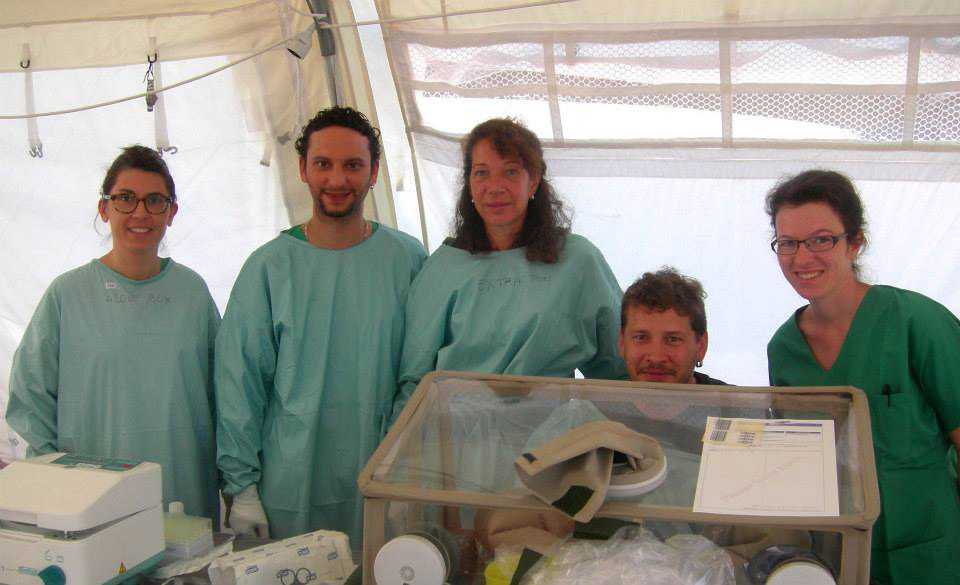
(Experts from the European Union Mobile Laboratory (EMLab) ready to support Ebola samples testings in Guéckédou, Guinea. Photo: WHO/S. Hugonnet)
Support Our Journalism
We cannot do without you.. your contribution supports unbiased journalism
IBNS is not driven by any ism- not wokeism, not racism, not skewed secularism, not hyper right-wing or left liberal ideals, nor by any hardline religious beliefs or hyper nationalism. We want to serve you good old objective news, as they are. We do not judge or preach. We let people decide for themselves. We only try to present factual and well-sourced news.
Support objective journalism for a small contribution.



Latest Headlines
Life expectancy is rising again after COVID-19 shock: WHO reveals global health comeback
Sat, Oct 03 2026
From physiotherapy to AI, robotics: MRCCon 2026 highlights how medical rehabilitation has transformed in 27 years
Fri, Oct 02 2026
Study finds chewing tobacco linked to 2.5 lakh deaths worldwide; India among worst-affected countries
Fri, Oct 02 2026
Kolkata's Desun Hospital's Cardio Care Walkathon daws 200 participants on World Heart Day
Fri, Oct 02 2026
Insomnia is more than just sleepless nights: Study finds higher stroke, dementia risk
Tue, Sep 29 2026
Manipal Hospital Dhakuria hosts ‘Heart of Innovation Cardiac Summit’ ahead of World Heart Day
Mon, Sep 28 2026
Eating with your partner could lower blood sugar spikes, study finds
Sun, Sep 27 2026