


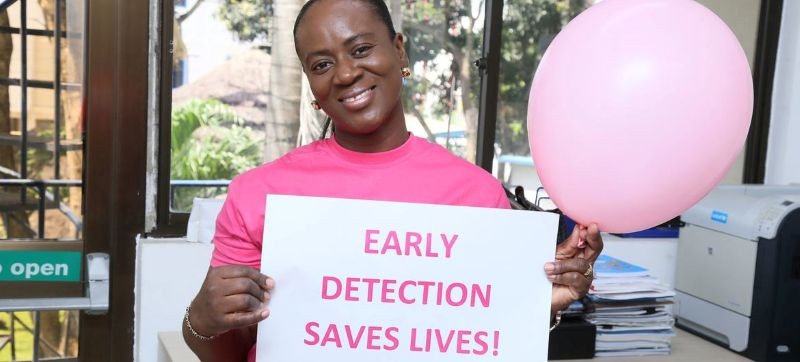
 Breast Cancer
WHO alerts Breast cancer cases projected to rise by nearly 40 per cent by 2050
Breast cancer cases are expected to increase by 38 percent globally by 2050, with annual deaths from the disease projected to rise by 68 percent, according to a new report from the International Agency for Research on Cancer (IARC), a specialised branch of the World Health Organization (WHO).
The findings, published in Nature Medicine on Monday, warn that if current trends continue, the world will see 3.2 million new breast cancer cases and 1.1 million related deaths each year by mid-century.
The burden will be disproportionately felt in low- and middle-income countries, where access to early detection, treatment and care remains limited.
“Every minute, four women are diagnosed with breast cancer worldwide and one woman dies from the disease, and these statistics are worsening,” said Dr. Joanne Kim, an IARC scientist and co-author of the report.
“Countries can mitigate or reverse these trends by adopting primary prevention policies, such as WHO’s recommended ‘best buys’ for noncommunicable disease prevention, and by investing in early detection and treatment,” she explained.
A growing global burden
Breast cancer remains the most common cancer among women worldwide and the second most common cancer overall.
In 2022 alone, an estimated 2.3 million new cases were diagnosed, with 670,000 deaths reported. However, the report highlights significant disparities across regions.
The highest incidence rates were recorded in Australia, New Zealand, North America and Northern Europe, while the lowest rates were found in South-Central Asia and parts of Africa.
Meanwhile, the highest mortality rates were reported in Melanesia, Polynesia and Western Africa, where limited access to healthcare contributes to poorer outcomes.
The link between breast cancer survival and economic development is stark: in high-income countries, 83 percent of diagnosed women survive, whereas in low-income countries, more than half of women diagnosed with breast cancer die from it.
Urgent need for action
The WHO launched the Global Breast Cancer Initiative in 2021, aiming to reduce breast cancer mortality rates by 2.5 per cent per year, which could prevent 2.5 million deaths by 2040.
The initiative focuses on early detection, timely diagnosis and access to quality treatment.
Dr. Isabelle Soerjomataram, Deputy Head of IARC’s Cancer Surveillance Branch, emphasised the need for high-quality cancer data to drive better policies in lower-income regions.
“Continued progress in early diagnosis and improved access to treatment are essential to address the global gap in breast cancer and ensure that the goal of reducing suffering and death from breast cancer is achieved by all countries worldwide,” she said.
The path forward
The report underscores the importance of stronger health systems, increased funding for breast cancer screening and treatment, and the adoption of cost-effective prevention policies.
With the projected rise in cases and deaths, the international community faces an urgent challenge – one that requires coordinated action to ensure millions of lives are not lost to a disease that is increasingly preventable and treatable.
Support Our Journalism
We cannot do without you.. your contribution supports unbiased journalism
IBNS is not driven by any ism- not wokeism, not racism, not skewed secularism, not hyper right-wing or left liberal ideals, nor by any hardline religious beliefs or hyper nationalism. We want to serve you good old objective news, as they are. We do not judge or preach. We let people decide for themselves. We only try to present factual and well-sourced news.
Support objective journalism for a small contribution.


