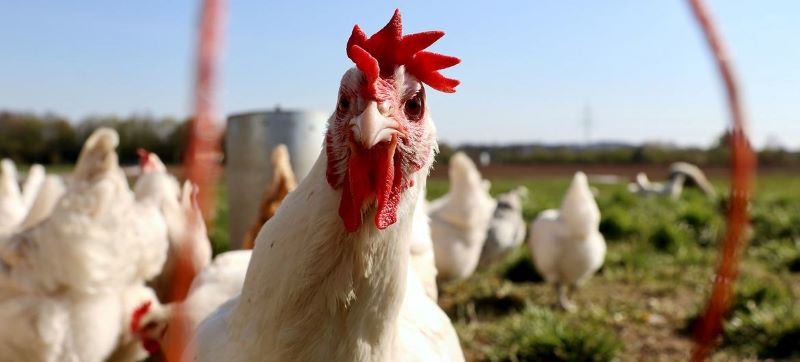
 H5N1 bird flu
WHO chief confirms there is no sign yet of H5N1 bird flu spreading between humans
The H5N1 avian influenza virus has so far shown no signs of adapting to allow human-to-human transmission, the UN health agency said on Wednesday, urging continued surveillance.
So far, one human case has been reported in the United States since the outbreak of bird flu among the millions of dairy cattle across the country. At least 220 people are subject to monitoring and at least 30 have been tested.
“However, many more people have been exposed to infected animals, and it is important that all those exposed are tested or monitored and receive care if needed,” Tedros Adhanom Ghebreyesus, Director-General of the UN World Health Organization (WHO), said at his regular press briefing.
“So far, the virus does not show signs of having adapted to spread among humans, but more surveillance is needed,” he urged.
Pasteurisation kills the virus
The WHO chief also said that though the virus has been detected in raw milk in the US, “preliminary tests show that pasteurisation kills the virus”.
“WHO’s standing advice in all countries is that people should consume pasteurised milk,” he highlighted.
Pasteurisation is a heat treatment process for milk that reduces the numbers of possible pathogenic microorganisms to levels at which they do not represent a significant health hazard. It also extends the usable life of milk.
Public health risk ‘low’
Tedros also noted that based on the available information, WHO continues to assess the public health risk posed by H5N1 avian influenza to be low and low-to-moderate for people exposed to infected animals.
He added that the agency has a system for monitoring influenza globally through a network of centres in 130 countries, seven collaborating centres and 12 reference laboratories with the capacities and biosafety requirements to deal with H5 viruses.
“We also have the Pandemic Influenza Preparedness Framework to support the rapid development and equitable distribution of vaccines in case of an influenza pandemic,” he said.
H5N1 spread
In recent years, H5N1 has spread widely among wild birds, poultry, land and marine mammals and now among dairy cattle.
Since 2021, there have been 28 reported cases in humans, although no human-to-human transmission has been documented.
The outbreak in the United States has so far infected 36 dairy herds in nine states.
Support Our Journalism
We cannot do without you.. your contribution supports unbiased journalism
IBNS is not driven by any ism- not wokeism, not racism, not skewed secularism, not hyper right-wing or left liberal ideals, nor by any hardline religious beliefs or hyper nationalism. We want to serve you good old objective news, as they are. We do not judge or preach. We let people decide for themselves. We only try to present factual and well-sourced news.
Support objective journalism for a small contribution.