


WHO sparks confusion saying asymptomatic Covid-19 spread 'very rare', backtracks later
Geneva/IBNS: The World Health Organisation (WHO) on Tuesday clarified its comment that coronavirus transmission from asymptomatic individuals is "very rare" after the same created confusion among the people and contradicted United States' Centers for Disease Control and Prevention (CDC) guideline.
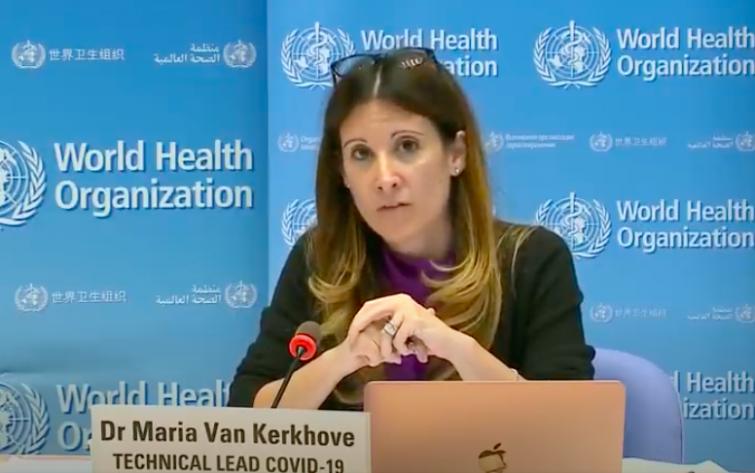
WHO official Maria Van Kerkhove clarified Tuesday she was only responding to a question from the press with reference to a small subset of studies.
"I was responding to a question at the press conference. I wasn’t stating a policy of WHO or anything like that. I was just trying to articulate what we know,” she said during a live Q&A streamed across multiple social media platforms.
The WHO official also regretted using the phrase 'very rare' and said the issue of asymptomatic spread is a “really complex question.”
“And in that, I used the phrase ‘very rare,’ and I think that that’s misunderstanding to state that asymptomatic transmission globally is very rare. I was referring to a small subset of studies," said the official of WHO, an organisation pilloried since the outbreak of Covid-19 for its failure to alert on time the world about the contagion that originated from China.
US President Donald Trump also last month end announced to withdraw from the WHO, a UN body, but since the outbreak of Covid-19 facing criticism for being driven by China.
Earlier on Monday, her remark about 'very rare' chance of transmission from asymptomatic individuals created a lot of confusion worldwide at the time when WHO itself stated that the global situation owing to the coronavirus pandemic is "worsening."
Speaking at a press conference at Geneva headquarters, Kerkhove on Monday said: "These individuals who are asymptomatic or with mild symptoms need to be followed carefully. From the data we have, it still seems to be rare that an asymptomatic person actually transmits onward to a secondary individual.”
She had in fact added, "It’s very rare.”
On Tuesday, she clarified that studies showed about 16% of the population may be asymptomatic and that some models developed by other scientists suggest as much as 40% of global transmission may be due to asymptomatic individuals.
“Some estimates of around 40% of transmission may be due to asymptomatic, but those are from models, so I didn’t include that in my answer yesterday, but wanted to make sure that I covered that here,” Kerkhove said.
On the other hand, WHO chief Tedros Adhanom Ghebreyesus on Monday said: "Although the situation in Europe is improving, globally it is worsening."
"More than 100,000 cases have been reported on 9 of the past 10 days. Yesterday, more than 136,000 cases were reported, the most in a single day so far," he had said.
He said almost 75% of yesterday’s cases come from 10 countries, mostly in the Americas and South Asia.
At present, the deadly virus, which had an outbreak in China's Wuhan last December, affected 7,164,393 people across 188 countries and claimed the lives of 407,818.
Support Our Journalism
We cannot do without you.. your contribution supports unbiased journalism
IBNS is not driven by any ism- not wokeism, not racism, not skewed secularism, not hyper right-wing or left liberal ideals, nor by any hardline religious beliefs or hyper nationalism. We want to serve you good old objective news, as they are. We do not judge or preach. We let people decide for themselves. We only try to present factual and well-sourced news.
Support objective journalism for a small contribution.


