


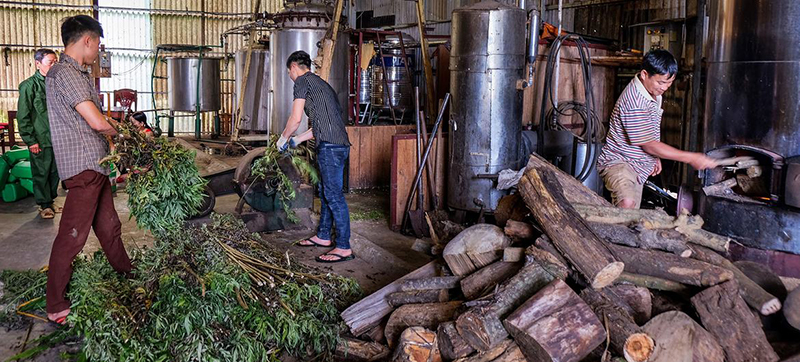
 Traditional Medicines
WHO summit aims to unlock power of traditional medicine through science
New York: The first global Traditional Medicine Summit convened by UN health agency WHO, got underway this week in the Indian city of Gandhinagar focused on sharing evidence and best practices in this field.
Speaking at the event on Thursday, WHO Director-General Tedros Adhanom Ghebreyesus underscored the “enormous” contributions of traditional medicine to human health and its understanding of the “intimate links” between health and the environment.
Tedros stressed the importance of the gathering for “bringing together ancient wisdom and modern science for the health and well-being of people and planet”.
Echoing his words, the Director-General of the World Trade Organization (WTO), Ngozi Okonjo-Iweala said that traditional medicine is not opposed to modern medicine, but rather complementary.
Tweet URL
Ancient roots of modern medicine
Recalling that traditional medicine was “as old as humanity itself”, the WHO chief noted that many modern drugs trace their roots to ancient healing practices.
He gave the example of bark from the willow tree, used by Sumerians and Egyptians as a pain reliever and an anti-inflammatory over 3,500 years ago. “Then in 1897, the chemist Felix Hoffmann synthesized aspirin and the drug has gone on to improve, and save, the lives of millions of people every day,” Tedros said.
He also cited a 1971 breakthrough for malaria remedies, when China’s Tu Youyou read about the use of sweet wormwood to treat fevers in traditional Chinese medical literature. This led her team to isolate the compound artemisinin, which has become the “backbone” of malaria treatment.
‘Growing demand’
The WHO Director-General insisted that far from being a thing of the past, traditional medicine is the object of growing demand worldwide. He highlighted its importance for mental health, healthy aging, and preventing and treating non-communicable diseases.
“This is not a new area for WHO”, he said, recalling that back in 2014, the organisation’s Member States approved the first global ten-year strategy for traditional medicine, adding that a new strategy will be developed by 2025.
Integrate traditional medicine
Through the summit - and the WHO Global Centre for Traditional Medicine launched in the Indian city of Jamnagar last year - the UN agency has been working to “inform policies, standards and regulations for the safe, cost-effective, and equitable use” of traditional remedies, Tedros said.
He urged countries to examine how best to incorporate traditional and complementary medicine into their health systems and “unlock [its] power through science and innovation”.
The WHO chief said that the Gujarat Declaration, which is expected to be adopted by the end of the summit, has the potential to enhance the “appropriate integration” of traditional medicine into states’ healthcare services.
‘Scientific validation’
WHO wrote on the social platform X that their work aimed to bring evidence and scientific validation around traditional medicine so that millions of people around the world who use it “understand whether it’s safe and effective and are better protected”.
“When scientifically validated, traditional medicine has the potential to bridge [healthcare] access gaps for millions around the world,” the agency said.
Support Our Journalism
We cannot do without you.. your contribution supports unbiased journalism
IBNS is not driven by any ism- not wokeism, not racism, not skewed secularism, not hyper right-wing or left liberal ideals, nor by any hardline religious beliefs or hyper nationalism. We want to serve you good old objective news, as they are. We do not judge or preach. We let people decide for themselves. We only try to present factual and well-sourced news.
Support objective journalism for a small contribution.


