


 Immunization
World Immunization Week sees ‘big catch-up’ to get vaccines back on track
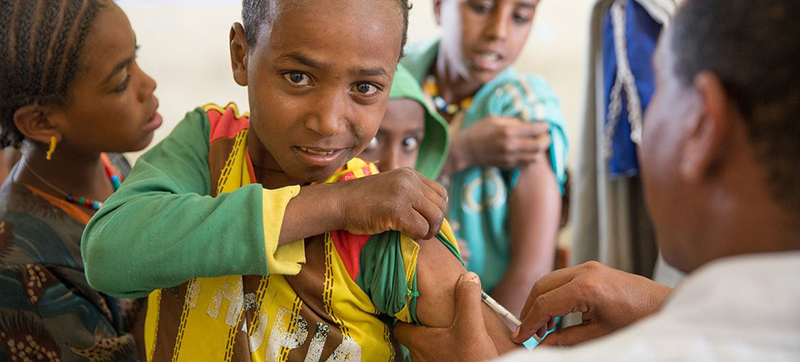
New York: The COVID-19 pandemic caused millions of children to miss out on routine vaccines and countries must act now to restore essential immunization coverage to a least 2019 levels, UN health agency WHO said on Monday, marking the start of World Immunization Week.
Under the banner of ‘The Big Catch-Up’, WHO – the World Health Organization - and partners will support countries to get back on track so that more children and adults are protected from preventable diseases.
WHO
The pandemic saw essential immunization levels decrease in over 100 countries, leading to rising outbreaks of measles, diphtheria, polio and yellow fever. An estimated 25 million children missed out on vaccination in 2021 alone.
Multiple factors
The decline in immunization was fuelled by factors that included overburdened health services, closed clinics, and disruptions in the import and export of medical supplies such as syringes and vials.
At the same time, communities and families experienced lockdowns, which restricted travel and access to health services, while financial and human resources were limited as governments responded to the emergency. WHO also pointed to other contributing factors such as conflicts, climate crises and vaccine hesitancy.
World Immunization Week runs through Sunday, and WHO has joined forces with the UN Children’s Fund (UNICEF); Gavi, the Vaccine Alliance, the Bill & Melinda Gates Foundation, and many other global and international partners.
Strengthening services
They are working with countries to strengthen healthcare workforces, improve health service delivery, build trust and demand for vaccines within communities, and address gaps and obstacles to restoring immunization
The ultimate goal is to ensure more children, adults, and their communities, are protected from vaccine-preventable diseases, allowing them to live happier, healthier lives.
Top 20 at risk
Particular focus will be given to the 20 countries that are home to three quarters of the children who missed vaccinations in 2021, which include Afghanistan, the Democratic People’s Republic of Korea, the Democratic Republic of the Congo, Ethiopia, India, Pakistan, Somalia and Myanmar.
WHO is also using the week to highlight successful vaccination campaigns underway in several countries, as well as some “bright spots of resilience”, such as India, which saw a strong recovery in essential immunization last year, according to initial reports. Uganda also maintained high coverage levels during the pandemic.
Looming risks: UNICEF chief
Catherine Russell, the UNICEF Executive Director, underscored the need to unite to strengthen services, build trust and save lives.
“Routine vaccines are typically a child’s first entry into their health system and so children who miss out on their early vaccines are at added risk of being cut out of health care in the long run,” she said.
“The longer we wait to reach and vaccinate these children, the more vulnerable they become and the greater the risk of more deadly disease outbreaks.”
Support Our Journalism
We cannot do without you.. your contribution supports unbiased journalism
IBNS is not driven by any ism- not wokeism, not racism, not skewed secularism, not hyper right-wing or left liberal ideals, nor by any hardline religious beliefs or hyper nationalism. We want to serve you good old objective news, as they are. We do not judge or preach. We let people decide for themselves. We only try to present factual and well-sourced news.
Support objective journalism for a small contribution.


