October 05, 2026 10:55 am (IST)

Follow us:


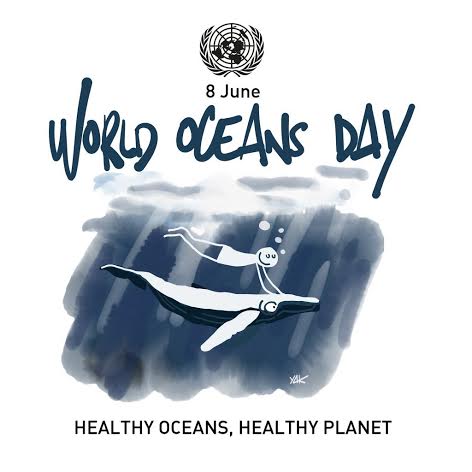
World Oceans Day 2016 focuses on preventing plastic pollution
New Delhi, Jun 8 (IBNS): To emphasise on the importance of oceans in our lives, the United Nations has selected "Healthy Oceans, Healthy Planet" as the theme for the World Oceans Day which is being celebrated across the globe on Wednesday.
UN Secretary-General Ban Ki-moon said, “Urgent action on a global scale is needed to alleviate the world’s oceans from the many pressures they face, and to protect them from future dangers that may tip them beyond the limits of their carrying capacity.”
One of the biggest threats to the ocean is plastic pollution.
According to the UN website,"Plastic pollution is a serious threat because it degrades very slowly, polluting waterways for a very long time. In addition, plastic pollution impacts the health of aquatic animals because animals including zooplankton mistake the microbeads for food. Scientists also fear health impacts for humans."
According to the UN website,"Plastic pollution is a serious threat because it degrades very slowly, polluting waterways for a very long time. In addition, plastic pollution impacts the health of aquatic animals because animals including zooplankton mistake the microbeads for food. Scientists also fear health impacts for humans."
Careful management of this essential global resource is a key feature of a sustainable future.
The Indo-US joint statement issued following the meeting between Indian Prime Minister Narendra Modi and United States President Barack Obama on June 7, also referred to the need to work together to combat marine pollution.
The statement said, "The leaders look forward to India’s participation at the September 2016 Our Ocean Conference in Washington, D.C. as well as holding of the first India-U.S. Oceans Dialogue later this year, to strengthen cooperation in marine science, ocean energy, managing and protecting ocean biodiversity, marine pollution, and sustainable use of ocean resources."
The concept of a 'World Oceans Day' was first proposed in 1992 at the Earth Summit in Rio de Janeiro to celebrate the world’s shared ocean and our personal connection to the sea, as well as to raise awareness about the crucial role the ocean plays in our lives and the important ways people can help protect it.
World Oceans Day is observed on June 8 every year since 2008.
The Indian Ocean, named after India, is said to be the third largest ocean in the world.
Some interesting facts:
- Oceans cover three quarters of the Earth’s surface, contain 97 per cent of the Earth’s water, and represent 99 per cent of the living space on the planet by volume.
- Over three billion people depend on marine and coastal biodiversity for their livelihoods.
- Globally, the market value of marine and coastal resources and industries is estimated at $3 trillion per year or about 5 per cent of global GDP.
- Oceans contain nearly 200,000 identified species, but actual numbers may lie in the millions.
- Oceans absorb about 30 per cent of carbon dioxide produced by humans, buffering the impacts of global warming.
- Oceans serve as the world’s largest source of protein, with more than 2.6 billion people depending on the oceans as their primary source of protein.
- Marine fisheries directly or indirectly employ over 200 million people.
- Subsidies for fishing are contributing to the rapid depletion of many fish species and are preventing efforts to save and restore global fisheries and related jobs, causing ocean fisheries to generate US$ 50 billion less per year than they could.
- As much as 40 per cent of the world oceans are heavily affected by human activities, including pollution, depleted fisheries, and loss of coastal habitats.
#World Oceans Day
# Healthy Oceans Healthy Planet
# plastic pollution
# Indian Ocean
# United nations
Support Our Journalism
We cannot do without you.. your contribution supports unbiased journalism
IBNS is not driven by any ism- not wokeism, not racism, not skewed secularism, not hyper right-wing or left liberal ideals, nor by any hardline religious beliefs or hyper nationalism. We want to serve you good old objective news, as they are. We do not judge or preach. We let people decide for themselves. We only try to present factual and well-sourced news.
Support objective journalism for a small contribution.



Latest Headlines
Global whale conservation in focus as India makes key pitch at IWC-70. All details here
Mon, Sep 28 2026
Nepal avalanche horror: 4 bodies recovered, 12 remain missing
Mon, Sep 28 2026
Nepal: Avalanche strikes Himlung Himal base camp, 10 feared missing
Sun, Sep 27 2026
India, Nepal, China to join hands? Balen Shah’s big Himalayan climate proposal at UNGA
Fri, Sep 25 2026
Super El Nino alert: 451,000 deaths could follow as extreme heat grips the world, warns study
Wed, Sep 23 2026