


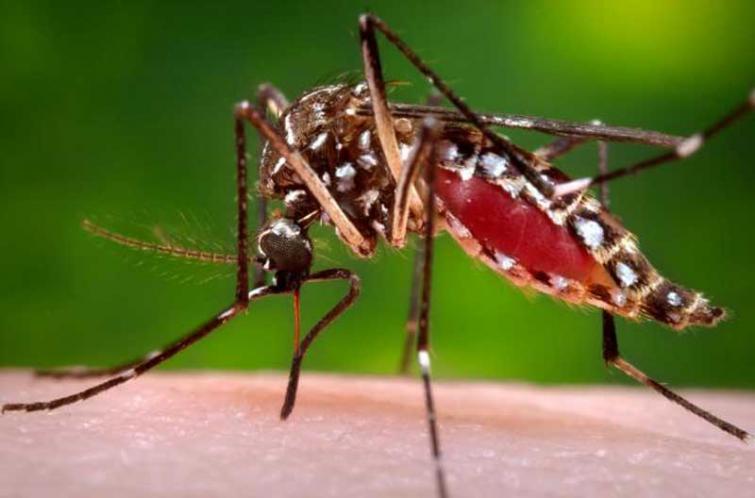
Zika virus causes delayed childhood neurodevelopment: international study
Beijing, Jul 9 (Xinhua/UNI) An international study has shown that the Zika virus may lead to delayed childhood neurodevelopment and impairment in children's vision and hearing, China Science Daily reported on Tuesday.
The study was jointly conducted by the University of California, Los Angeles, the Institute of Genetics and Developmental Biology under the Chinese Academy of Sciences as well as other institutions.
Researchers tracked the development of 216 babies born to women who contracted the Zika virus in Rio de Janeiro, Brazil during the 2015-2016 Zika epidemic. The study was published in the journal Nature Medicine.
Researchers conducted neurodevelopment questionnaires and neurological examinations. They also performed eye exams and hearing assessments for those children.
Results showed that about 31.5 percent of the children aged between 7 and 32 months old have seen delayed neurodevelopment or impaired vision and hearing. Language function was most affected, with 35 percent of 146 children below average.
The impact of the Zika virus on neurodevelopment has been confirmed through animal tests. Further research will be conducted to find if early intervention may improve the neurodevelopment of fetus that is exposed to the Zika virus in the uterus, according to the report.
Support Our Journalism
We cannot do without you.. your contribution supports unbiased journalism
IBNS is not driven by any ism- not wokeism, not racism, not skewed secularism, not hyper right-wing or left liberal ideals, nor by any hardline religious beliefs or hyper nationalism. We want to serve you good old objective news, as they are. We do not judge or preach. We let people decide for themselves. We only try to present factual and well-sourced news.
Support objective journalism for a small contribution.


