Euthanasia: Time of My Life
After a lot of furore, followed with debates and discussions, on euthanasia, Canada has finally passed its royal assent on bill C-14, its medical assisted dying legislation.
This legislation now enables people with grievous and irremediable medical conditions to commit medically assisted suicide. However, factions of the society are still debating the validity of the bill as it does not grant mercy killing to all irremediable conditions.
A Toronto based organization started a campaign called Project Value, featuring stories of people who are disabled by the incurable problem of spinal muscular atrophy (SMA).
It is in response to the ongoing doctor assisted dying debate and the case of 25-year-old, Julia Lamb, the British Columbian woman with SMA who is fighting for the right to die.
Julia: Right to die should be for people with SMA
Julia has been under a wheel chair assisted life since she was six. Despite her illness she had a full childhood, an adolescence, and is now working part time as a marketing assistant.
"As I look back at all I have accomplished … I feel a strong sense to forge ahead, but I can't ignore the progression of my disease," she said.
"I am terrified that I could be trapped in a state of physical and mental suffering that could last for months, years or even decades. Having to think about this future causes me immense physical distress."
Lamb said she presently requires personal care to get her basic errands done, be it a shower or to turn over in the bed. “If my suffering becomes intolerable, I would like to be able to make a final choice about how much suffering to endure," Lamb said.
Grace Pastine, litigation director of British Columbia Civil Liberties Association (BCCLA), who is also working for Lamb’s case explains, “This legislation is clearly unconstitutional. It deliberately excludes a class of Canadians — those who are suffering with no immediate end in sight. How can we turn away and ignore their pleas?"
Disability is not a disease
While Lamb pleas for medical assisted dying to relieve people like her from the pain associated with SMA, Ing Wong Ward, advocates for life instead. “We seem to be portrayed as people who are on the verge of death. But I am certainly not thinking about my death.”
Wong Ward was born with SMA and she wheels around on her motorized wheel chair. Although the disease is incurable and slowly degenerates one’s mobility completely, yet Ward doesn’t want to look at it with mercy.
"Ultimately, I am more than what you see physically," said Wong-Ward. "I'm a mother, I have an eight-year-old daughter, I'm a wife. I'm part of the leadership team of a large disabilities resources organization."
Tracy Odell, another SMA affected person too advocates for the positivity of life. “I was born witrh SMA but still I did everything in life. I worked full time from the moment I graduated from York University until the present day. With my husband David we brought two girls into the world, and so far, have yielded one dancing granddaughter. I live independently with dignity because of community based attendant services.”
She questions, “If I wanted help to die, would you do it because you think my disability is a tragedy? Or would you see that my life has value and talk me out of it?” She further asks the society, “Why are we so eager to help people with disabilities to die when there is still so much living to do?”
Project Value aims for positive life
While many still debate about people with terminal disabilities be granted the right to die or not, #Project Value is a movement that supports people with disabilities and kindles a ray of hope among them.
On the Facebook page of the organization, they state their work is, “to explore a different perspective [that] contradicts the narrative disability is a fate worse than death.”
While Pastine from BCCLA thinks, “The new legislation will have the perverse effect of forcing seriously ill Canadians to resort to violent methods or the 'back alley.” Project Value is highlighting real life stories of several SMA affected people and their happy lives.
As the bill was released under a strict deadline, due to the rising debates, the government promised there will be further studies and possible amendments. Canada is now at par with Belgium, the Netherlands and the states of Oregon, Washington, Montana and Vermont in favouring the doctor assisted dying.
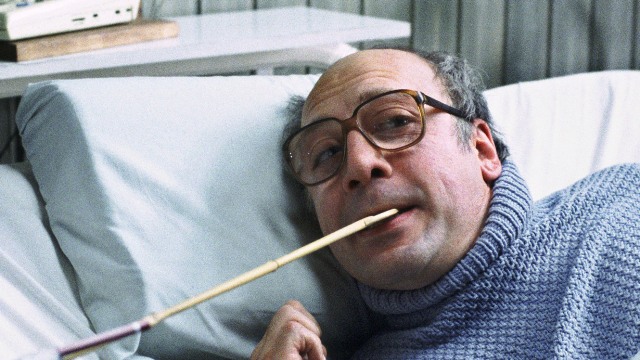
Image: A scene from the 2004 Spanish film The Sea Inside based on the real-life story of Ramón Sampedro (played by Javier Bardem), who was left quadriplegic after a diving accident, and his 28-year campaign in support of euthanasia and the right to end his life.
Support Our Journalism
We cannot do without you.. your contribution supports unbiased journalism
IBNS is not driven by any ism- not wokeism, not racism, not skewed secularism, not hyper right-wing or left liberal ideals, nor by any hardline religious beliefs or hyper nationalism. We want to serve you good old objective news, as they are. We do not judge or preach. We let people decide for themselves. We only try to present factual and well-sourced news.
Support objective journalism for a small contribution.