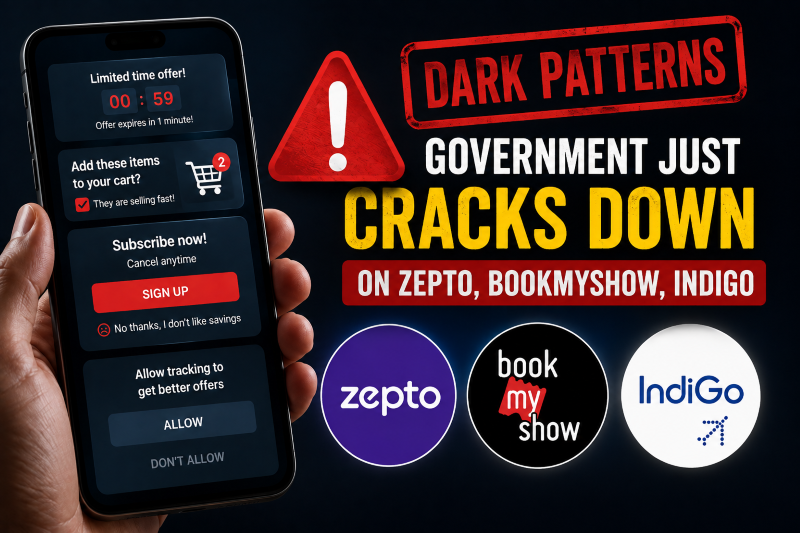
 Dark Patterns
Explained: What are 'Dark Patterns' that landed Zepto, BookMyShow, IndiGo in trouble?
New Delhi/IBNS: The Central Consumer Protection Authority (CCPA) has imposed penalties on nine digital platforms, including Zepto, BookMyShow and IndiGo, for using "dark patterns"—deceptive design techniques that manipulate users into making choices they might not otherwise make.
The government has also informed the Rajya Sabha about the penal action taken against the platforms.
What are dark patterns?
Dark patterns are deceptive user interface designs used on websites, apps or digital services to influence users into making decisions that primarily benefit the platform rather than the consumer.
These practices are designed to mislead, confuse or pressure users into actions such as making unintended purchases, subscribing to services or sharing personal information.
Government's crackdown
The Centre has intensified its efforts to curb the use of dark patterns to ensure that digital platforms offer consumers transparent, informed and freely made choices instead of influencing them through misleading interface designs.
In June 2026, the Reserve Bank of India (RBI) prohibited banks and lenders from using dark patterns across websites, mobile applications and other sales channels.
The RBI's new rules mandate explicit customer consent, clearer disclosures and periodic audits of digital interfaces, with implementation scheduled to begin in 2027.
Common examples of dark patterns
Some of the most common dark patterns include:
- Hidden costs: Additional charges are revealed only at the final stage of checkout.
- Basket sneaking: Extra products or services are automatically added to a user's cart without explicit consent.
- Subscription trap: Users can subscribe easily but face unnecessary hurdles while trying to cancel.
- Confirm shaming: Guilt-inducing language is used to discourage users from opting out of an offer.
- Disguised advertisements: Ads are designed to resemble genuine content or download buttons.
- Forced action: Users are compelled to create an account or share personal information to access a basic service.
- Privacy manipulation: Privacy-friendly options are made difficult to locate, nudging users to share more personal data.
- False urgency or scarcity: Misleading messages such as "Only one room left" or countdown timers create artificial pressure to make immediate decisions.
Why are dark patterns a concern?
According to consumer protection authorities, dark patterns can:
- Mislead consumers into spending more money than intended.
- Result in accidental purchases or unwanted subscriptions.
- Reduce users' control over their personal data.
- Undermine informed decision-making and erode consumer trust in digital platforms.
Support Our Journalism
We cannot do without you.. your contribution supports unbiased journalism
IBNS is not driven by any ism- not wokeism, not racism, not skewed secularism, not hyper right-wing or left liberal ideals, nor by any hardline religious beliefs or hyper nationalism. We want to serve you good old objective news, as they are. We do not judge or preach. We let people decide for themselves. We only try to present factual and well-sourced news.
Support objective journalism for a small contribution.