Greece: COVID-19 pandemic a further risk to refugee child education
New York/IBNS: UN agencies in Greece have expressed concern at the effect that the COVID-19 pandemic is having on the education of refugee children in the country, as a charity partner warns that funding for educational programmes is on the verge of running out.
The UN refugee agency UNHCR, and children’s agency UNICEF, which co-ordinate the refugee education response on the Greek islands – as well other services including safety, sanitation, health care and nutrition, in liaison with the Greek government – have appealed for emergency funds to extend remote learning for refugee children whose education has been severely disrupted by the coronavirus.
“We are working on establishing remote channels of communication with children who were physically attending our learning centres before COVID-19, providing distance learning lessons through mobile phones and printed education materials”, said Lucio Melandri, head of UNICEF’s Greece office.
“The situation in general is extremely difficult for refugee and migrant children on the Greek islands”, added Mr. Melandri.
“Once we start to emerge from this crisis, it is crucial that their education is not overlooked. COVID-19 response should not hamper the necessity of providing constructive learning opportunities and a safe space for children to learn, grow and regain a sense of normalcy in their lives”.
The charity Theirworld, which helps to fund education programmes managed by UNHCR and UNICEF, has released a report stating that, without additional funding, vital education services for refugee children, many of whom are vulnerable children who have often fled conflict in Syria or Afghanistan, will end in June.
Major donors are currently a long way from agreeing to a funding extension for the programmes operated by UNHCR, UNICEF and other aid groups, says the report. Theirworld estimates that some $20 million is needed to keep the initiatives open for another two years.
The charity calculates that, as of late 2019, less than a third of the estimated 5,296 school-age refugee children on the islands were receiving any schooling. UNHCR favours access to the official Greek school system, but promotes non-formal educational activities, as a way to help bridge the gap.
“For children who have been displaced because of conflict or persecution entering school restores their hope and dignity”, says Philippe Leclerc, UNHCR Representative in Greece.
“Non-formal education is providing a safe space away from the difficult conditions and an opportunity to connect with the educational process. It is crucial that we continue to provide this opportunity during the Covid-19 outbreak, without sparing efforts to promote their inclusion in the national education system."
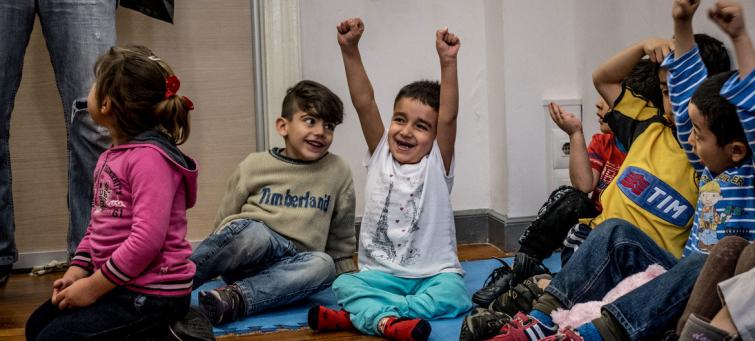
Photo caption and credit: UNICEF/ Gilbertson Children at a refugee center in Athens (file photo)
Support Our Journalism
We cannot do without you.. your contribution supports unbiased journalism
IBNS is not driven by any ism- not wokeism, not racism, not skewed secularism, not hyper right-wing or left liberal ideals, nor by any hardline religious beliefs or hyper nationalism. We want to serve you good old objective news, as they are. We do not judge or preach. We let people decide for themselves. We only try to present factual and well-sourced news.
Support objective journalism for a small contribution.