IIT Madras, ISRO develop indigenous IRIS chip to boost India’s space program: Report
Chennai: Days after unveiling new technologies for extraterrestrial habitation, the Indian Institute of Technology Madras (IIT Madras) has introduced a state-of-the-art microprocessor chip to strengthen India’s space program, India Today reported.
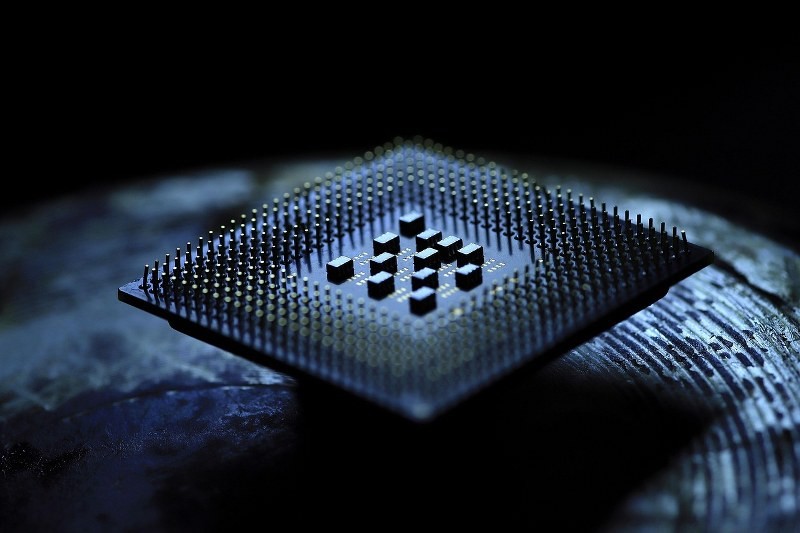
In collaboration with the Indian Space Research Organisation (ISRO), IIT Madras has successfully developed and booted IRIS, an indigenous semiconductor chip.
Part of the Shakti series of microprocessors, IRIS is built on the open-source RISC-V Instruction Set Architecture (ISA), marking a significant step toward reducing India's reliance on foreign semiconductor technology, the report said.
The IRIS chip was conceptualised by ISRO’s Inertial Systems Unit (IISU) in Thiruvananthapuram and designed and implemented by IIT Madras.
The entire process—from chip design and fabrication to packaging, motherboard assembly, and software booting—was completed within India, showcasing the country's growing semiconductor ecosystem.
Designed for space applications, the IRIS chip features fault-tolerant internal memories and specialised modules like CORDIC and WATCHDOG Timers.
It is engineered to support ISRO’s command and control systems along with other crucial space mission operations.
IIT Madras Director Prof. V. Kamakoti underscored the importance of self-reliant microprocessors for national security and strategic missions.
"The microprocessor is the brain of any computing system. It should do what you want it to do and not do what you don’t want it to do," he stated.
The open-source Shakti processor offers cost-effective adaptability by supporting legacy interfaces, thereby reducing component replacement expenses.
ISRO officials, having assessed the chip’s design and stress tests, are now set to conduct further evaluations.
This joint effort between IIT Madras and ISRO strengthens India’s space technology capabilities while highlighting the nation's advancements in semiconductor innovation.
It also lays the groundwork for future indigenous breakthroughs in space exploration.
Earlier, IIT Madras had developed water-free concrete for constructing structures on the Moon and Mars.
Support Our Journalism
We cannot do without you.. your contribution supports unbiased journalism
IBNS is not driven by any ism- not wokeism, not racism, not skewed secularism, not hyper right-wing or left liberal ideals, nor by any hardline religious beliefs or hyper nationalism. We want to serve you good old objective news, as they are. We do not judge or preach. We let people decide for themselves. We only try to present factual and well-sourced news.
Support objective journalism for a small contribution.