Shakespeare more popular abroad than in the UK, finds survey
Released today, the ‘All the World’s’ report – which questioned 18,000 respondents in 15 countries - reveals that internationally Shakespeare is widely known, liked, understood and still regarded as relevant today. While more than three quarters of those polled had experienced Shakespeare (78%) - with a similar number saying that they liked him (76%) - 69% understood him and saw him as still relevant today. In fact, the bard actually proved more popular outside the UK (65%) than in the country where he was born (59%).
“Four hundred years after his death, Shakespeare’s work continues to play a vital role in educating and entertaining people around the world,” commented Rosemary Hilhorst, Director of Shakespeare Lives for the British Council. “As well as bringing pleasure to millions of people, his works make a valuable contribution to the UK’s standing in the world and the economy.”
In terms of his contribution to the UK’s reputation and influence globally, Shakespeare was most liked and understood in many countries that – as emerging economies - will have a direct impact on the future stability, prosperity and influence of the UK. These include India, Mexico, Brazil, Turkey, South Africa and China.
Over a third of those questioned said Shakespeare made them feel more positive about the UK in general – with respondents in India (62%) and Brazil (57%) scoring the highest. Additionally, of those, 70% were interested in visiting the UK as tourists. Therefore, with the Royal Shakespeare Company and Shakespeare’s Globe generating one and a half million visits and over £50 million in box office receipts annually, Shakespeare’s global popularity has a direct and a positive economic benefit to the UK both in direct spend into the UK’s cultural scene and then in terms of secondary and tertiary tourism spend.
The research showed that Shakespeare is slightly more popular outside the UK (65%) than in the country where he was born (59%). Contributable factors include his works being translated into more contemporary editions and adaptation into other formats such as a new production of Romeo and Juliet in Bangladesh by disabled actors in partnership with the British Council and the Graeae Theatre Company.
Specifically, in the English-speaking countries polled - the UK (58%) and both Australia and the USA (55%) – an understanding of Shakespeare also scored comparably lower. With the research suggesting that this may be because of the inaccessibility of his original writing, the British Council in partnership with the Royal Shakespeare Company has developed a schools pack for pupils aged 7-14 years. Specially designed to encourage learning across the curriculum for pupils aged 7-14, the pack is built around five key themes – leadership and power, family and relationships, identity and equality, fate and destiny and justice and rules. Since its launch in January 2016 the various sections of the pack have been downloaded over 2,000 times; and are available in English and Welsh.
This new research underlines the continued importance and relevance of Shakespeare in the 21st century. Previous research conducted by the British Council in 2014 shows that Shakespeare was the leading personality that 18 to 34 year olds in Brazil, China, Germany, India and the US most identified with contemporary UK arts and culture.
Shakespeare Lives is an ambitious global programme of events and activities celebrating William Shakespeare’s work on the occasion of the 400th anniversary of his death in 2016. Led by the British Council and the GREAT Britain Campaign, the programme brings together an unparalleled breadth of creative organisations as well as a major partnership with UK-based charity Voluntary Services Overseas (VSO) to give real help to children in some of the world’s poorest communities and to raise funds and awareness of their work in education globally. Other partnerships and collaborations include with the BBC, the BFI (British Film Institute), the National Theatre, the Royal Shakespeare Company, the Shakespeare 400 consortium, the Shakespeare Birthplace Trust and Shakespeare’s Globe.
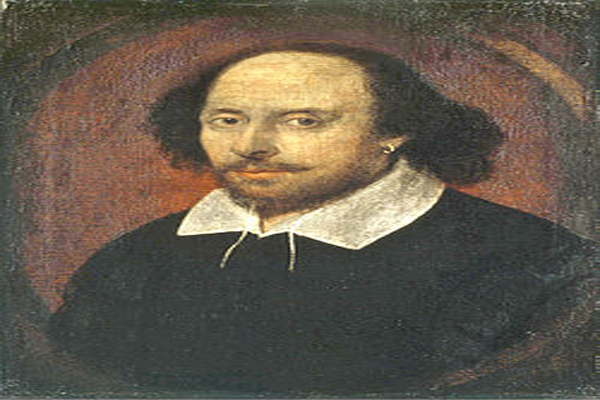
Image: Wikimedia Commons
Support Our Journalism
We cannot do without you.. your contribution supports unbiased journalism
IBNS is not driven by any ism- not wokeism, not racism, not skewed secularism, not hyper right-wing or left liberal ideals, nor by any hardline religious beliefs or hyper nationalism. We want to serve you good old objective news, as they are. We do not judge or preach. We let people decide for themselves. We only try to present factual and well-sourced news.
Support objective journalism for a small contribution.