 India AI
Tata Bharat YUVAi Hackathon: Non-Engineering students pull off massive app-nuilding feat at Inda AI Impact Summit
The Tata Bharat YUVAi Hackathon, hosted at the India AI Impact Summit 2026, marked the culmination of India’s largest hackathon for non-coders, demonstrating the transformative potential of artificial intelligence in enabling mass digital creation.
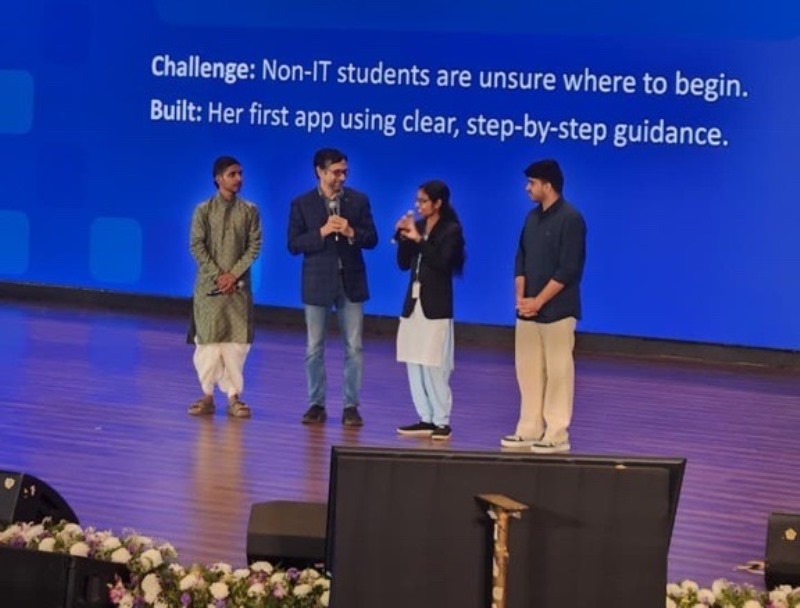
A first-of-its-kind initiative, the hackathon brought together 1,800 college students from across Arts, Science, and Commerce streams to build working digital app prototypes in just 90 minutes.
Participants, all without prior coding experience, were guided by AI tools that operate in Indian languages, enabling them to move seamlessly from problem identification to solution-building in real time.
The event was graced by Ashwini Vaishnaw, Hon’ble Minister for Railways, Information and Broadcasting, and Electronics and Information Technology, Government of India, as Chief Guest, and attended by K. Krithivasan, CEO and Managing Director, TCS.
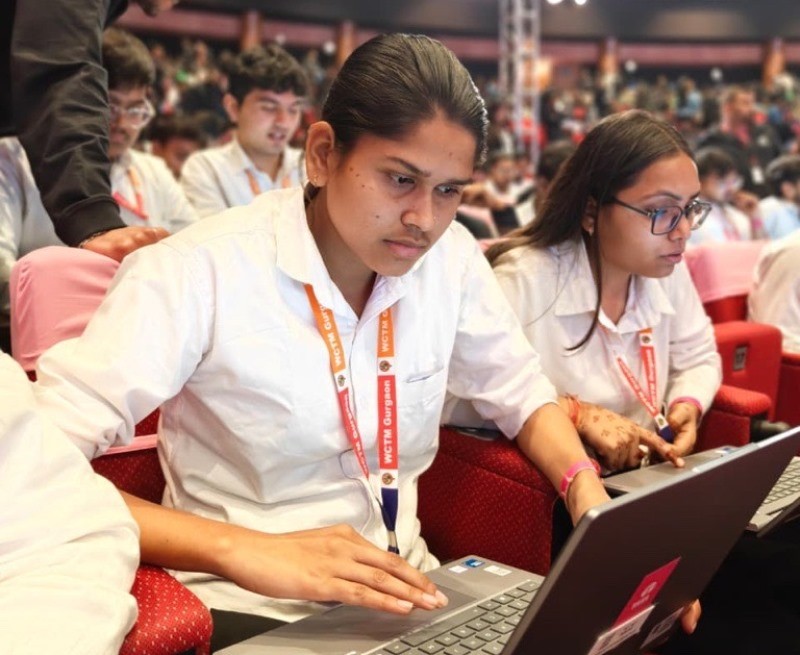
Participants selected challenges across critical sectors including healthcare, education, agriculture, and civic life. Using step-by-step AI-enabled workflows, students researched problems, brainstormed solutions, and built 1,500 app prototypes within 90 minutes addressing issues identified within their own communities. The hackathon served as a live demonstration of how AI can democratise innovation, enabling students from non-technical backgrounds to become creators rather than consumers of technology.
K Krithivasan, Chief Executive Officer and Managing Director, said, “India’s digital future depends on unlocking talent beyond engineering. The Tata YUVAi Hackathon, which witnessed 1,800 students from non‑engineering backgrounds come together to build digital app prototypes, marks a major step toward that vision. It reflects the Tata Group’s commitment to digital inclusion, where opportunity is not defined by background, stream, or language. This is the country’s largest single‑session learning initiative of its kind and the beginning of a national movement to reach one million students, empowering them with AI tools to turn ideas into real‑world solutions.”
The Tata Bharat YUVAi Hackathon reflects a broader vision of empowering India’s youth with future-ready digital capabilities. In a country where 62.3% of its undergraduate students study Arts, Science, and Commerce the unique initiate aims to unearth India’s next million digital creators by lowering technical barriers and enabling creation through intuitive, and language-accessible AI tools.
The flagship event at Bharat Mandapam marked the crescendo of a nationwide movement. Over the past six weeks, the TCS Bharat YUVAi Hackathon hosted satellite events across 22 colleges in 10 states, including Kerala, Assam, Tamil Nadu, Uttar Pradesh, Andhra Pradesh, and Gujarat, reaching more than 10,000 students.
The completion rates across these events consistently ranged between 88 and 93 percent. All the participants consisting of students who had never built a digital product before completed the full journey and walked away with a working app prototype highlighting what India’s next wave of digital creators could look like—diverse, inclusive, and driven by real societal needs.
Support Our Journalism
We cannot do without you.. your contribution supports unbiased journalism
IBNS is not driven by any ism- not wokeism, not racism, not skewed secularism, not hyper right-wing or left liberal ideals, nor by any hardline religious beliefs or hyper nationalism. We want to serve you good old objective news, as they are. We do not judge or preach. We let people decide for themselves. We only try to present factual and well-sourced news.
Support objective journalism for a small contribution.