 Education
UNESCO chief calls for transforming education, with 244 million still out of school
New York: The bell is ringing for the start of a new school year in many countries, but inequalities in access to education are keeping some 244 million children out of the classroom, according to data published on Thursday by the UN Educational, Scientific and Cultural Organization (UNESCO).
Sub-Saharan Africa remains the region with the most children out of school, 98 million, and it is also the only region where this number is increasing.
The Central and Southern Asia region has the second highest out-of-school population, with 85 million.
Education goals at risk
“No one can accept this situation,” said Audrey Azoulay, the UNESCO Director-General, underlining the need to respect every child’s right to education.
“In view of these results, the objective of quality education for all by 2030, set by the United Nations, risks not being achieved,” she warned. “We need a global mobilization to place education at the top of the international agenda.”
Ms. Azoulay will renew her call at the landmark Transforming Education Summit on 19 September, at UN Headquarters in New York.
UN Secretary-General António Guterres has convened the Summit to mobilize action and solutions, including to reverse learning losses due to the COVID-19 pandemic
Closing the gender gap
On a more positive note, the UNESCO data has confirmed that the difference in the rate of girls and boys out of school has closed worldwide.
Back in 2000, the gender gap was 2.5 percentage points among primary school age children, and 3.9 percentage points among their upper secondary school counterparts.
These gaps have been reduced to zero, although regional disparities persist.
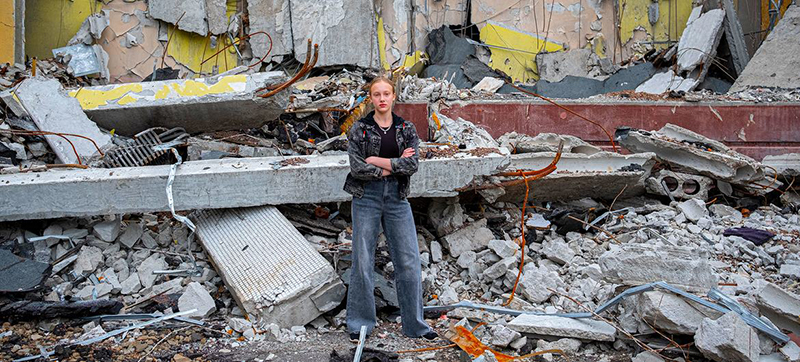
Uncertainty clouds Ukraine’s return to class
Relatedly, four million boys and girls in Ukraine are facing the start of an uncertain school year, the head of the UN Children’s Fund, UNICEF, said on Thursday.
Catherine Russell concluded a three-day visit to the country, where she met students, parents and teachers scarred by the war, now in its seventh month.
“Children are returning to schools - many of which have been damaged during the war – with stories of destruction, uncertain if their teachers and friends will be there to welcome them. Many parents are hesitating to send their children to school, not knowing if they will be safe,” she said.
Thousands of schools across Ukraine have been damaged or destroyed due to the fighting, with less than 60 per cent deemed safe and eligible for reopening.
Ms. Russell visited a rehabilitated primary school that had been damaged during the early weeks of the conflict. Only 300 students can attend at any one time due to the capacity of the school’s bomb shelter, representing a mere 14 per cent of the school’s pre-war capacity.
‘Bomb shelters instead of playgrounds’
UNICEF is working with the Ukrainian authorities to get children back to learning – both in classrooms, when it is deemed safe, and through online or community-based alternatives if in-person education is not possible.
Since the war began, some 760,000 children have received formal or non-formal education. Additionally, more than 1.7 million children and caregivers have benefited from UNICEF-supported mental health and psychosocial support interventions.
“Schools in Ukraine are desperate for resources to build bomb shelters instead of playgrounds, with children being taught about unexploded ordinances instead of road safety,” said Ms. Russell. “This is the stark reality for Ukrainian students, parents and teachers.”
Getting children back to learning involves efforts such as rehabilitating schools, providing laptops, tablets and supplies to teachers and students, and guiding children and teachers on how to stay safe during a time of war.
‘Sad reality’ affecting young minds
Ms. Russell said education for the children of Ukraine has been dramatically compromised.
“After more than two years of the COVID-19 pandemic and six months since the escalation of the war, their physical and mental health is under enormous strain. More must be done to address what for many has been a sad reality.”
Meanwhile, Ukrainian children who are now refugees face other challenges. Roughly 650,000 living in 12 host countries were still not enrolled in national education systems as of the end of July.
UNICEF has supported nearly half with formal or non-formal education. The UN agency is also working with governments and partners to make sure that Ukrainian refugee children are either enrolled in schools or have access to online learning.
Winter worries
Across Ukraine, UNICEF has reached an additional 616,000 people - including the most vulnerable families - with humanitarian cash transfers. However, with winter settling in, Ms. Russell feared needs could outpace resources.
“Unless there is peace, the lives of children and their families in Ukraine are going to get even more challenging as winter approaches,” she said
“We know freezing temperatures and heavy snowfalls are just months away, which is why UNICEF is working with the government and partners to preposition winter supplies, including warm clothing, shoes, generators, heaters and wood pellets.”
During her visit, Ms. Russell also met with First Lady Olena Zelenska, complementing the efforts of the Ukrainian people – including teachers, parents, and healthcare workers - and expressed gratitude for the long-standing partnership between the Government and UNICEF.
She also discussed ways of further strengthening the joint response to the humanitarian crisis and the importance of having safe, timely and unhindered humanitarian access to all children in need of life-saving support.
Support Our Journalism
We cannot do without you.. your contribution supports unbiased journalism
IBNS is not driven by any ism- not wokeism, not racism, not skewed secularism, not hyper right-wing or left liberal ideals, nor by any hardline religious beliefs or hyper nationalism. We want to serve you good old objective news, as they are. We do not judge or preach. We let people decide for themselves. We only try to present factual and well-sourced news.
Support objective journalism for a small contribution.