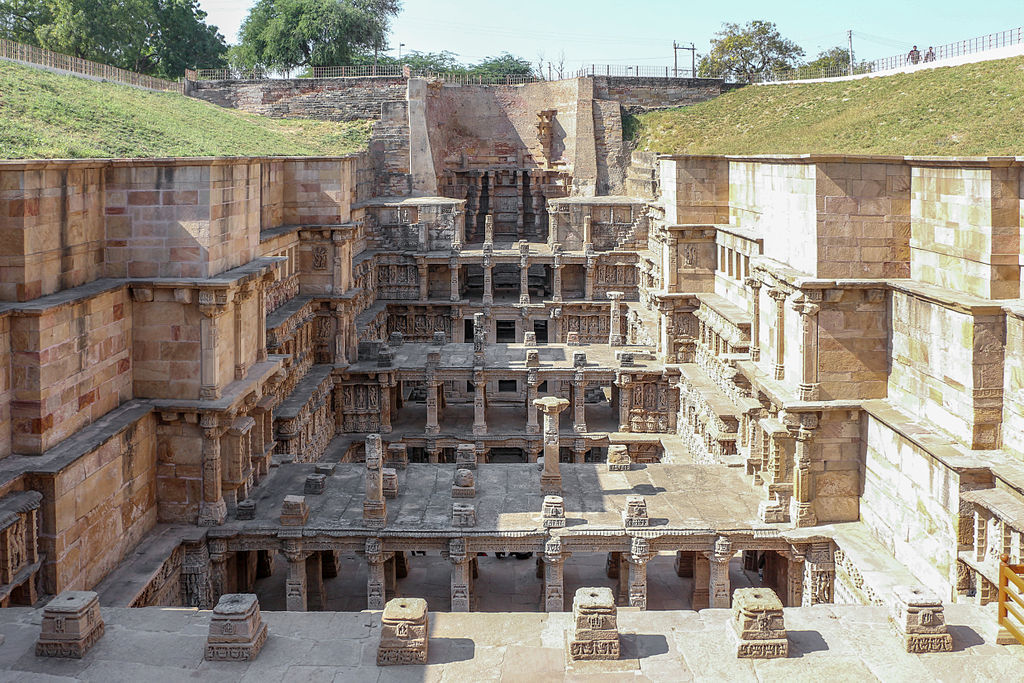
UNESCO recognizes Gujarat's Rani-ki-Vav as World Heritage Site
The recognition was granted by the UNESCO at the World Heritage Committee Session currently on at Doha in Qatar.
"UNESCO has recognized this masterpiece as an exceptional example of technological development in utilizing ground water resources in a single component, water management system and it illustrates the exceptional capacity to break large spaces into smaller volumes following ideal aesthetic proportions," the Indian government said in a statement.
Rani-ki-Vav, a stepwell built in the 11th century is the most developed, elaborate and ornate example of a unique type of Indian subterranean architectural structure, and it marks the zenith in the evolution of stepwells in India.
It is a particularly large and complex example of a stepwell, with seven storeys of ornamented panels of sculptures and relief representing the height of the Maru-Gurjara style, read the statement.
"Following the flooding and disappearance of the Saraswati River due to geotectonic changes, the property was buried under layers of silt for almost seven centuries and has been preserved underneath in an exceptional state of conservation by the Archaeological Survey of India. The stepwell is digitally documented through collaboration between ASI, CyArk and the Scottish Ten," the statement said.
It was nominated by ASI for the World Heritage List of UNESCO in February 2013.
"The process of nomination of Rani ki Vav and the management strategy presented for the property and Buffer Zone as per Operational Guidelines of UNESCO can be credited to excellent teamwork between the Archaeological Survey of India and the State Government of Gujarat," the government said in a statement.
The dossier was prepared by an in-house team of experts within the ASI and vetted by the Ministry of Culture through its Advisory Committee at various stages.
The Gujarat government supported the protection of Buffer Zone as a protected area in the Development Plan.
"They worked with ASI officials to mark the around the Rani ki Vav including the excavated area of the historic Sahastralinga Talao under ASI as well as the unexcavated areas of this Talao which falls under agricultural fields for future protection in the Development Plan," the statement said.
Image: Wikimedia Commons
The initiative of additionally protecting surrounding area around Rani ki Vav with its inclusion in the Local Development Plan is an exemplary example of integrating heritage with planning and needs to be emulated for heritage sites across India.
The inscription of Rani ki Vav on the World Heritage List as the single most example of a step well is a testimony to the traditional water systems of India.
The local residents of Patan who were engaged actively in the process and provided full support to ASI and State Government in the process including its field evaluation by ICOMOS (the Advisory Body to UNESCO) deserve a special mention in achieving this target to place this stepwell on India’s World Heritage List.
Support Our Journalism
We cannot do without you.. your contribution supports unbiased journalism
IBNS is not driven by any ism- not wokeism, not racism, not skewed secularism, not hyper right-wing or left liberal ideals, nor by any hardline religious beliefs or hyper nationalism. We want to serve you good old objective news, as they are. We do not judge or preach. We let people decide for themselves. We only try to present factual and well-sourced news.
Support objective journalism for a small contribution.