US-China trade war will not end with Trump, says a new book on the subject
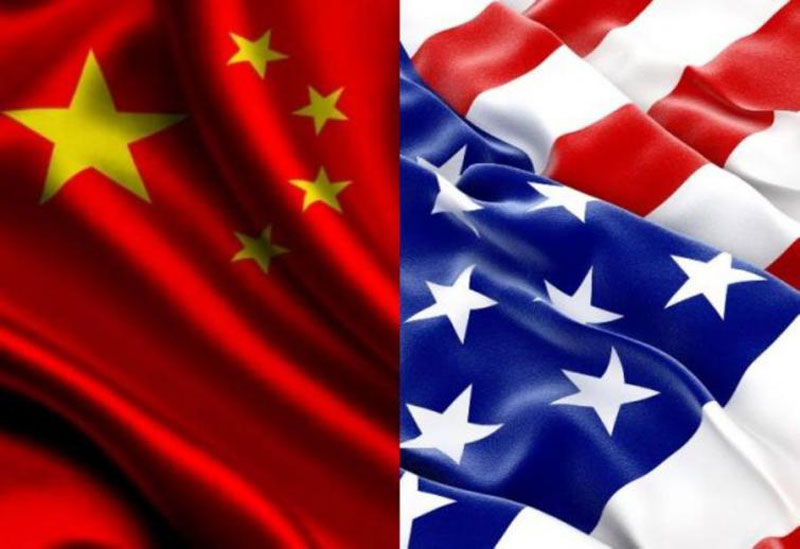
Kolkata, Aug 10 (UNI) Animosity between the two super powers--the US and China--has heated up this November's presidential election with Donald Trump taking some tough trade measures against the eastern country.
But the trade battle between the two did not start with Trump and will not end with him, argue authors Bob Davis and Lingling Wei in their latest book 'Superpower Showdown'.
Billed as vivid and provocative, 'Superpower Showdown' will help readers understand the context of the trade war and prepare them for what may come next, publisher HarperCollins shared with UNI here.
The U.S. and China have a long and fraught political and economic history which has become more contentious over the past three years—an escalation that has negatively impacted both countries' economies and the world at large—and holds the potential for even more uncertainty and disruption.
How did this stand-off happen? How much are U.S. presidents and officials who have not effectively confronted or negotiated with China to blame? What role have Chinese leaders and U.S. business leaders who for decades acted as Beijing’s lobbyists in Washington, played in driving tensions between the two countries?
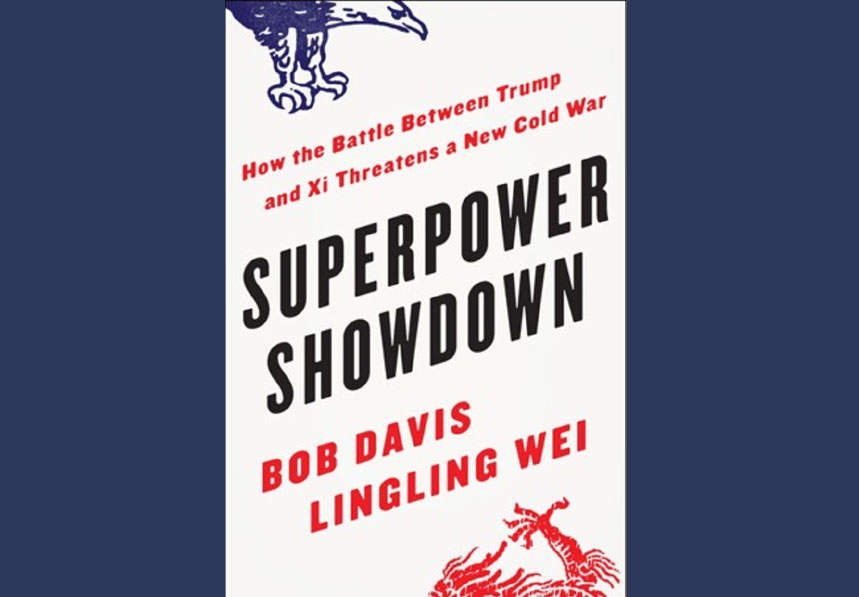
'Superpower Showdown' is the story of a romance gone bad. Uniquely positioned to tell the story, Davis and Wei have conducted hundreds of interviews with government and business officials in both nations over the seven years they have worked together writing for the Wall Street Journal.
Analyzing U.S.–China relations, the duo explain how this tipping point was reached and what could lie ahead.
The 480-page book, priced at Rs 599, is due to be released on August 25.
Bob Davis is a Pulitzer Prize-winning senior editor covering economic issues at the Wall Street Journal’s Washington D.C. bureau and continues to write about China, where he was posted from 2011 to 2014. He has served as the Journal’s bureau chief in Brussels covering the European Union and as the Latin America bureau chief. He lives in Washington, D.C.
Lingling Wei is an award-winning journalist in the Wall Street Journal’s Beijing bureau. Hailing from a farm province in eastern China, she came of age as a journalist in New York and then returned to China in early 2011 to report on changes in her homeland. She focuses on the intersection of Chinese politics and the economy.
This is the inside story of the US-China trade war, how relations between these super powers unraveled, darkening prospects for global peace and prosperity, as told by two WSJ reporters, one based in Washington DC and the other in Beijing. They have had more access to the decision makers in the White House and in China's Zhongnanhai leadership compound than anyone else, HarperCollins said.
Support Our Journalism
We cannot do without you.. your contribution supports unbiased journalism
IBNS is not driven by any ism- not wokeism, not racism, not skewed secularism, not hyper right-wing or left liberal ideals, nor by any hardline religious beliefs or hyper nationalism. We want to serve you good old objective news, as they are. We do not judge or preach. We let people decide for themselves. We only try to present factual and well-sourced news.
Support objective journalism for a small contribution.