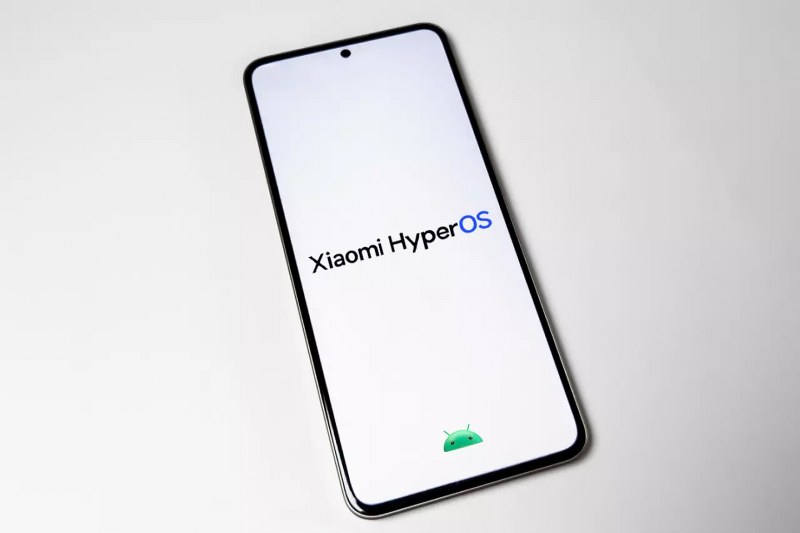
Xiaomi is set to introduce its fresh Operating System HyperOS; check out the features here
Xiaomi is set to introduce a fresh operating system called HyperOS, which is slated to replace the current MIUI system.
HyperOS aims to bring together all Xiaomi devices into a unified system, emphasizing low-level restructuring, intelligent connectivity, proactive intelligence, and end-to-end security.
Initially, it will come pre-installed on the Xiaomi 14 series, with plans for a wider deployment on other Xiaomi devices, including Redmi devices.
HyperOS is being promoted as a faster and lighter alternative to MIUI, boasting a reduced firmware size of 8.75GB in contrast to MIUI 14's 13.09GB. It will also showcase a completely redesigned user interface. Here are five key points to acquaint you with Xiaomi's HyperOS:
User-Friendly Operating System: Over the past 13 years, Xiaomi's global user base has grown to over 1.1 billion, spanning a product range of 200 categories. However, managing diverse device operating systems and ensuring compatibility in the IoT era posed challenges.
In response, Xiaomi initiated the development of HyperOS in 2017. This "human-centric" OS is engineered to be more user-friendly, intuitive, and versatile than MIUI.
It introduces a contemporary, streamlined design language and a range of innovative features that enhance the usability of Xiaomi devices. It enables seamless device transitions, remote access to data and applications, and leverages AI for functionalities like speech synthesis, image search, and artwork creation.
Based on Android Open Source Project (AOSP): Xiaomi's HyperOS is an efficient and lightweight operating system built on the foundation of the Android Open Source Project (AOSP).
This means it isn't reliant on Google's Android services, affording Xiaomi the flexibility to customize it according to their specific requirements. HyperOS is engineered to run smoothly on devices with less powerful hardware, making it an apt choice for budget-friendly Xiaomi devices.
HyperOS Features: HyperOS represents an enhanced iteration of MIUI, offering significant enhancements in performance, AI capabilities, connectivity, and security. It elevates performance with quicker app launches, improved background memory retention, reduced disk latency, and smoother animations.
Furthermore, it integrates AI features like AI-generated text, text extraction from images, doodle-to-painting conversion, and natural language image searches. HyperOS ensures intelligent connectivity through Xiaomi HyperConnect and Hypermind, enabling functionalities such as utilizing your phone's rear camera as a webcam, seamless data sharing, and receiving phone notifications on larger-screen devices.
Security is also a priority, with HyperConnect being opened to third-party developers and a focus on encryption, permission management, and security protocols. Users can customize the lock screen and experience minor UI tweaks in the control center and stock applications.
Compatible Devices: HyperOS is a unified operating system compatible with a wide array of Xiaomi devices, encompassing smartphones, tablets, smart home products, and even automobiles.
Registration for the domestic version of HyperOS commenced on October 26, 2023, at 10 pm, with the official release set for December 2023. Eligible devices encompass the Xiaomi 14 and Xiaomi 14 Pro phones, the Redmi K60 Ultra phone, along with other Xiaomi and Redmi devices like the Xiaomi Watch S3, Xiaomi Pad 6 Max 14, Xiaomi TV S Pro 65, Xiaomi TV S Pro 75, Xiaomi TV S Pro 85 (MiniLED TVs), Xiaomi Sound speaker, and Xiaomi Smart Camera 3 Pro.
Rollout: While HyperOS is still in development, it is initially accessible on the Xiaomi 14 and Xiaomi 14 Pro smartphones in China. Xiaomi has plans to extend HyperOS to more devices in the future.
The rollout schedule for both the Chinese and international markets includes pre-installation on the Xiaomi 14, Xiaomi 14 Pro, Xiaomi TV S Pro 85" MiniLED, and Xiaomi Watch S3.
In December, several other devices will receive HyperOS via an over-the-air update, including the Redmi K60 Ultra, Xiaomi Pad 6 Max 14", Xiaomi TV S Pro 65, Xiaomi TV S Pro 75, Xiaomi Sound Speaker, and Xiaomi Smart Camera 3 Pro. Additionally, Xiaomi will release Mijia APP 9.0 for smart home devices in early December 2023.
Support Our Journalism
We cannot do without you.. your contribution supports unbiased journalism
IBNS is not driven by any ism- not wokeism, not racism, not skewed secularism, not hyper right-wing or left liberal ideals, nor by any hardline religious beliefs or hyper nationalism. We want to serve you good old objective news, as they are. We do not judge or preach. We let people decide for themselves. We only try to present factual and well-sourced news.
Support objective journalism for a small contribution.