 Lok Sabha
'Bankim Da' or 'Bankim Babu': How Modi handled TMC MP's objection during Vande Mataram debate speech
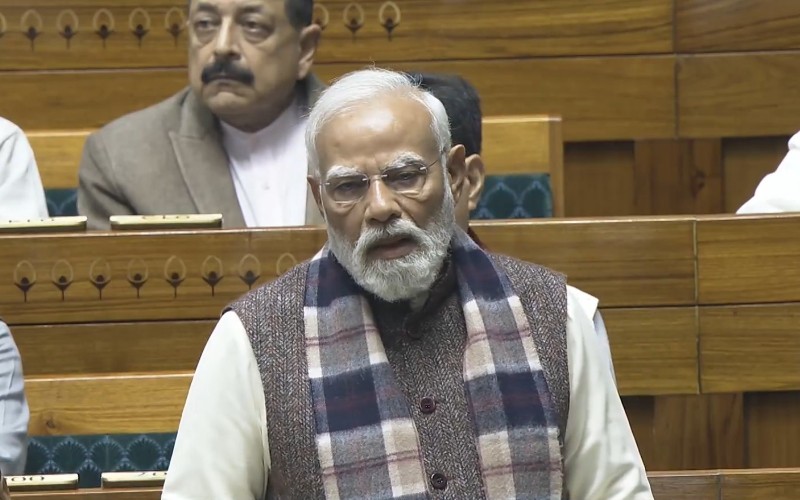
New Delhi/IBNS: Prime Minister Narendra Modi’s address in the Lok Sabha on Monday, marking the beginning of a special discussion on the 150th anniversary of the national song Vande Mataram, briefly hit an unexpected linguistic roadblock — a light but pointed exchange unfolded over his reference to the song’s creator, Bankim Chandra Chatterjee, as “Bankim Da”.
While speaking on Chatterjee’s contributions, Modi used the Bengali suffix “Da”—a colloquial short form of dada, commonly used to refer to an elder brother or companion.
Modi insulted Bankim Chandra Chatterjee in the Parliament.
— Shantanu (@shaandelhite) December 8, 2025
He was referring him aa ‘da’, then an MP from opposition corrected him that he should say ‘Bankim Babu’ not ‘da’.
Modi realised his mistake and instead of saying sorry, he said Thankyou Thankyou…. pic.twitter.com/remGphGkD7
Trinamool Congress (TMC) MP Saugata Roy immediately objected, arguing that such an informal term was inappropriate for a revered cultural figure of Bengal.
“You are saying Bankim Da? You should say Bankim Babu,” Roy interjected, insisting that “Babu” was the more respectful and traditionally accepted honorific for Bankim Chandra Chatterjee.
Prime Minister Modi responded without hesitation, acknowledging the sentiment.
“I will say Bankim Babu. Thank you, I respect your sentiments,” he said.
Then, with a touch of humour, he added, “I can call you dada, right? Or you have an objection to that too?” prompting laughter across the House.
After the brief interruption, Modi resumed his speech, underscoring Vande Mataram’s historical and emotional significance during India’s struggle for freedom.
He described the national song as far more than a rallying cry for political liberation, calling it a “sacred war cry to rid Bharatmata of vestiges of colonialism.”
He reminded the House that the British colonial government felt so threatened by the song’s growing popularity that it imposed stringent restrictions on its singing and printing.
“Such was the power of Vande Mataram that the British were forced to impose a legal ban on it. There was punishment for singing it and for printing it. Such harsh laws were created to suppress it,” the Prime Minister said.
The Lok Sabha is holding a 10-hour debate to commemorate the song’s 150-year legacy, highlighting its role in the freedom movement and its enduring influence on India’s national identity.
The discussion will also be carried forward in the Rajya Sabha.
While Modi initiated the proceedings in the lower house, Congress leaders— including Priyanka Gandhi Vadra — are also scheduled to participate in the wider deliberations on Vande Mataram’s historical relevance and cultural imprint.
Support Our Journalism
We cannot do without you.. your contribution supports unbiased journalism
IBNS is not driven by any ism- not wokeism, not racism, not skewed secularism, not hyper right-wing or left liberal ideals, nor by any hardline religious beliefs or hyper nationalism. We want to serve you good old objective news, as they are. We do not judge or preach. We let people decide for themselves. We only try to present factual and well-sourced news.
Support objective journalism for a small contribution.