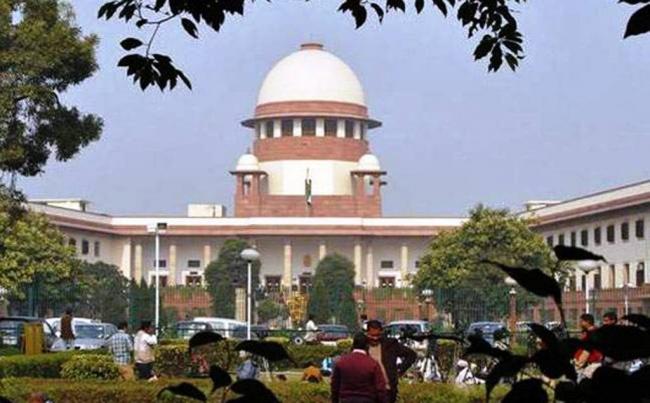
Centre objects to dropping of adultery as an offence
New Delhi, July 11 (IBNS) : Objecting to dropping adultery as an offence, the Centre on Wednesday told the Supreme Court that such a move is against the Indian ethos and will weaken the institution of marriage, media reports said.
In an 11-page affidavit that will come up before a Constitution Bench, the Centre said the provision punishing adultery - Section 497 of the Indian Penal Code - "supports, safeguards and protects the institution of marriage".
The affidavit is to counter a petition filed by Joseph Shine, represented by advocates Kaleeswaram Raj and Suvidutt M.S. seeks to drop Section 497 as a criminal offence from the statute book.
The Centre states that “diluting adultery law will impact the sanctity of marriages,” and that it supports keeping adultery as a penal offence in India.
In December last year, a three-member bench headed by CJI Dipak Misra, issued a notice to the Centre on the validity of Section 497 of IPC that deals with adultery. The bench stated that the law appears to be prima facie "archaic" and doesn't treat women as equal to men.
The Bench had observed that the provision raised a question mark on social progress, outlook, gender equality and gender sensitivity.
It was time to bring to the forefront a different view with a focus on the rights of women, Chief Justice Misra had observed.
The Constitution Bench will decide whether the pre-Independence provision of adultery in the Indian Penal Code treats a married woman as her husband's "subordinate" and violates the constitutional concepts of gender equality and sensitivity.
The Bench may also examine why the offence of adultery ceases the moment it is established that the husband connived or consented to the adulterous act.
Section 497 of the Code mandates that if a man has sexual intercourse with another's wife without the husband's "consent or connivance", he is guilty of the offence of adultery and shall be punished".
Support Our Journalism
We cannot do without you.. your contribution supports unbiased journalism
IBNS is not driven by any ism- not wokeism, not racism, not skewed secularism, not hyper right-wing or left liberal ideals, nor by any hardline religious beliefs or hyper nationalism. We want to serve you good old objective news, as they are. We do not judge or preach. We let people decide for themselves. We only try to present factual and well-sourced news.
Support objective journalism for a small contribution.