 Nobel Prize
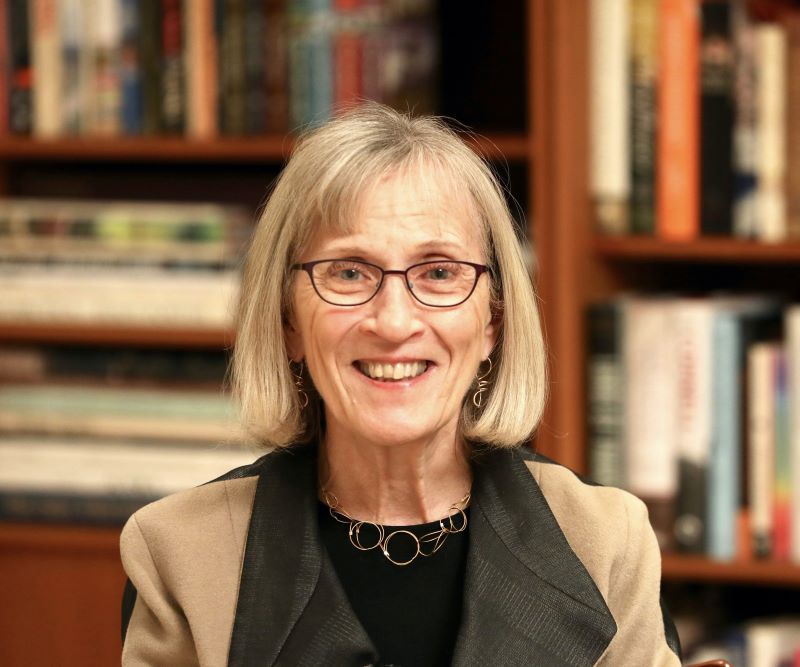
Claudia Goldin from Harvard University is the winner of Nobel Prize in Economics for research on women’s labour market outcomes
The Royal Swedish Academy of Sciences Monday announced to confer the Sveriges Riksbank Prize (Nobel Prize) 2023 in Economic Sciences to Claudia Goldin of Harvard University, Cambridge, USA, “for having advanced our understanding of women’s labour market outcomes”.
Claudia Goldin provided the first comprehensive account of women’s earnings and labour market participation through the centuries. Her research reveals the causes of change, as well as the main sources of the remaining gender gap.
Women are vastly underrepresented in the global labour market and, when they work, they earn less than men. Claudia Goldin has trawled the archives and collected over 200 years of data from the US, allowing her to demonstrate how and why gender differences in earnings and employment rates have changed over time, a statement from the Nobel Prize committee stated.
Goldin showed that female participation in the labour market did not have an upward trend over this entire period, but instead formed a U-shaped curve. The participation of married women decreased with the transition from an agrarian to an industrial society in the early nineteenth century but then started to increase with the growth of the service sector in the early twentieth century.
On receiving the award, Goldin said: "I have always thought of myself as a detective! The detective always believes there is a way of finding the answer and that is the way I have always done research.”
She explained this pattern as the result of structural change and evolving social norms regarding women’s responsibilities for home and family.
During the twentieth century, women’s education levels continuously increased, and in most high-income countries they are now substantially higher than for men. Goldin demonstrated that access to the contraceptive pill played an important role in accelerating this revolutionary change by offering new opportunities for career planning.
Despite modernisation, economic growth, and rising proportions of employed women in the twentieth century, for a long period of time, the earnings gap between women and men hardly closed.
According to Goldin, part of the explanation is that educational decisions, which impact a lifetime of career opportunities, are made at a relatively young age. If the expectations of young women are formed by the experiences of previous generations – for instance, their mothers, who did not go back to work until the children had grown up – then development will be slow.
Historically, much of the gender gap in earnings could be explained by differences in education and occupational choices. However, Goldin has shown that the bulk of this earnings difference is now between and women in the same occupation, and that it largely arises with the birth of the first child.
“Understanding women’s role in labour is important for society. Thanks to Claudia Goldin’s groundbreaking research we now know much more about the underlying factors and which barriers may need to be addressed in the future,” Jakob Svensson, Chair of the Committee for the Prize in Economic Sciences, said.
Support Our Journalism
We cannot do without you.. your contribution supports unbiased journalism
IBNS is not driven by any ism- not wokeism, not racism, not skewed secularism, not hyper right-wing or left liberal ideals, nor by any hardline religious beliefs or hyper nationalism. We want to serve you good old objective news, as they are. We do not judge or preach. We let people decide for themselves. We only try to present factual and well-sourced news.
Support objective journalism for a small contribution.