‘Employers won’t hire women’: Supreme Court on mandatory menstrual leave plea
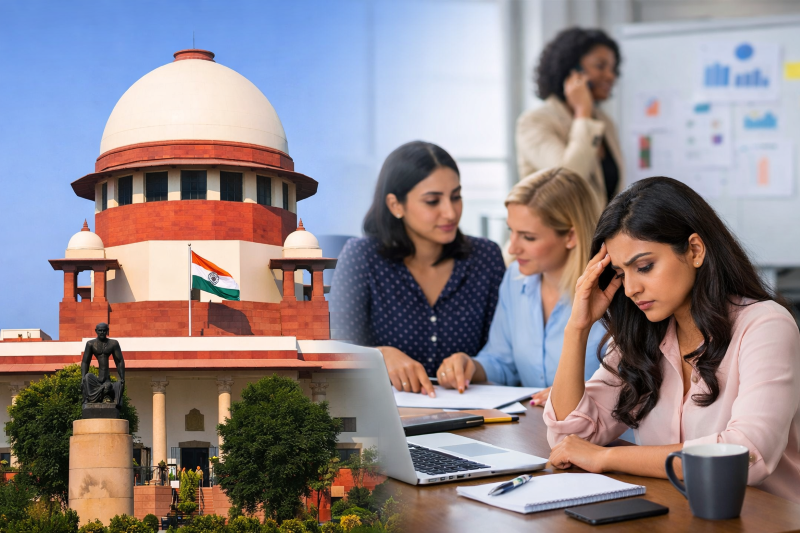
Mandatory menstrual leave could negatively impact women’s employment prospects, Chief Justice of India Surya Kant said on Friday while hearing a petition seeking directions for states to introduce paid menstrual leave policies.
The Chief Justice warned that making such leave mandatory through legislation could discourage employers from hiring women.
“Creating awareness and sensitisation is different, but the moment you bring in a law mandating menstrual leave, nobody will hire them,” he said during the hearing.
“You don’t know the mindset of employers. They will not hire women if we make such a law.”
The court was hearing a petition filed by lawyer Shailendra Mani Tripathi seeking directions to state governments to frame rules allowing paid leave for women during menstruation, both for students and working professionals.
Chief Justice Surya Kant also said such a law could unintentionally create a perception that women are less capable than men in the workplace.
“It will create a psychological fear or impression among working women that they are ‘less’ than men,” he said.
Justice Joymalya Bagchi, who was part of the bench, also highlighted practical concerns from the perspective of employers.
“Affirmative action in respect of females is constitutionally recognised. But look at the practical reality in the job market. The more unattractive the human resource, the less is the possibility of assumption in the market,” he said.
Senior advocate MR Shamshad, appearing during the hearing, pointed out that the Government of Kerala had introduced menstrual leave for women students in state-run universities in 2013.
The decision was announced by Chief Minister Pinarayi Vijayan as part of the state’s commitment to building a “gender-just society”.
However, Chief Justice Surya Kant said such provisions work when implemented voluntarily but could have unintended consequences if made compulsory through law.
“The moment you say it is compulsory in law, nobody will give them jobs. Nobody will take them in judiciary or government jobs… their career is over,” he said.
Earlier this year, the Supreme Court of India recognised menstrual hygiene as an integral part of a girl child’s right to life, dignity, health and education under Article 21 of the Constitution.
A bench comprising Justices JB Pardiwala and R Mahadevan had also directed governments to ensure free sanitary napkins, gender-segregated toilets and menstrual health awareness campaigns.
Support Our Journalism
We cannot do without you.. your contribution supports unbiased journalism
IBNS is not driven by any ism- not wokeism, not racism, not skewed secularism, not hyper right-wing or left liberal ideals, nor by any hardline religious beliefs or hyper nationalism. We want to serve you good old objective news, as they are. We do not judge or preach. We let people decide for themselves. We only try to present factual and well-sourced news.
Support objective journalism for a small contribution.