 Quota
Quota
'Equality among unequals': Supreme Court gives landmark judgement on sub-classification of SCs and STs
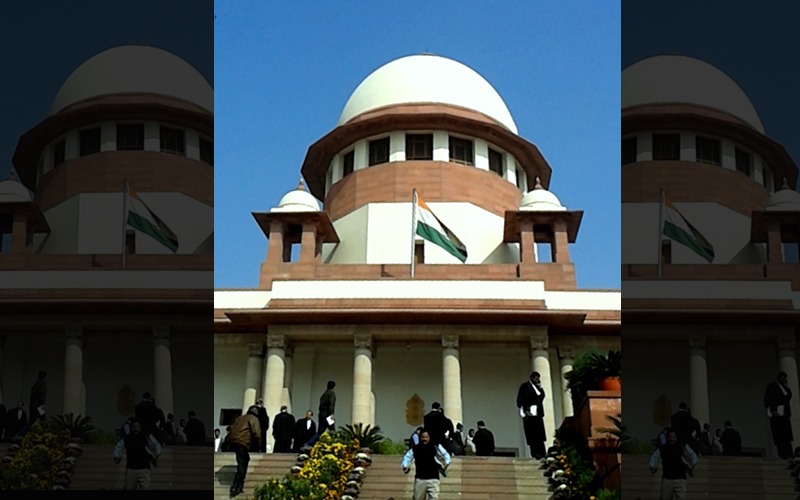
New Delhi/IBNS: In a landmark judgement, the Supreme Court on Thursday agreed to the sub-classification within the Scheduled Castes and Scheduled Tribes to provide quotas in government jobs and education, media reports said.
The sub-classification is aimed at making quotas for marginalised sections within the communities.
A seven-judge bench comprising Chief Justice of India DY Chandrachud passed the verdict with 6:1 majority.
Justice Bela Trivedi was the only dissenting voice in the panel.
The top court has overruled its own 2004 judgement in the EV Chinnaiah v Andhra Pradesh case.
In 2004, the top court had ruled the state legislatures had no power to sub-classify existing reserved sections for government jobs and education.
CJI Chandrachud on Thursday said the SCs are not a homogenous group.
The top court bench stated that the state legislatures can identify various degrees of backwardness within the SCs and STs backed by empirical data.
The sub-classification of SCs and STs won't violate the President's exclusive authority to identify SCs and STs, the court said and added the sub-classification is subjected to judicial review.
Justice B.R.Gavai said the court, in his opinion, is aiming to achieve an equality among the unequals.
On a separate note, Justice Gavai has opined the states should also identify people, who are no longer deprived despite remaining in the reservation categories, and exclude them from the group.
"In my view, only this, and this alone, would help to reach real equality enshrined under the Constitution," he said as quoted by The Hindu.
In her dissenting voice, Justice Trivedi opined that the states cannot fiddle with the existing list of reserved classes citing the quota is meant for the entire community.
Support Our Journalism
We cannot do without you.. your contribution supports unbiased journalism
IBNS is not driven by any ism- not wokeism, not racism, not skewed secularism, not hyper right-wing or left liberal ideals, nor by any hardline religious beliefs or hyper nationalism. We want to serve you good old objective news, as they are. We do not judge or preach. We let people decide for themselves. We only try to present factual and well-sourced news.
Support objective journalism for a small contribution.