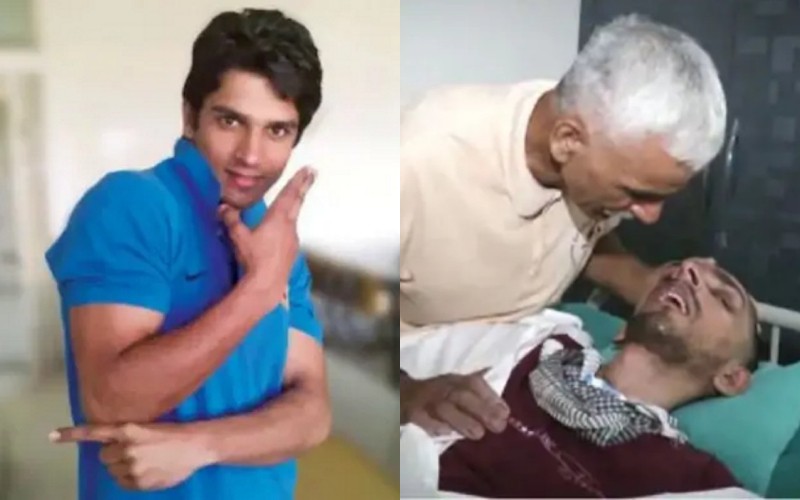
 Harish Rana
Harish Rana, India's first passive euthanasia case, dies at AIIMS Delhi after 13-year coma
New Delhi/IBNS: Harish Rana, the first person in India to receive court approval for passive euthanasia, died at All India Institute of Medical Sciences (AIIMS) in New Delhi, bringing a historic legal and medical case to a close.
The 31-year-old had remained in a vegetative state since 2013 after suffering severe head injuries from a fall while studying at Panjab University.
For more than a decade, he depended on artificial nutrition and intermittent oxygen support to survive.
Passive euthanasia
On March 11, the Supreme Court of India granted permission for passive euthanasia in Rana’s case.
The court directed doctors to withdraw life support through a carefully regulated process that prioritised dignity and adherence to medical ethics.
The ruling marked a significant step in India’s evolving legal stance on end-of-life care.
Complex medical protocol at AIIMS
Rana was moved from his residence in Ghaziabad to the palliative care unit at AIIMS Delhi’s Dr BR Ambedkar Institute Rotary Cancer Hospital on March 14.
A multidisciplinary medical team led by Dr Seema Mishra oversaw the procedure.
The team included experts from neurosurgery, anaesthesia, palliative medicine and psychiatry, reflecting the complexity and sensitivity involved.
Gradual withdrawal of life support
Doctors followed established protocols to gradually withdraw artificial nutrition and supportive care.
The process was conducted under strict supervision to ensure compliance with the Supreme Court’s directive.
Rana’s passing is being viewed as a landmark moment in India’s approach to passive euthanasia, highlighting the intersection of law, medicine and ethical decision-making.
Support Our Journalism
We cannot do without you.. your contribution supports unbiased journalism
IBNS is not driven by any ism- not wokeism, not racism, not skewed secularism, not hyper right-wing or left liberal ideals, nor by any hardline religious beliefs or hyper nationalism. We want to serve you good old objective news, as they are. We do not judge or preach. We let people decide for themselves. We only try to present factual and well-sourced news.
Support objective journalism for a small contribution.