September 18, 2026 02:30 pm (IST)

Follow us:


Kedarnath temple finally reopens
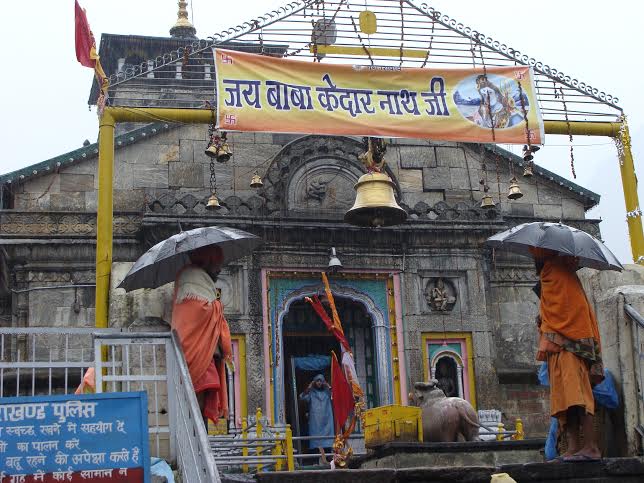
Kedarnath, May 4 (IBNS): Almost a year after the massive floods that ravaged Uttarakhand, doors of Kedarnath shine finally opened on Sunday.
Earlier on Friday, on the auspicious occasion of Akshay Tritiya, doors of Yamunotri-Gangotri were opened.
According to reports, doors of Badrinath shrine will be let open for the devotees from Monday onwards.
The yatra to Kedarnath and Badrinath temples were restarted last year itself.
The temple dedicated to Lord Shiva opened for offering prayers at 7.30 am and the rituals continued till 11 am.
Kedarnath was the worst affected area during the flash floods in North India.
The Kedarnath temple complex, surrounding areas and Kedarnath town suffered extensive damage, but the shrine remained unharmed to a large extent.
The temple, located at an height of 3,583 m (11,755 ft), 223 km from Rishikesh, on the shores of Mandakini river, a tributary of Ganges, is an impressive stone edifice of unknown date.
The structure is believed to have been constructed in 8th Century AD, when Adi Shankara visited this place and the present structure is on a site adjacent to the site where Pandavas are believed to have built the temple.
The temple has on Garbhagruha and a Mantapa and stands on a plateau surrounded by snow clad mountain and glaciers. In front of the temple, directly opposite to inner shrine, is a Nandi statue carved out of rock.
Badrinath temple, sometimes called Badrinarayan Temple, is situated along the Alaknanda river, in the hill town of Badrinath in Uttarakhand.
It is widely considered to be one of the holiest Hindu temples, and is dedicated to god Vishnu. The temple and town are one of the four Char Dham and Chota Char Dham pilgrimage sites.
It is also one of the 108 Divya Desams, holy shrines for Vaishnavites.
The temple is open only six months every year (between the end of April and the beginning of November), due to extreme weather conditions in the Himalayan region.
The main deity worshipped in the temple is a one meter tall statue of Vishnu as Lord Badrinarayan, made of black stone.
The statue is considered by many Hindus to be one of eight swayam vyakta kshetras, or self-manifested statues of Vishnu.
The murti depicts Vishnu sitting in meditative posture, rather than his far more typical reclining pose.
Support Our Journalism
We cannot do without you.. your contribution supports unbiased journalism
IBNS is not driven by any ism- not wokeism, not racism, not skewed secularism, not hyper right-wing or left liberal ideals, nor by any hardline religious beliefs or hyper nationalism. We want to serve you good old objective news, as they are. We do not judge or preach. We let people decide for themselves. We only try to present factual and well-sourced news.
Support objective journalism for a small contribution.


Latest Headlines
‘Old friend, recent critic’: Shashi Tharoor bumps into Anupam Kher during California medical checkup
Fri, Sep 18 2026
‘First Shiv Sena, then NCP, now Trinamool Congress’: Rahul Gandhi backs Mamata over party name and symbol freeze
Fri, Sep 18 2026
Gurugram murder shocker: Groom-to-be leaves sisters at Delhi restaurant to meet ex-colleague, found dead days later
Fri, Sep 18 2026
Delhi horror: Teen allegedly gangraped, stabbed to death and dumped in field; dogs eat parts of body
Fri, Sep 18 2026
TMC name, symbol frozen: EC tells rival factions to pick new identities ahead of Bengal bypolls
Thu, Sep 17 2026
PM Modi turns 76: From 25 years in public life to yoga, fasting and ‘Panchtatva’ walk — his life beyond politics
Thu, Sep 17 2026