Mocked, challenged, written off—How Narendra Modi defied every prediction to become India's longest-serving PM
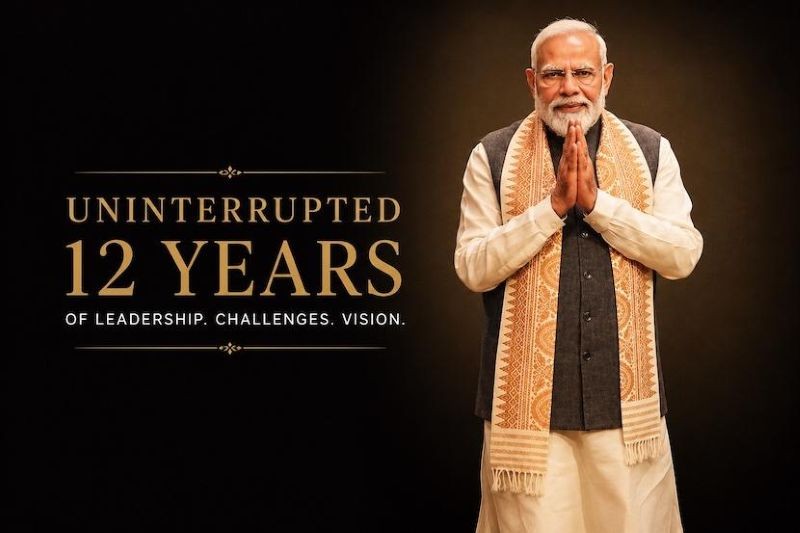
New Delhi/IBNS: From a humble beginning as a tea seller to becoming India's longest-serving Prime Minister in consecutive terms, Narendra Modi's political journey has been marked by adversity, criticism, electoral triumphs and transformative governance.
As he completes 4,399 days in office, the Bharatiya Janata Party (BJP)-led National Democratic Alliance (NDA) is preparing to celebrate a political career that has reshaped India's political landscape and challenged the dominance of the Congress, which had largely defined national politics for six decades.
In crossing this mark, Modi surpassed India's first Prime Minister, Jawaharlal Nehru, to become the country's second-longest-serving Prime Minister in a continuous tenure.
The milestone places him behind only Indira Gandhi in terms of time spent in the nation's highest executive office and marks another significant chapter in a political career that has redefined the contours of Indian electoral politics over the past decade.
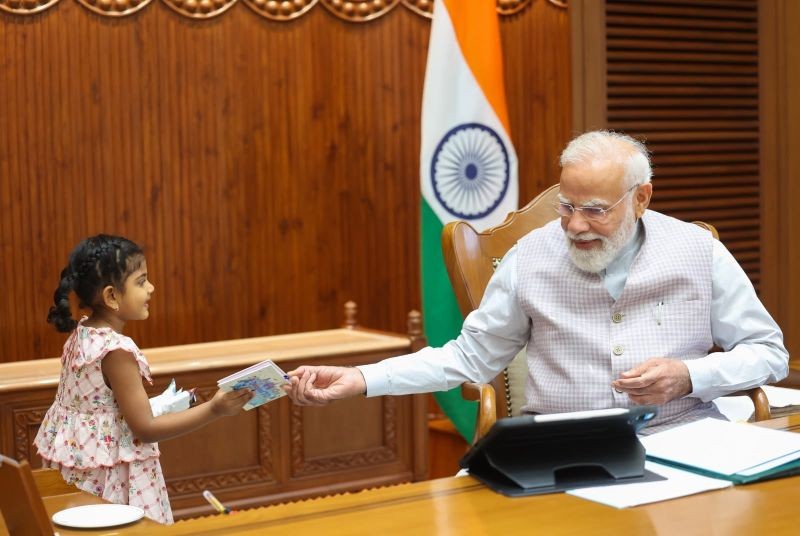
From Tea Seller to National Leader
A tea seller-turned-Rashtriya Swayamsevak Sangh (RSS) pracharak, Modi rose through the ranks of the BJP to become the country's second BJP Prime Minister in 2014.
Defying political predictions and expert assessments, he led the BJP to a historic victory, securing 282 seats and delivering India's first single-party majority government in three decades.
In the process, Modi emerged as a symbol of social mobility in Indian politics, challenging the perception that political power remained confined to elite and dynastic circles.
Defying Critics and Building a Global Profile
Modi's frequent foreign visits during his first term were often mocked by political opponents, but his supporters viewed them as part of a broader effort to elevate India's global standing.
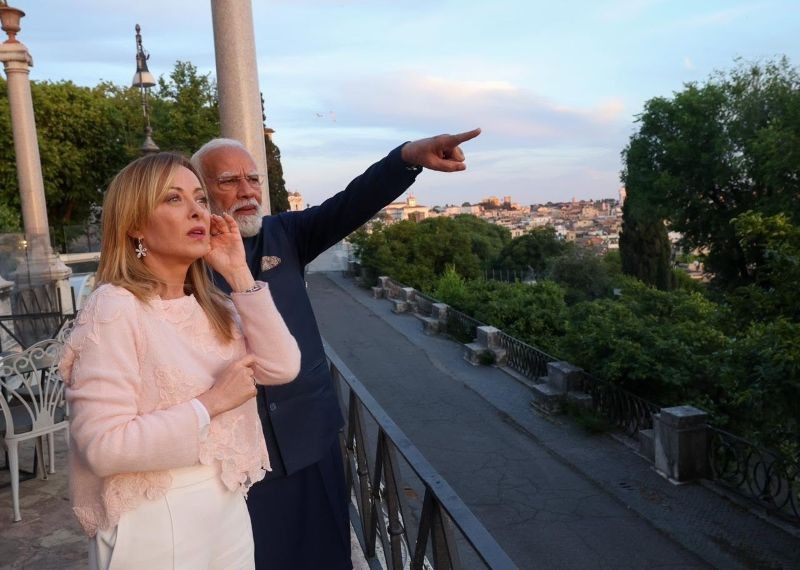
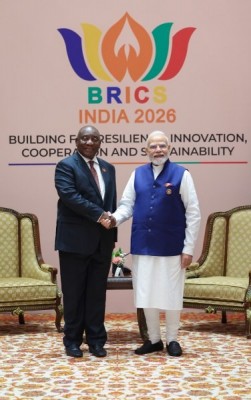
His government pursued an active diplomatic outreach, strengthening ties with major powers and expanding India's influence on international platforms.
Despite criticism over occasional diplomatic missteps, Modi remained focused on his vision of a "New India".
Demonetisation: The Gamble That Defined a Term
One of the most dramatic decisions of Modi's first term came in November 2016 when his government announced demonetisation.
The move triggered long queues outside banks and sparked intense national debate. While economists and analysts remain divided on its long-term effectiveness, the political fallout was less severe than many had anticipated.
The BJP's sweeping victory in the Uttar Pradesh Assembly elections months later suggested that a large section of voters continued to trust Modi's intentions and leadership.
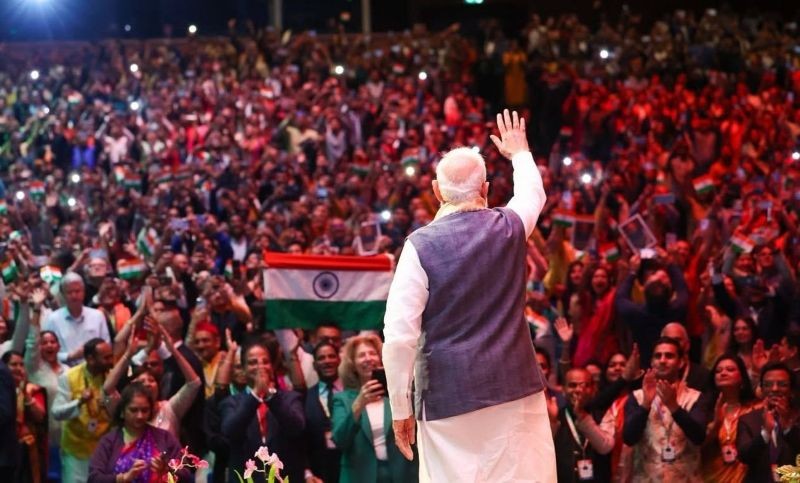
The 2019 Comeback
The BJP suffered setbacks in Madhya Pradesh, Rajasthan and Chhattisgarh ahead of the 2019 Lok Sabha elections, raising questions about Modi's political future.
The February 14, 2019 Pulwama terror attack dramatically altered the political atmosphere.
India's subsequent airstrike on terrorist camps across the border was widely viewed by supporters as a display of decisive leadership. The BJP went on to secure an even bigger mandate in the 2019 general election, winning 303 seats on its own.
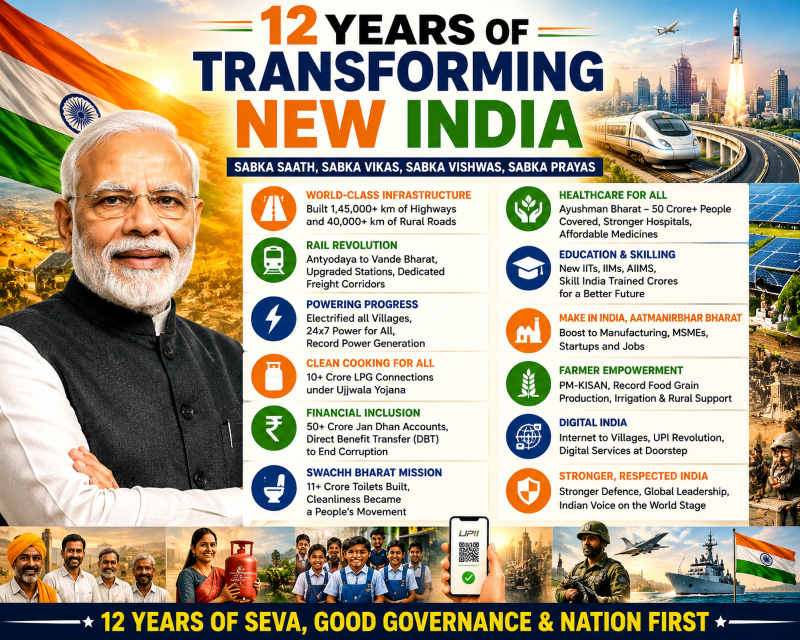
CAA, Pandemic and the Vaccine Challenge
Modi's second term began amid intense controversy over the Citizenship Amendment Act (CAA), which triggered protests across the country.
Soon after, the Covid-19 pandemic emerged as one of the biggest crises independent India had ever faced.
The nationwide lockdown, migrant crisis and economic slowdown put enormous pressure on the government.
However, India eventually developed indigenous vaccines, including Covaxin, and launched one of the world's largest vaccination drives. Through its vaccine diplomacy initiatives, India also supplied doses to several countries, enhancing its global standing during the crisis.

Infrastructure Push and Governance Agenda
The second term witnessed an aggressive push towards infrastructure development.
The government expanded highways, modernised railways, upgraded airports and promoted digital governance initiatives.
Welfare measures such as affordable medicines, direct benefit transfers and financial inclusion programmes continued to form a key part of the administration's policy framework.
Ram Temple and the Viksit Bharat Vision
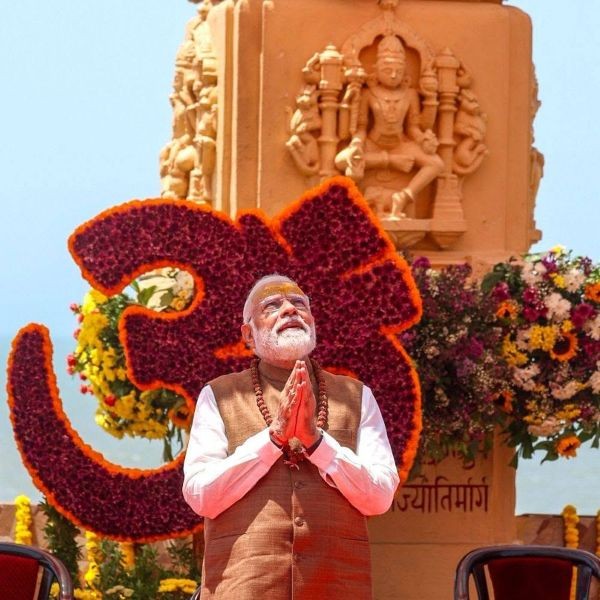
One of the defining moments of Modi's second term was the consecration of the Ram Temple in Ayodhya, fulfilling a long-standing ideological and political commitment of the BJP.
As the 2024 Lok Sabha elections approached, Modi campaigned extensively on the vision of "Viksit Bharat" (Developed India), positioning it as the next phase of India's national journey.
The 2024 Reality Check
Despite expectations of a comfortable victory, the 2024 Lok Sabha election delivered a more complex verdict.
The BJP fell short of an outright majority and relied on NDA allies to form the government for a third consecutive term.
The result was viewed by many as a reminder that coalition politics remained relevant and that electoral success could no longer be taken for granted.
In his post-election speeches, Modi repeatedly emphasised the importance of the NDA alliance, signalling a shift in political messaging.
Security, Diplomacy and Emerging Challenges
Subsequent state election victories helped the BJP maintain political momentum.
The government's supporters also highlighted India's firm response to terrorism, including military operations targeting terror infrastructure across the border following attacks on Indian soil.
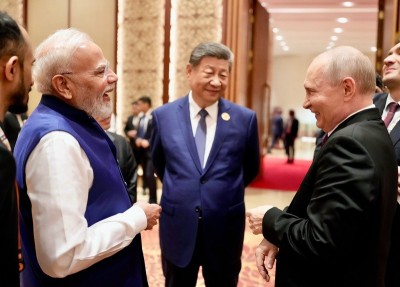
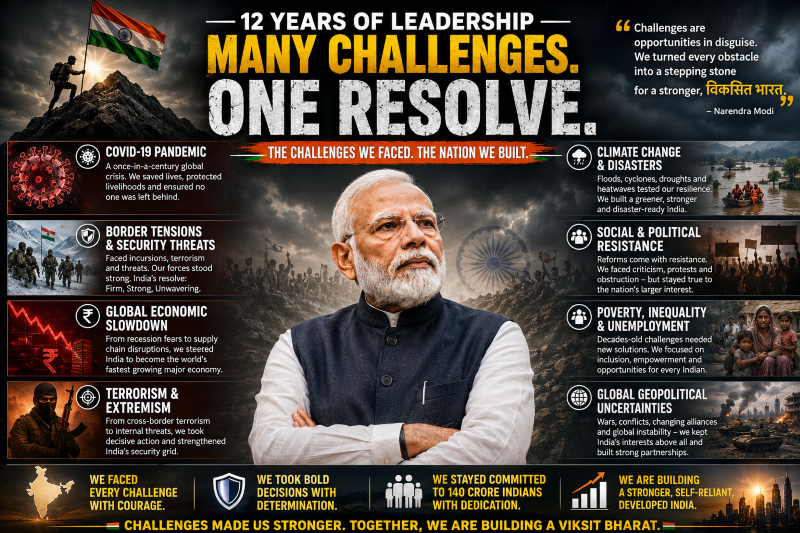
At the same time, Modi faced criticism over diplomatic and economic challenges, including debates surrounding India-Pakistan relations, tariff pressures from the United States and evolving geopolitical equations involving Russia and China.
Economic Pressures and Domestic Concerns
Rising oil prices, disruptions linked to conflicts in West Asia and global economic uncertainties have posed fresh challenges for the government.
Domestically, issues such as examination paper leaks, debates over higher education reforms and the prolonged violence in Manipur have drawn criticism and placed the administration under scrutiny.
The government has also faced questions over unemployment, inflation and social cohesion, issues that continue to influence public discourse.
The Road Ahead
Twelve years after assuming office, Narendra Modi remains one of the most influential and polarising figures in contemporary Indian politics.
For supporters, he represents decisive leadership, national pride and transformative governance. For critics, his tenure raises questions about institutional balance, social harmony and democratic accountability.
(Photos: Narendra Modi/Facebook)
Support Our Journalism
We cannot do without you.. your contribution supports unbiased journalism
IBNS is not driven by any ism- not wokeism, not racism, not skewed secularism, not hyper right-wing or left liberal ideals, nor by any hardline religious beliefs or hyper nationalism. We want to serve you good old objective news, as they are. We do not judge or preach. We let people decide for themselves. We only try to present factual and well-sourced news.
Support objective journalism for a small contribution.