"Mumbai attacks may rank among the most devastating near-misses in history of spycraft"
An investigation by The New York Times,ProPublica and the PBS series “Frontline” has found that the hidden history of the Mumbai attacks 'reveals the vulnerability as well as the strengths of computer surveillance and intercepts as a counterterrorism weapon'.
It revealed that the technology chief of Lashkar-e-Taiba had contacted a New Jersey company by posing online as an Indian reseller of telephone services named Kharak Singh, purporting to be based in Mumbai.
The chief was identified as 30-year-old computer expert named Zarrar Shah.
"Mr. Shah, the technology chief of Lashkar-e-Taiba, the Pakistani terror group, and fellow conspirators used Google Earth to show militants the routes to their targets in the city. He set up an Internet phone system to disguise his location by routing his calls through New Jersey. Shortly before an assault that would kill 166 people, including six Americans, Mr. Shah searched online for a Jewish hostel and two luxury hotels, all sites of the eventual carnage," the newspaper reported.
"But he did not know that by September, the British were spying on many of his online activities, tracking his Internet searches and messages, according to former American and Indian officials and classified documents disclosed by Edward J. Snowden, the former National Security Agency contractor," it said.
"They were not the only spies watching. Mr. Shah drew similar scrutiny from an Indian intelligence agency, according to a former official briefed on the operation. The United States was unaware of the two agencies’ efforts, American officials say, but had picked up signs of a plot through other electronic and human sources, and warned Indian security officials several times in the months before the attack," the newspaper reported.
"What happened next may rank among the most devastating near-misses in the history of spycraft. The intelligence agencies of the three nations did not pull together all the strands gathered by their high-tech surveillance and other tools, which might have allowed them to disrupt a terror strike so scarring that it is often called India’s 9/11," it said.
“No one put together the whole picture,” Shivshankar Menon, who was India’s foreign secretary at the time of the attacks and later became the national security adviser, was quoted as saying by the newspaper.
“Not the Americans, not the Brits, not the Indians.” Mr. Menon, now retired, recalled that “only once the shooting started did everyone share” what they had, largely in meetings between British and Indian officials, and then “the picture instantly came into focus," Menon said.
"The British had access to a trove of data from Mr. Shah’s communications, but contend that the information was not specific enough to detect the threat. The Indians did not home in on the plot even with the alerts from the United States," the newspaper reported.
Speaking on Shah, the newspaper said: "Not long after the British gained access to his communications, Mr. Shah contacted a New Jersey company, posing online as an Indian reseller of telephone services named Kharak Singh, purporting to be based in Mumbai. His Indian persona started haggling over the price of a voice-over-Internet phone service — also known as VoIP — that had been chosen because it would make calls between Pakistan and the terrorists in Mumbai appear as if they were originating in Austria and New Jersey."
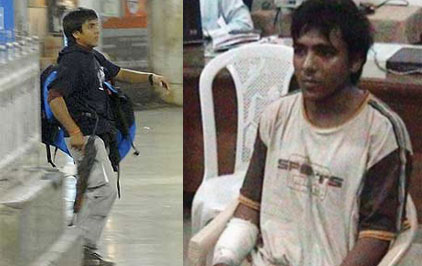
The attacks, which drew widespread global condemnation, began on Wednesday, Nov 26 and lasted until Saturday, Nov 29, 2008, killing 166 people and wounding at least 308.
Support Our Journalism
We cannot do without you.. your contribution supports unbiased journalism
IBNS is not driven by any ism- not wokeism, not racism, not skewed secularism, not hyper right-wing or left liberal ideals, nor by any hardline religious beliefs or hyper nationalism. We want to serve you good old objective news, as they are. We do not judge or preach. We let people decide for themselves. We only try to present factual and well-sourced news.