Pakistan offers Trump $1.2 billion Pasni port project near India’s Chabahar in bid to reset US ties
Pakistan has proposed that the United States build and operate a port on the Arabian Sea, in what appears to be an attempt to rekindle ties with Washington under President Donald Trump, the Financial Times has reported.
According to the report, advisers to Pakistani Army Chief Field Marshal Asim Munir have reached out to senior US officials with an offer valued at up to $1.2 billion to develop a civilian deep-water port at Pasni in Balochistan’s Gwadar district.
The port’s proposed site places it strategically close to Chabahar in Iran, where India is developing the Shahid Beheshti terminal.
Deep-water port in Pasni
The blueprint proposes that the US construct and manage a terminal at the Pasni port to facilitate access to Pakistan’s critical minerals.
Pasni, located in the volatile Balochistan province, shares borders with Afghanistan and Iran.
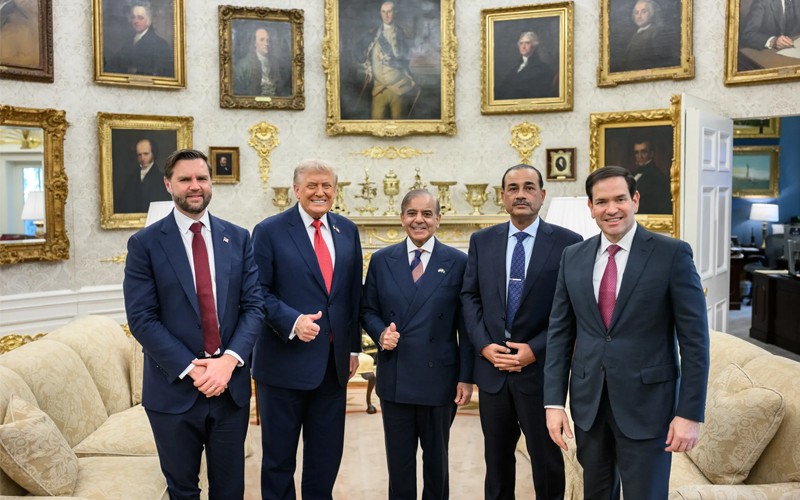
The proposal follows a closed-door meeting between Trump, Prime Minister Shehbaz Sharif, and Munir at the White House in September.
During the meeting, Sharif sought American investment in Pakistan’s mining and energy sectors, while Munir showcased samples of the country’s mineral wealth.
Images circulated on social media showed Munir presenting Trump with a wooden box containing rare earth minerals.
Soon after, a US metals firm signed a $500 million deal with Pakistan to jointly explore strategic minerals for defence and technology applications.
Having been sidelined during Joe Biden’s presidency, Islamabad has been eager to mend relations with Washington under Trump, offering access to its untapped oil, gas, and mineral reserves—mostly located in the restive Balochistan region.
It remains unclear, however, whether Munir discussed the Pasni port proposal directly with Trump.
The blueprint reportedly rules out any US military use of the port or establishment of a base.
Instead, Pakistan is seeking American financing to build a rail link connecting the Pasni facility to its mineral-rich western provinces.
What’s in it for the US—and implications for India
Pakistan has tried to appeal to Washington by highlighting Pasni’s proximity to Iran and Central Asia, suggesting it could bolster America’s trade routes and expand its presence in the Arabian Sea region.
However, the geopolitical stakes are high.
China already operates the nearby Gwadar port—just 100 km from Pasni—under its Belt and Road initiative.
Any US involvement in Pasni could complicate Islamabad’s delicate balancing act between Beijing and Washington.
India, too, will be closely monitoring developments.
The proposed Pasni port lies only about 300 km from Chabahar, which New Delhi and Tehran agreed in 2024 to jointly develop and manage under a 10-year deal.
Chabahar serves as India’s key route to Afghanistan and Central Asia, bypassing Pakistan.
Support Our Journalism
We cannot do without you.. your contribution supports unbiased journalism
IBNS is not driven by any ism- not wokeism, not racism, not skewed secularism, not hyper right-wing or left liberal ideals, nor by any hardline religious beliefs or hyper nationalism. We want to serve you good old objective news, as they are. We do not judge or preach. We let people decide for themselves. We only try to present factual and well-sourced news.
Support objective journalism for a small contribution.