 Canada
Questions arise over Justice Minister appointment in Canada
Canada has long prided itself on the strength of its democratic institutions, but recent political appointments have sparked heated debates over the influence of external affiliations on government portfolios.
At the center of the controversy is Arif Virani, newly appointed as Canada’s Minister of Justice and Attorney General.
Critics question whether his appointment represents an independent, merit-based decision or a troubling example of undue influence within the country’s political sphere.
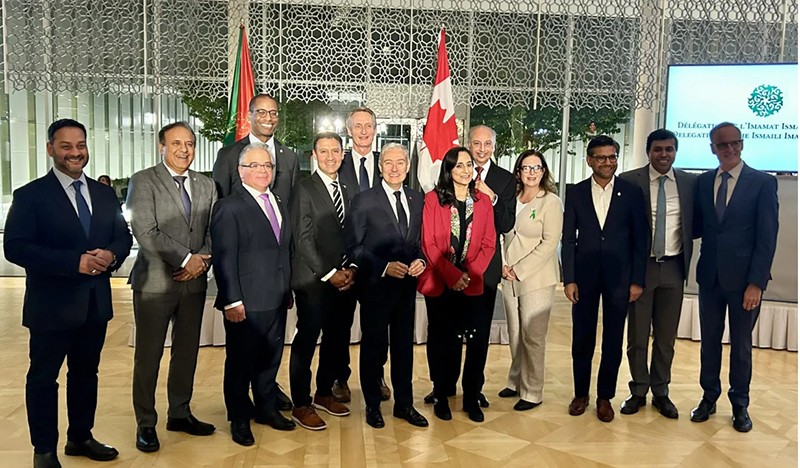
Arif Virani’s appointment has drawn attention not only for his record as a politician but also for his ties to the Aga Khan, a prominent spiritual leader of the Ismaili Muslim community. Prime Minister Justin Trudeau’s decision to elevate Virani to the high-profile justice portfolio has reignited discussions about Trudeau’s past connections to the Aga Khan, including his 2016 vacation on the leader’s private island—a trip that led to Trudeau being found in violation of the Conflict of Interest Act.
During his tenure, Virani has played a key role in overseeing a significant number of judicial appointments, a process central to Canada’s justice system.
However, concerns have been raised over his advocacy for the controversial “Online Harms Act,” a piece of legislation that critics argue could have sweeping implications for free speech in Canada.
For some, this raises the question of whether his appointment reflects a commitment to justice or serves the interests of a specific agenda.
Opponents of the decision question what qualifications, beyond political or external affiliations, led to Virani’s appointment. They allege that his selection could be a symbolic nod to powerful groups and question whether it undermines public confidence in the impartiality of Canada’s justice system.
This controversy comes as Trudeau’s Liberal government faces increasing scrutiny over its approach to governance and transparency. For many, the optics of this appointment—particularly in light of Trudeau’s past ethical lapses—add fuel to an ongoing debate about the influence of elite networks and the priorities of Canada’s political leadership.
The Prime Minister’s Office has yet to address these concerns directly, and Trudeau has previously dismissed suggestions of favoritism in political appointments.
Nevertheless, the questions surrounding Arif Virani’s rise to one of Canada’s most powerful legal roles reflect a growing unease among Canadians about the forces shaping the country’s government.
As the justice portfolio continues to influence pivotal issues, from judicial appointments to digital rights, public trust in its independence will remain under scrutiny.
This latest chapter in Trudeau’s leadership serves as a reminder of the delicate balance between political strategy and public accountability in democratic institutions.
Only time will tell how this appointment impacts the broader narrative of Canadian politics and governance.
(Image and Text courtesy: Khalsavox.com)
Support Our Journalism
We cannot do without you.. your contribution supports unbiased journalism
IBNS is not driven by any ism- not wokeism, not racism, not skewed secularism, not hyper right-wing or left liberal ideals, nor by any hardline religious beliefs or hyper nationalism. We want to serve you good old objective news, as they are. We do not judge or preach. We let people decide for themselves. We only try to present factual and well-sourced news.
Support objective journalism for a small contribution.