 Liquor scam
SC questions central agencies' 'fairness' in Delhi liquor policy case, K Kavitha gets bail
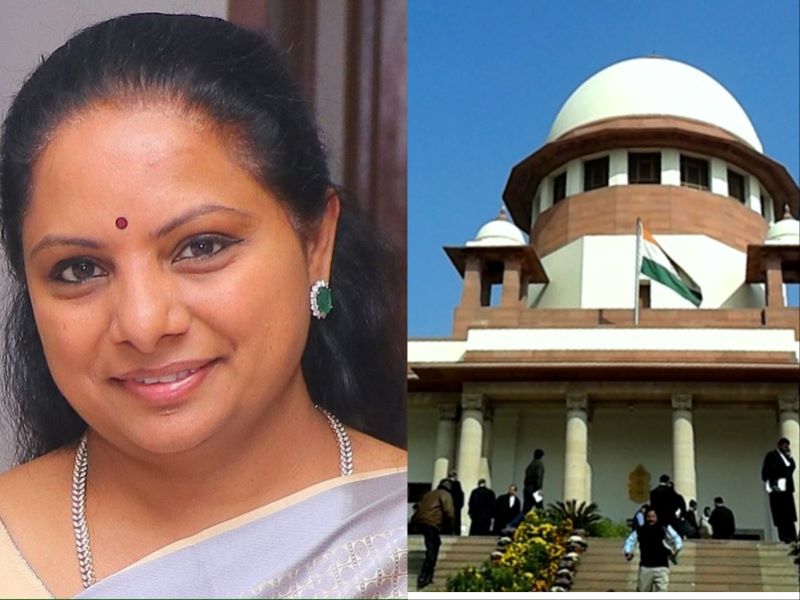
New Delhi/IBNS: In a significant observation, which could have a significant impact on future hearings in the alleged Delhi liquor policy case, the Supreme Court has questioned the Enforcement Directorate and the Central Bureau of Investigation (CBI)'s "fairness" as they probe opposition politicians and others in this matter.
A two-judge bench of Justices BR Gavai and KV Viswanathan observed the federal agencies could not rely only on statements made by former accused persons who have turned 'approver', or become prosecution witnesses.
"You have to be fair... a person who incriminates himself has been made a witness? You cannot pick and choose... What is this fairness?" the court asked.
This came after the prosecution challenged the bail plea by Bharat Rashtra Samithi leader K Kavitha, who was arrested by the ED in March in connection with the liquor policy case and the CBI the following month.
Arguing against Kavitha, Additional Solicitor General SV Raju had referred to "independent evidence" by former accused Bucchi Babu and Raghav Magunta Reddy, who transformed into government witnesses (and received pardons) in April last year and March this year, respectively.
However, senior advocate Mukul Rohatgi, appearing for Kavitha, pointed out that many of the same statements, by the same individuals, had been cited as "evidence" in related cases, particularly that involving Delhi Chief Minister Arvind Kejriwal, who was arrested in March, days after Kavitha.
"You say Kejriwal is kingpin... say (ex-Delhi Deputy Chief Minister Manish) Sisodia is kingpin... then say I (K Kavitha) am kingpin! There is no evidence apart from approvers' tainted statements!"
At this point the court stepped in, observing approvers' statements needed to be backed up by direct evidence. "What is the material to show she was involved in the crime?" Justice Gavai asked Raju.
The top court's observation has been critical in the liquor policy case context, much of which, it appears, depends on statements by former accused-turned-approvers.
Mention of approvers' statements featured heavily in bail pleas filed by Kejriwal and Sisodia before the Supreme Court. Sisodia was granted bail by the top court earlier this month.
The court then noted that he had spent nearly 18 months in jail and there was no prospect of a trial anytime soon. To keep him in prison would be a "travesty of justice", the court said.
Kejriwal, who has also contested charges against him by noting the material is based on approvers' statements, remains in jail. He was given bail in the ED case but not yet in the CBI case.
K Kavitha gets bail
Meanwhile, moments after the court's tough questions to the agencies, Ms Kavitha got bail.
In doing so the court also noted she too had spent months in jail without a trial, and that to keep her in prison, given "likelihood of trial be in near future is impossible", would violate fundamental rights.
The court also noted "the law provides special treatment for women while considering bail applications", referring to provisions in Section 45 of the Prevention of Money Laundering Act that "permits certain category of accused, including women, to be released on bail without (satisfying) twin requirements."
The prosecution had argued against bail on this ground, declaring Ms Kavitha's status as an educated woman and former MP, excluded her from being a 'vulnerable' person.
Support Our Journalism
We cannot do without you.. your contribution supports unbiased journalism
IBNS is not driven by any ism- not wokeism, not racism, not skewed secularism, not hyper right-wing or left liberal ideals, nor by any hardline religious beliefs or hyper nationalism. We want to serve you good old objective news, as they are. We do not judge or preach. We let people decide for themselves. We only try to present factual and well-sourced news.
Support objective journalism for a small contribution.