 Khalistan
The Khalistan referendum: A misguided pursuit of self-determination
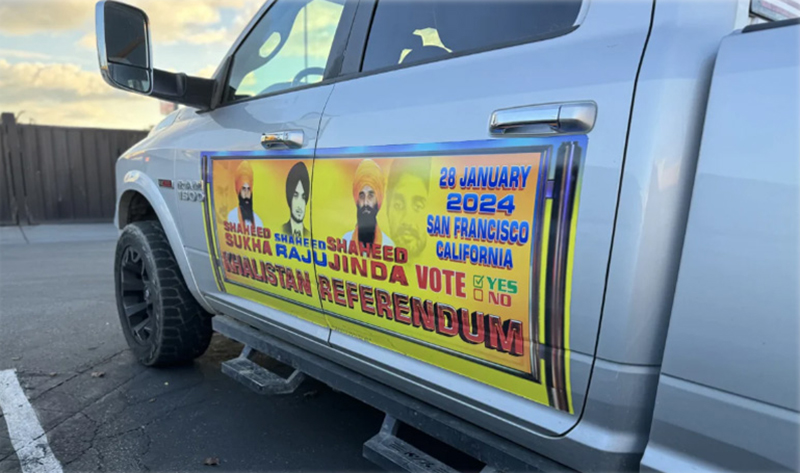
On January 28th, hundreds of Sikhs lined up in California to cast their votes in the “Khalistan” Referendum, organized by the proscribed group Sikhs for Justice (SFJ). This self-declared vote seeks to carve out an independent Sikh homeland from Northern India. While the SFJ touts this as a noble pursuit of self-determination, a closer look reveals a fundamental misunderstanding of both the principle and the necessary procedures for its legitimate exercise.
The right to self-determination, while enshrined in international law, is not a blank check for secession. Its purpose is to protect oppressed peoples, not grant territorial grab-bags to any group that desires them. As legal scholar Yoram Dinstein reminds us in the book War, Aggression and Self-Defence, this right belongs to “all peoples,” (jus cogens norm) not just select diasporas.
Historically, self-determination has manifested in two forms: external, granting secession from colonial rule, and internal, offering autonomy within existing states. The SFJ’s demand for an independent “Khalistan” falls neither neatly into these categories. They claim it’s necessary due to alleged human rights abuses by India, but their unilateral referendum excludes the very people it supposedly represents – the Sikhs living in Punjab itself.
In Punjab, beneath the vibrant turbans, beats the unwavering heart of Indian patriotism. Sikhs in this corner of India are not defined by division but by a deep-rooted pride in being a part of a vibrant and diverse India. They see a rising India aiming for a $5 trillion economy and want to be an integral part of that ascent. Equal opportunities, not separate borders, fuel their aspirations.
The theocratic whispers of Khalistan find no fertile ground here. Sikhs in Punjab have witnessed the turmoil of the past, and they have chosen prosperity over separatism. There is no romanticized blueprint for this proposed nation, no clear path to navigate its potential pitfalls. For them, India’s diversity is not a burden, but a strength. They want to contribute to its rich cultural mosaic, not secede from it.
Every five years, Punjab holds elections, electing their representatives in a vibrant display of democracy. These elections have served as a resounding rejection of any secessionist whispers. Time and again, the fringe voices advocating for Khalistan have been relegated to the margins, garnering barely any votes in the face of a unified population yearning for progress and prosperity within the folds of India.
Exclusion of the very people it claims to represent – the Sikhs and other communities residing within Punjab – exposes it as a hollow exercise in self-aggrandizement. True self-determination lies not in manufactured consent from afar, but in the voices that rise from the fertile fields of Punjab itself, voices that sing a chorus of unity and shared dreams within the vibrant diversity of India.
Referendums, like the Khalistan Referendum as well, while carrying powerful sociological weight, require rigorous adherence to legal norms. The Aaland Islands case, often cited by secessionists, involved a population seeking reunification with a pre-existing state within a newly independent Finland. The Khalistan referendum, however, seeks to redraw international borders based on the preferences of a select diaspora, completely ignoring the voices of those on the ground.
This blatant disregard for procedural legitimacy renders the “Khalistan” referendum entirely null and void. As James Crawford, another legal scholar, states, “an entity may not claim statehood if its creation is in violation of an applicable right to self-determination.” Colin Warbrick, referencing the illegal Rhodesian referendum, echoes this point: “the illegality stemmed from the fact that it had been established without the consent of the people of the territory as a whole.”
In nations like the US and Canada, where free speech stands tall as a pillar of identity, navigating the tightrope between open expression and harmful extremism becomes a delicate dance. While safeguarding the vital right to dissent and debate, we must remain vigilant against those who twist these freedoms into weapons of hate and division. Fringe extremists, often cloaked in the false garments of free speech, seek to exploit these liberties for their own nefarious ends. They spew venom, sow discord, and ignite flames of prejudice, all under the guise of expressing their “opinions.”
The SFJ’s attempt to manufacture legitimacy through a flawed and biased referendum is misguided at best and dangerous at worst. True self-determination requires the involvement of all stakeholders, respect for legal procedures, and a genuine dialogue rather than unilateral power grabs. Until these principles are embraced, the “Khalistan” referendum will remain a hollow charade, fuelling tensions and undermining the very right it claims to uphold.
The echoes from Punjab are clear: they yearn for more employment, better roads, improved healthcare, and a share in the nation’s economic fruits. They want to educate their children in a vibrant, unified India, in line with the teachings of their Gurus, not a nation carved out of religious divides. Their dreams are woven into the fabric of India’s aspirations, and their hands are ready to help build a stronger, more inclusive future for all.
(Photo and Text courtesy: Khalsavox.com)
Support Our Journalism
We cannot do without you.. your contribution supports unbiased journalism
IBNS is not driven by any ism- not wokeism, not racism, not skewed secularism, not hyper right-wing or left liberal ideals, nor by any hardline religious beliefs or hyper nationalism. We want to serve you good old objective news, as they are. We do not judge or preach. We let people decide for themselves. We only try to present factual and well-sourced news.
Support objective journalism for a small contribution.