

 India
India
Union Minister says 6.39 crore individuals were trained under digital literacy programme in rural India
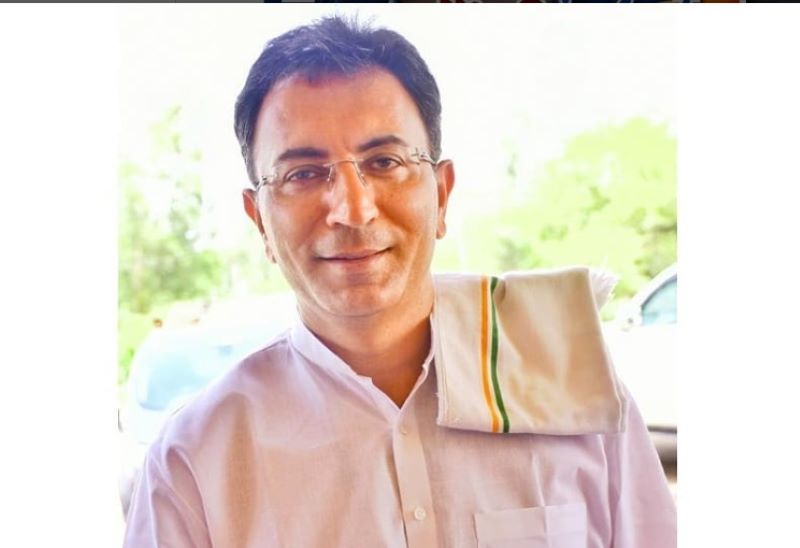
Minister of State for Electronic & Information Technology Jitin Prasada on Friday informed the Rajya Sabha that the Indian government has implemented the scheme “Pradhan Mantri Gramin Digital Saksharta Abhiyan (PMGDISHA)” for digital literacy in rural India.
"Under the said scheme, around 7.35 crore candidates were enrolled and 6.39 crore were trained, out of which 4.78 crore candidates were certified," he said.
The main features of the PMGDISHA scheme are as under
The scheme was implemented only in rural areas i.e. Gram Panchayat/Village to cover 6 crore rural households (one person per household).
The beneficiaries were provided with 20 hours of training consisting of 5 modules namely (i) Introduction to digital devices, (ii) Operating digital devices, (iii) Introduction to the internet, (iv) Communications using the internet, (v) Application of internet (includes citizen centric services) and use of financial tools for undertaking digital cashless transactions.
The training content was made available in 22 scheduled languages and English. This content was made available in both online and offline mode. In addition, keeping in view the thrust of the government on promoting cashless transactions through mobile phones, the content on digital wallets, mobile banking, Unified Payments Interface (UPI), Unstructured Supplementary Service Data (USSD), Aadhaar Enabled Payment System (AEPS), and PoS were included.
After training of the candidate, a third-party assessment of the trained candidates was carried out by recognized certifying agencies namely National Institute of Electronics and Information Technology (NIELIT), National Institute of Open Schooling (NIOS), Centre for Development of Advanced Computing (CDAC), Haryana Knowledge Corporation Limited (HKCL) and ICT Academy of Tamil Nadu (ICTACT). Digitally Signed Certificates were issued for all successful candidates and directly uploaded in their Digi-Locker accounts.
Support Our Journalism
We cannot do without you.. your contribution supports unbiased journalism
IBNS is not driven by any ism- not wokeism, not racism, not skewed secularism, not hyper right-wing or left liberal ideals, nor by any hardline religious beliefs or hyper nationalism. We want to serve you good old objective news, as they are. We do not judge or preach. We let people decide for themselves. We only try to present factual and well-sourced news.
Support objective journalism for a small contribution.