'Who asks for proof of religion?' Plea challenges Waqf Law in Supreme Court
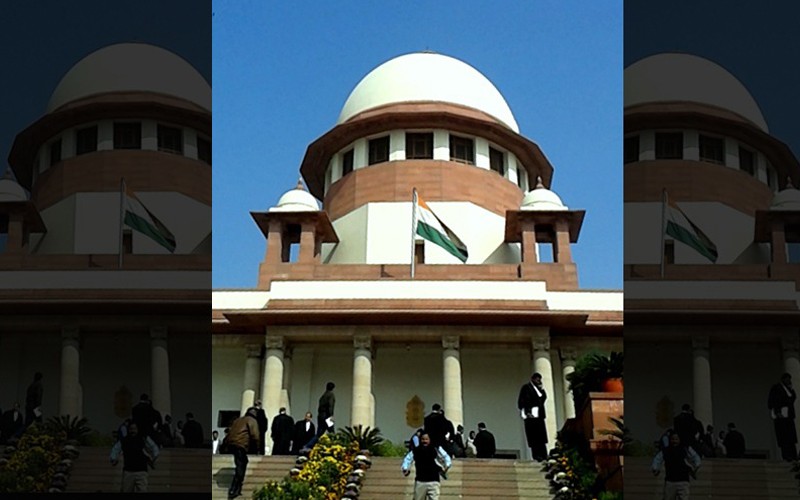
New Delhi/IBNS: The Waqf was not created for a secular process but a Muslim's dedication of property to God, senior advocate Kapil Sibal told the Supreme Court on Tuesday, challenging the inclusion of non-Muslim members in Waqf bodies as per the law's provision.
Appearing for a petitioner, Sibal argued that the composition of the Central Waqf Council under the new law is such that Muslims can become a minority.
The 22-member body has the Minority Affairs Minister as an ex officio member. Ten of its members must be chosen from among Muslims.
The others include jurists, persons of national eminence, and a bureaucrat.
Sibal argued that with the inclusion of the new provision, the control of the Waqf body has been taken away from the Muslims.
"In every religious endowment, not a single person is a Muslim or non-Hindu," Sibal said, pointing to Hindu and Sikh institutions.
Chief Justice BR Gavai then asked, "What about Bodh Gaya? All are Hindus."
To this, Sibal said, "I knew you will ask this", and pointed out that places of worship can be the same for Hindus and Buddhists.
"These are mosques. This is not secular. Creation of Waqf is itself not secular. It's a Muslim property dedicated to God," Sibal said.
Senior Advocate Abhishek Singhvi, also appearing for a petitioner, said the new law is a tactic to ensure that the applicant keeps visiting the office for Waqf registration "forever".
"This is just to infuse terror... Endowments are there in every religion. Which religious endowment asks you to prove that you have been practising it for the last 5 years? Who asks them for proof of religion?" Singhvi said that as soon as a dispute is raised under the new law, a property will lose its status as Waqf.
Senior Advocate Huzefa Ahmadi asked how someone would be identified as a practising Muslim to fulfil the criterion under the new law. "Can someone ask me, do you pray five times a day... and then someone will ask me if I drink... is that how it will be judged?"
The case will be heard again on Wednesday.
The Waqf Amendment Act, which was cleared in the Parliament and became a law last month, sparked nationwide protests as Muslim bodies claimed it was an attack on minorities and accused the Centre of eyeing Waqf land.
The government insists that the amendments have been undertaken to ensure the functioning of Waqf Boards is more efficient, inclusive, and transparent.
Support Our Journalism
We cannot do without you.. your contribution supports unbiased journalism
IBNS is not driven by any ism- not wokeism, not racism, not skewed secularism, not hyper right-wing or left liberal ideals, nor by any hardline religious beliefs or hyper nationalism. We want to serve you good old objective news, as they are. We do not judge or preach. We let people decide for themselves. We only try to present factual and well-sourced news.
Support objective journalism for a small contribution.