24TH KIFF screens restored classics for cine buffs
Kolkata, Nov 16 (IBNS) The terms “restoration” and “preservation” have very positive associations so far as cinema across the world is concerned.
The digitalization of cinema has spread the idea that celluloid cinema on 8mm, 16mm and 35 mss is passé and will no longer be in vogue in another ten years perhaps.
Then, what about the classic films that have not been digitized because they were not fit enough to be digitized or, perhaps, it did not occur to anyone that these might get destroyed because of lack of proper infrastructure in film organizations for the conservation and preservation of old films, classic or not?
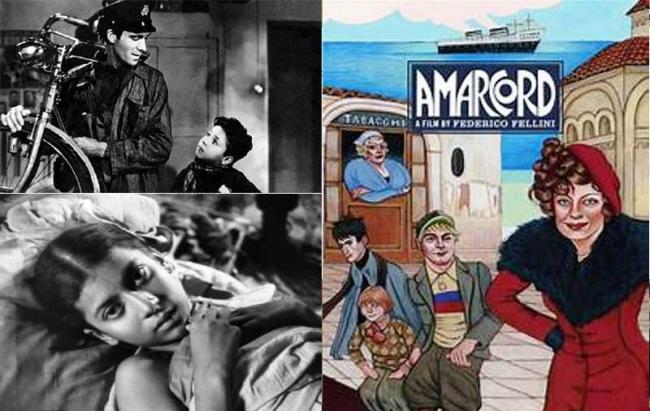
The 24th KIFF has not only organized a Film Preservation and Restoration Workshop under the aegis of the Film Heritage Foundation along with a host of international organizations involved in this work, but for film buffs, it has also curated a screening programme for people who would love to catch up on very good restored prints of say, Bicycle Thief, or, Amarcord, or even say, Uday Shankar’s film Kalpana which may not have been a very good film technically speaking, but has excellent archival value.
In 1992, Academy of Motion Pictures Arts and Sciences decided to honour veteran Indian filmmaker Satyajit Ray with the Lifetime Achievement Award (Oscar). Filmmaker and critic Richard Schickel was asked to put together a montage of Ray’s films. A search for the material available revealed that hardly any copies of Ray’s films were available in the USA and those that were available were in extremely poor condition.
Later, in October 1992, at the behest of the Academy, when Professor Dilip Basu of the University of California, Santa Cruz, and David Shepard, director of Film Preservation Associates and a member of the Academy, began an assessment of Ray’s films, they were in for a rude shock — the original negatives of 18 films were in critical condition.
Perhaps it was left to Shivendraj Singh Dungarpur, the young alumnus of the FTII Pune, who “re-discovered’ P. K. Nair through his celluloid tribute Celluloid Man to form the Film Heritage Foundation in 2014 and has formed a wonderful body that conducts Film Preservation and Restoration Workshops throughout the country and this year, has added Kolkata to its geography.
This Foundation has restored the Ray trilogy on Apu and all three are in the screening schedule of the 24th KIFF. The other films are - Amarcord, Blow-Up, The Magnificent Ambersons and Bicycle Thieves.
Shivendra is deeply committed to the preservation and restoration of cinema. He travels the world to meet and extensively interview on camera great masters of cinema for his personal archive.
He has spent time with Manoel de Oliveira in Porto and shot documentaries on Jiri Menzel and Raoul Coutard. He has also shot in-depth interviews with Andrzej Wajda and Krzysztof Zanussi in Warsaw, Miklós Jancsó and István Szabó in Budapest and VÄ›ra Chytilová, Juraj Herz and Jan Nemec in Prague.
He is a patron of the British Film Institute and facilitated the restoration of the 1948 Indian classic Uday Shankar’s “Kalpana” done by Martin Scorsese’s World Cinema Foundation that was premiered in the Cannes Classic section in 2012.
“Films are a part of our cultural history. I was shocked to discover that of the 1700 silent films made in India only 9 survive thanks to the efforts of Mr. Nair. He travelled to remote parts of India to collect and save cans of rare films. The fact that Dadasaheb Phalke is recognized today as the father of Indian cinema is Mr. Nair’s doing. He was truly democratic as an archivist trying to save any film that he could get his hands on be it world cinema, Hindi popular films or regional Indian cinema. He even took world cinema to the villages of India,” Dungarpur sums up.
(Reporting by Shoma A. Chatterji)
Support Our Journalism
We cannot do without you.. your contribution supports unbiased journalism
IBNS is not driven by any ism- not wokeism, not racism, not skewed secularism, not hyper right-wing or left liberal ideals, nor by any hardline religious beliefs or hyper nationalism. We want to serve you good old objective news, as they are. We do not judge or preach. We let people decide for themselves. We only try to present factual and well-sourced news.
Support objective journalism for a small contribution.