A multilayered tribute to Bimal Roy at the KIFF 2018
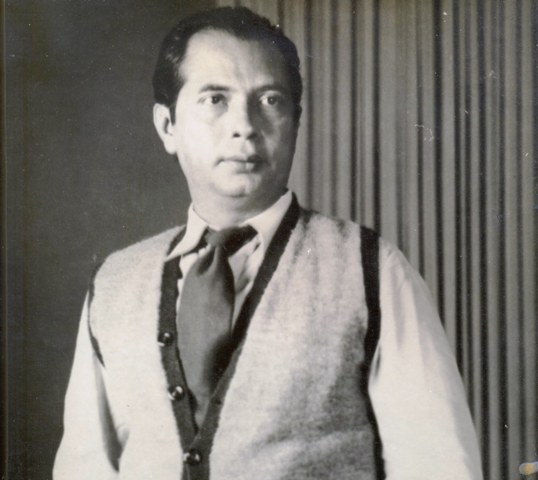
Bimal Roy is one of the ten most favourite filmmakers so far as this writer is concerned. So, a multi-layered tribute to this great master of Indian cinema that is an integral part of the 24th KIFF is a celebration unto itself. Shoma A Chatterji reports
According to well-known journalist, author and filmmaker Ratnotamma Sengupta, who has curated the tribute on Bimal Roy, in its several layers for the 24th KIFF "the spread is remarkably laid out under three different umbrellas. "
"The Bengali Cinema Centenary Tribute includes his debut film Udayer Pathey (1943) and Mukti for which he was behind the camera. The Great Masters’ section features Pehla Aadmi (1949), perhaps the first Indian film to depict war on the big screen. Maa (1952) is what took Bimal Roy to Bombay, along with his dedicated team comprising Hrishikesh Mukherjee, Nabendu Ghosh, Nazir Hussain, Paul Mahendra."
Roy's Do Bigha Zamin (1953) remains a milepost on our screen for ushering new realism. "Yahudi (1957) remains etched in my mind for the lovable pairing of Dilip Kumar and Meena Kumari and also for Sohrab Modi’s performance in the Parsee theatre mould. And Sujata (1959) with its charming juxtaposition of casteist prejudices versus scientific realities, continues to bring us back to Gandhian ideals.”
Ratnotamma should know because as the daughter of story and screenplay writer Nabendu Ghosh, she has become an authority on Bimal Roy.
.jpg)
The Shorts and Documentaries Section features Gotama The Buddha, a long documentary made by Bimal Roy which very few of us have seen, Remembering Bimal Roy made by his son Joy Roy and And They Made Classics by Shivraj Singh Dungarpur of the Film Heritage Foundation.
A seminar on him at the KIFF include speakers such as Aditya Roy Bhattacharya, the grandson of Bimal Roy, Anik Dutta, noted filmmaker known for his film Bhooter Bhabishyat and some others.
Bimal Roy’s “Cinema” embraces much more than the images we see flashed on the screen shot and projected on 35 mm which might have become a fossilized symbol of the past unless the Film Heritage Foundation was formed to restore his films. But there are films like Baap Beti and Anjangarh which can never be restored as they are lost completely in time.
Bimal Roy’s space and time in cinema overlaps the colonial cultural and political ambience and the ambience in Independent India where his choice of source also transcends the colonial era to step into independent India. During his tenure as director, Bimal Roy directed 15 feature films and four documentaries. He also produced some films under his Bimal Roy Productions banner which he did not direct himself.
Bimal Roy’s cinema and his style, treatment, approach and presentation were unique in defining this filmmaker without bringing in any comparative analysis of his cinema and the that came after Ray made his historic debut in Indian cinema.
Support Our Journalism
We cannot do without you.. your contribution supports unbiased journalism
IBNS is not driven by any ism- not wokeism, not racism, not skewed secularism, not hyper right-wing or left liberal ideals, nor by any hardline religious beliefs or hyper nationalism. We want to serve you good old objective news, as they are. We do not judge or preach. We let people decide for themselves. We only try to present factual and well-sourced news.
Support objective journalism for a small contribution.