 Documentary
Every film has a climate responsibility irrespective of subject, say American docu makers
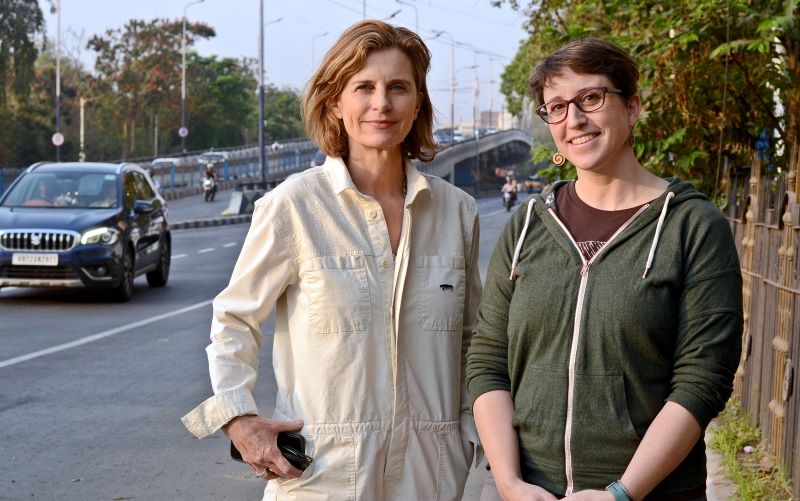
American documentary filmmakers Holly Morris and Deia were in Kolkata recently for a workshop and the screening of their films, Exposure and The Story of Plastic respectively. IBNS correspondent Souvik Ghosh interacts with both...
Q (to HM): Tell us about your film Exposure.
HM: Exposure is a film about a group of women from the Arab world and the West who teamed up to try to ski the north pole. It's a part of an expedition film and a part of feminist manifesto for women's history. It's also an environmental film in many ways because it plays out a climate change ground zero but also a good adventure.
Q (to HM). What are the ways you have touched upon the burning issue of the environment?
HM: Exposure is about skiing over the Arctic Sea ice to the north pole. The sea ice is disappearing very rapidly which increases the danger of the experience. It also reveals the profoundness of the story because when we see those women crossing the fragile bit of ice and hear those cracking under their skis and see the open needs of water. All these scenes make the climate crises, which are often abstract, very real.
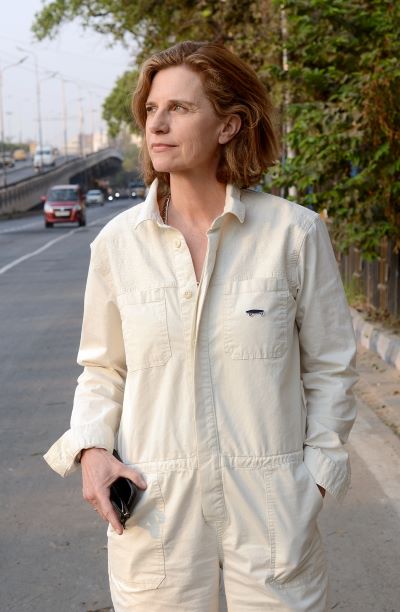 Holly Morris | Image Credit: Avishek Mitra/IBNS
Q (to HM): How crucial has it become for filmmakers to touch upon these issues?
HM: I think every film has a climate responsibility in some way or the other even if the project's subject is very different. The production process can be a green filmmaking experience and embody good practices in small steps to help the planet. The topic of true climate themes should be there in as many projects as possible. I do think even a wider range of stories can embody the values that we need in moving forward. I also think the climate storytelling is also evolving.
Q (to D): Can you tell us the crux of your film The Story of Plastic?
D: I think most people have heard about plastic pollution and how big the problem is. Most people are unaware of where the plastics are coming from. Not just the countries or resources directly but originally coming out of the Earth are fossil fuel, raw materials so my film explores the whole lifecycle and all of these environmental and human health abuses along the whole chain and the people impacted in the whole way.
Q (to D): Do you have any favourite pick among the films which deal with environmental issues?
D: To keep it on topic, I thought Plastic China has been an amazing film. It was very beautiful.
Q (to both): How challenging is it to deal with environment issues through the prism of fiction?
HM: I think it is the biggest challenge as a filmmaker because those issues don't land unless we present them in a certain way. I think climate storytelling is evolving. We are telling artful, adventurous, character-driven stories and those things make a great film.
D: I think more films can use the opportunities of the platform they are given to bring up climate issues without having to be climate or environmental films because climate is affecting almost every aspect of daily life around the world.
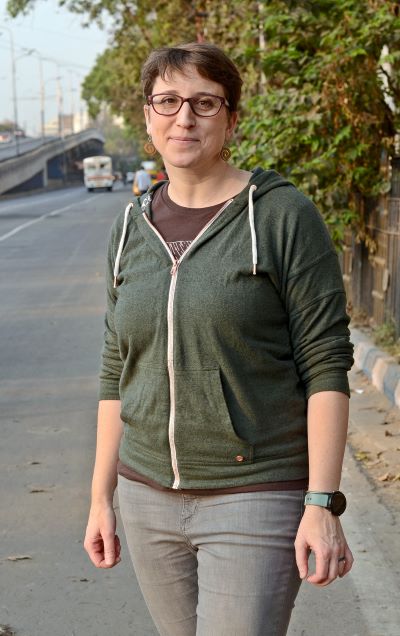 Deia | Image Credit: Avishek Mitra/IBNS
Q (to both): Do you think enough steps have been taken to combat climate issues globally?
HM: It's a firm 'No' from both of us (laughs). We were in Egypt during COP27 and we wondered whether the steps taken were effective. We don't know the answer actually whether the right things are coming out.
D: I think it can largely be solved with a political will. It can be solved by the world leaders who have the most power and resources.
(Images by Avishek Mitra/IBNS)
Support Our Journalism
We cannot do without you.. your contribution supports unbiased journalism
IBNS is not driven by any ism- not wokeism, not racism, not skewed secularism, not hyper right-wing or left liberal ideals, nor by any hardline religious beliefs or hyper nationalism. We want to serve you good old objective news, as they are. We do not judge or preach. We let people decide for themselves. We only try to present factual and well-sourced news.
Support objective journalism for a small contribution.