October 05, 2026 08:33 am (IST)

Follow us:


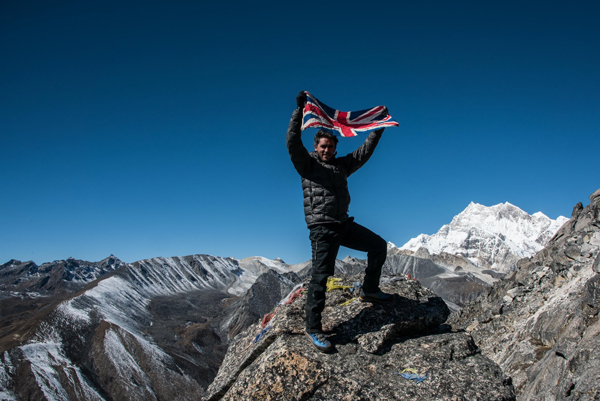
Explorer Levison Wood walks the length of the Himalayas
New Delhi, July 29 (IBNS): Six-month journey, over 4 million steps, trekking 1,700 gruelling miles across the roof of the world, teaming up with local guides and meeting monks, soldiers and nomadic tribes, explorer Levison Wood takes on an extreme challenge to walk the length of the world's highest mountain range from Afghanistan in the west to Bhutan in the East.
Premiering Friday, August 5, Discovery Channel’s new series Walking The Himalayas, airing every Friday at 9 PM, introduces explorer, writer and photographer Levison Wood as he embarks on an ambitious challenge to walk the length of the Himalayas.
British Army officer and explorer Levison Wood won critical acclaim for his nine-month long trek and first ever expedition to walk the entire length of the river Nile.
Taking the same intimate and authentic approach that made his previous series a hit, Levison takes on a new adventure across Himalayas where he confronts snow and ice, altitude sickness and earthquake-devastated landscapes.
He treads carefully through one of the most fought-over areas of the world, navigating isolated Afghan valleys and the Line of Control between Pakistani and Indian Kashmir.
Along the way, he passes through some of the most remote, beautiful, and perilous regions on earth - places few outsiders ever get to see.
Levison begins is journey in Afghanistan’s remote Wakhan corridor, where the mountains first rise in the west.
This 200 mile long and 25 mile wide strip of land, bordered by Tajikistan remains one of the most isolated and inhospitable places on Earth.
His guide Malang Darya - one of the country’s best mountaineers accompanies him to trek through barren, snow-ridged valleys before attempting to climb the Irshad Pass, a 5,000m wall of snow and ice that leads to northern Pakistan.
Levison and Malang traverse breathtaking scenery in northern Pakistan's remote mountain valleys, meeting tribes people and nomads, before heading to the heavily militarised frontier with India. He passes through Kashmir, Dharamshala and spiritual heartland Rishikesh to reach the holy city - Benaras.
In Nepal, he reunites with an old friend, Binod Parya, who saved his life when, as a 19-year-old, Levison was caught up in political violence.
Levison enters one of its least explored national parks - Bardia, which is home to rhinos, tigers and 10-foot-long crocodiles.
But animals aren't the only dangers he faces. He is forced to evacuate the camp site in the middle of night due to the rapidly rising river, swollen by the monsoon rains.
Levison’s journey gets interrupted by a serious car crash which gives him a near-death experience. Levison undergoes a surgery in UK and resumes his journey with his friend Binod after six weeks of rest.
Further in his adventure, Levison heads towards Everest, Kathmandu and Bhutan and gets a rare chance to experience its dramatic scenery, colourful festivals and historic monasteries and meet its people. Levison Wood ends his journey in Bhutan climbing the world’s highest unclimbed peak and country’s holiest mountain ‘Ghankar Puensem’, which mountaineers are forbidden to climb.
Support Our Journalism
We cannot do without you.. your contribution supports unbiased journalism
IBNS is not driven by any ism- not wokeism, not racism, not skewed secularism, not hyper right-wing or left liberal ideals, nor by any hardline religious beliefs or hyper nationalism. We want to serve you good old objective news, as they are. We do not judge or preach. We let people decide for themselves. We only try to present factual and well-sourced news.
Support objective journalism for a small contribution.


Latest Headlines
Air India, Adani Airports join hands: Travellers can now pre-order duty-free goods online
Mon, Sep 28 2026
Lufthansa reveals new Oktoberfest uniforms — See what’s changed
Sun, Sep 27 2026
Air India unveils ‘Vista’: AI, streaming-style entertainment coming to your seatback screen
Tue, Sep 22 2026
Etihad Airways, Etihad Rail partner: What new air-rail travel plan means for UAE passengers
Wed, Sep 16 2026
Big travel news: India waives visa fees for Thai tourists until 2027
Sun, Sep 13 2026
1000 Islands: Back to the Waters That Never Left Me
Fri, Sep 11 2026