Access to higher education doesn't always lead to lower unemployment: UN agency
The 9th edition of the ILO’s Key Indicators of the Labour Market, released Monday, said the educational level of the labour force is improving worldwide but access to a higher education is not leading to lower unemployment at the global level.
“This reflects a mismatch between skilled persons and the number of available jobs matching their competencies and expectations, and unless addressed may work to put a limit on economic growth and development,” according to Rosina Gammarano, from the ILO Department of Statistics.
According to the report, which is part of the broader ILO statistical database, all but two of 64 countries with available data have registered an increase in the share of the labour force with a tertiary education over the past 15 years.
The biggest increases were seen in Canada, Luxembourg and Russia, it said.
At the same time, the report said, there has been a drop in the share of labour market participants with only a primary-level education or less.
But workers with secondary-level education do not automatically have a better chance of finding a job.
“While they are less likely to be unemployed in most high-income economies, tertiary graduates in low- and lower-middle-income economies are actually more likely to be among the unemployed than workers with lower educational levels,” it said.
The report also provides data on the share of youth who are not in education, employment or training, one of the proposed indicators that will be used for monitoring the 2030 Agenda for Sustainable Development.
The report includes the first-ever estimates of the size of the labour force (employed + unemployed) across different income classifications, making it possible to determine the percentage of workers throughout the world that are in high-income, low-income, lower-middle income and upper-middle income economies.
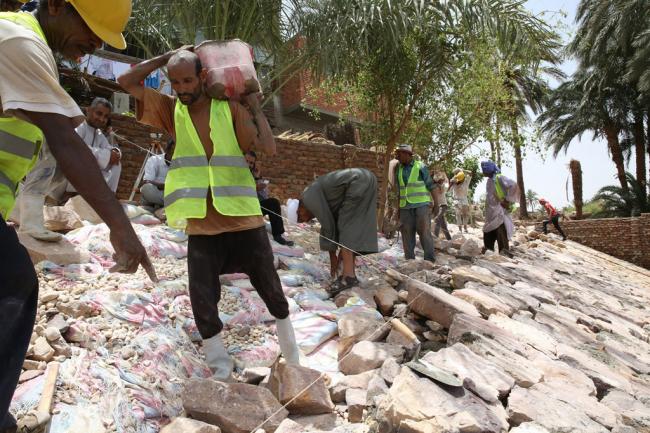
Photo: World Bank/Dominic Chavez
Support Our Journalism
We cannot do without you.. your contribution supports unbiased journalism
IBNS is not driven by any ism- not wokeism, not racism, not skewed secularism, not hyper right-wing or left liberal ideals, nor by any hardline religious beliefs or hyper nationalism. We want to serve you good old objective news, as they are. We do not judge or preach. We let people decide for themselves. We only try to present factual and well-sourced news.
Support objective journalism for a small contribution.