‘We need to rethink our daily lives,’ warns UN health chief, urging action to halt rising tide of diabetes
To mark World Health Day (7 April), which celebrates WHO’S founding in 1948, the agency is issuing a call for action on diabetes. In its first-ever Global report on diabetes, WHO highlights the need to step up prevention and treatment of the disease.
Measures needed to tackle the disease include expanding health-promoting environments to reduce diabetes risk factors, like physical inactivity and unhealthy diets, and strengthening national capacities to help people with diabetes receive the treatment and care they need to manage their conditions.
“If we are to make any headway in halting the rise in diabetes, we need to rethink our daily lives: to eat healthily, be physically active, and avoid excessive weight gain,” says Dr. Margaret Chan, WHO Director-General, who adds that even in the poorest settings, governments must ensure that people are able to make these healthy choices and that health systems are able to diagnose and treat people with diabetes.
WHO notes that diabetes is a chronic, progressive noncommunicable disease characterized by elevated levels of blood glucose (blood sugar). It occurs either when the pancreas does not produce enough of the insulin hormone, which regulates blood sugar, or when the body cannot effectively use the insulin it produces.
Key findings from WHO’s ‘Global report on diabetes’
Among the key findings from the report are:
The number of people living with diabetes and its prevalence are growing in all regions of the world. In 2014, 422 million adults (or 8.5 per cent of the population) had diabetes, compared with 108 million (4.7 per cent) in 1980.
The epidemic of diabetes has major health and socioeconomic impacts, especially in developing countries.
In 2014, more than 1 in 3 adults aged over 18 years were overweight and more than one in 10 were obese.
The complications of diabetes can lead to heart attack, stroke, blindness, kidney failure and lower limb amputation. For example, rates of lower limb amputation are 10 to 20 times higher for people with diabetes.
Diabetes caused 1.5 million deaths in 2012. Higher-than-optimal blood glucose caused an additional 2.2 million deaths by increasing the risks of cardiovascular and other diseases.
Global commitments to reduce diabetes
Many cases of diabetes can be prevented, and measures exist to detect and manage the condition, improving the odds that people with diabetes live long and healthy lives,” says Dr. Oleg Chestnov, WHO’s Assistant Director-General for NCDs and Mental Health. “But change greatly depends on governments doing more, including by implementing global commitments to address diabetes and other [noncommunicable diseases].”
Sip, a type 1 diabetes patient living on the outskirts of Bangkok, Thailand, takes a sweet drink with him to school which his teacher gives to him if his blood sugar is low. Photo: WHO/P. Brown
These include meeting Sustainable Development Goals (SDGs) target 3.4, which calls for reducing premature death from noncommunicable diseases, including diabetes, by 30 per cent by 2030. Governments have also committed to achieving four time-bound national commitments set out in the 2014 UN General Assembly “Outcome Document on Noncommunicable Diseases”, and attaining the nine global targets laid out in the WHO “Global Action Plan for the Prevention and Control of NCDs”, which include halting the rise in diabetes and obesity.
“Around 100 years after the insulin hormone was discovered, the ‘Global report on diabetes’ shows that essential diabetes medicines and technologies, including insulin, needed for treatment are generally available in only one in three of the world’s poorest countries,” says Dr. Etienne Krug, Director of WHO’s Department for the Management of NCDs, Disability, Violence and Injury Prevention.
“Access to insulin is a matter of life or death for many people with diabetes. Improving access to insulin and NCD medicines in general should be a priority.”
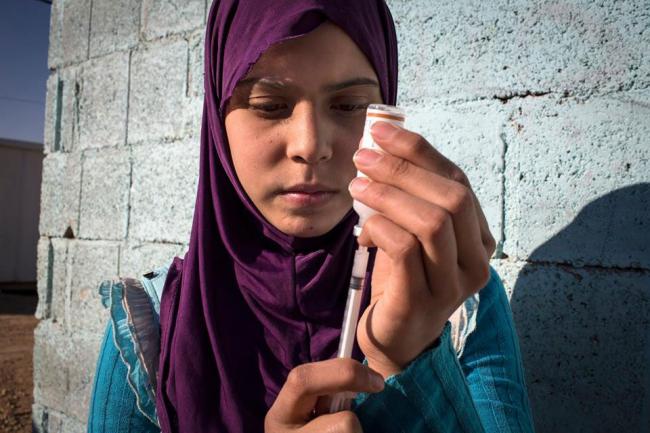
Photo: WHO/T. Habjouqa
Support Our Journalism
We cannot do without you.. your contribution supports unbiased journalism
IBNS is not driven by any ism- not wokeism, not racism, not skewed secularism, not hyper right-wing or left liberal ideals, nor by any hardline religious beliefs or hyper nationalism. We want to serve you good old objective news, as they are. We do not judge or preach. We let people decide for themselves. We only try to present factual and well-sourced news.
Support objective journalism for a small contribution.